格物
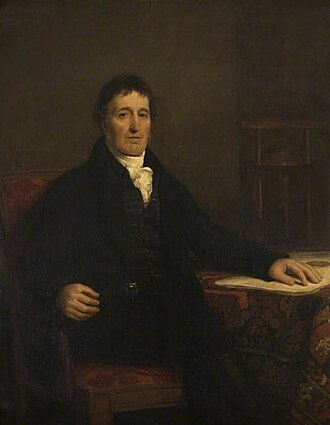
图:Public domain · Wikimedia Commons
- 出生
- 1754 年 8 月 21 日,艾尔郡
- 逝世
- 1839 年 11 月 15 日,伯明翰
- 国籍
- 大不列颠及爱尔兰联合王国
- 学科
- 化学、工程与发明
- 职业
- 发明家、工程师、化学家
- 母语 / 工作语言
- 英语
研究领域
所获奖项(1)
- 1806伦福德奖
百科正文
本条目暂无中文维基百科条目,下面是英文维基百科原文。
Murdoch was employed by the firm of Boulton & Watt and worked for them in Cornwall, as a steam engine erector for ten years, spending most of the rest of his life in Birmingham, England.
Murdoch was the inventor of the oscillating cylinder steam engine, and gas lighting is attributed to him in the early 1790s, as well as the term "gasometer". However the Dutch-Belgian Academic Jean-Pierre Minckelers had already published on coal gasification and gas lighting in 1784, and had used gas to light his auditorium at the University of Leuven from 1785. Archibald Cochrane, 9th Earl of Dundonald, had also used gas for lighting his family estate from 1789 onwards.
Murdoch also made innovations to the steam engine, including the sun and planet gear and D slide valve. He invented the steam gun and the pneumatic tube message system, and worked on one of the first British paddle steamers to cross the English Channel. Murdoch built a prototype steam locomotive in 1784, and made a number of discoveries in chemistry.
Murdoch remained an employee, and later a partner, of Boulton and Watt until the 1830s, but his reputation as an inventor has been obscured by the reputations of Matthew Boulton, James Watt, and the firm they founded.
Early life
William Murdoch was born in Bello Mill Lugar, near Old Cumnock in Ayrshire, Scotland, the third of seven children and the first son to survive beyond infancy. A son of John Murdoch, a former Hanoverian artillery gunner and a Millwright and tenant of Bello Mill on the estate of James Boswell in Auchinleck, he was educated until the age of ten at the Old Cumnock Kirk School before attending Auchinleck school under William Halbert, author of a highly regarded arithmetic textbook. Murdoch excelled in mathematics.
Birmingham
In 1777, at age 23, Murdoch walked to Birmingham, a distance of over 300 miles (480 km), to ask for a job with James Watt, the steam engine manufacturer. Both Watt and Murdoch were probably aware of each other because of their connections with James Boswell, who had made several visits to Watt's workshop at Soho. Watt's partner Matthew Boulton was so impressed by Murdoch's wooden hat, made on a lathe of his own design, that he hired him.
Cornwall
In September 1779 Murdoch was sent to Redruth in Cornwall as a senior engine erector, responsible for the erection, maintenance & repair of Boulton & Watt engines. These were used for pumping water out of the Cornish Tin mines, and therefore the efficiency and efficacy of the engines was an important factor in the amount of tin, and money, which could be extracted from a mine. At that time steam engines were not simply sold to customers but operated, and maintained by the builders for groups or individuals known as 'adventurers' (shareholders).
Mechanical improvements and inventions
While based in Cornwall, Murdoch had to deal with a wide range of mechanical problems related to steam engines, and this led him to make practical improvements to the basic steam engine designs used by Boulton and Watt. From 1782 there is evidence that Murdoch was discussing and collaborating with Watt on a number of inventions and improvements.
Steam powered locomotion
An important invention for which Murdoch receives less credit than one might expect is Britain's first working model of a steam carriage, or road locomotive, in 1784. French engineer Nicolas-Joseph Cugnot had already demonstrated the utility of such a device by building (from 1769) two full-sized working steam vehicles, one of which was designed to carry 4–5 tonnes. All that was needed was a more effective design.
Chemistry discoveries
In addition to his mechanical work Murdoch also experimented in the field of chemistry and made a number of discoveries. One such was the discovery, first recorded in 1784, of iron cement made from sal ammoniac, or ammonium chloride and iron filings, apparently discovered when Murdoch observed that these two components had accidentally mixed in his tool bag and formed a solid mass. This iron cement was used to fix and harden the joints of steam engines, thus creating a hard durable seal.
Gas lighting
The key invention for which Murdoch is best known is the application of gas lighting as a replacement for oil and tallow produced light. It was in 1792 that he first began experimenting with the use of gas, derived from the heating of coal and other materials, for lighting. Many believe this experimenting took place in a cave. There is some uncertainty as to when he first demonstrated this process in practice; however, most sources identify this as between 1792 and 1794.
The Caledonia paddle steamer
Boulton and Watt had been involved in a minor way with attempts to apply steam power to boats, providing in 1807 for Robert Fulton the engine for North River Steamboat, the first steamboat to run on the Hudson River, (the boat later referred to as the Clermont). Murdoch was primarily responsible for designing and building this engine and for agreeing technical details and designs with Fulton, who also worked on the design of the engine. Boulton and Watt also provided engines for a number of other marine vessels.
Later years
Murdoch wrote a paper, "Account of the Application of Gas from Coal to Economical Purposes" which was presented to the Royal Society in 1808. In that year he was awarded their Rumford Gold Medal for "both the first idea of applying, and the first actual application of gas to economical purposes".
In 1817 Murdoch moved into a large new house he had built outside Birmingham.
Honours and awards
At the celebration of the centenary of gas lighting in 1892, a bust of Murdoch was unveiled by Lord Kelvin in the Wallace Monument, Stirling, and there is also a bust of him by Sir Francis Legatt Chantrey at St. Mary's Church.
His life and works are commemorated by the Moonstones; a statue of him, Boulton and Watt, by William Bloye; and Murdock Road, all in Birmingham. There is also a Murdoch House in Rotherhithe, London.
以上节选摘自英文维基百科「William Murdoch」,按 CC BY-SA 4.0 使用,去掉了参考文献、外部链接等尾部小节,公式改写成了纯文本。篇幅所限,较长的小节只摘了开头一部分,有的小节没有收;全文、配图和出处见原文。
同一学科、同时代的科学家