格物

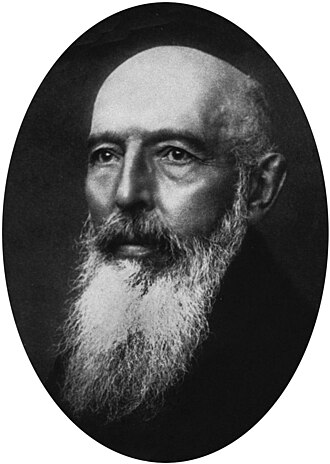
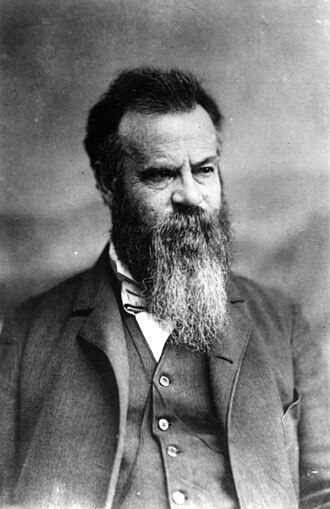
图:AnonymousUnknown author · Public domain · Wikimedia Commons
- 出生
- 1848 年 9 月 1 日,莫尔日
- 逝世
- 1931 年 7 月 27 日,伊沃尔讷
- 国籍
- 瑞士
- 学科
- 生物学、医学
- 职业
- 昆虫学家、精神科医师、神经科医生、世界语者
- 母语 / 工作语言
- 法语、世界语、德语
- 母校
- 苏黎世大学
- 工作单位
- 苏黎世大学
研究领域
主要贡献
代表成就
师承
博士生1
来自 Wikidata 的「博士导师」「师从」「博士生」「学生」记录,可能不全。
学会与院士
百科正文
英文维基百科补充中文条目比较短,下面是英文条目「Auguste Forel」的原文
Auguste-Henri Forel (French pronunciation: [oɡyst ɑ̃ʁi fɔʁɛl]; 1 September 1848 – 27 July 1931) was a Swiss myrmecologist, neuroanatomist, psychiatrist and former eugenicist, notable for his investigations into the structure of the human brain and that of ants. He is considered a co-founder of the neuron theory. Forel is also known for his early contributions to sexology and psychology. From 1978 until 2000 Forel's image appeared on the 1000 Swiss franc banknote.
Early life
Born in 1848 in a villa La Gracieuse, at Morges, on Lake Geneva, Switzerland, to Victor Forel (1823–1914) a pious Swiss Calvinist and Pauline Morin (1828–1890), a French Huguenot he was brought up in a protective household.
Auguste Forel was born in 1848 at Morges on Lake Geneva in Switzerland. His great uncle, who was an entomologist, introduced Forel to insect natural history when he was young. After reading a book by Pierre Huber, he became interested in ants.
Education
He went to school at Morges and Lausanne. In 1866 he began his studies at the University of Zurich's medical school. While at medical school he continued to collect colonies of ants in order to study their physiology, biology, anatomy, systematic and even posology, as he experimented with the effect of some biochemical agents on them.
In 1871, he went to Vienna and studied under Theodor Meynert (1833-1892), where he did his first comparative study of the thalamus. Forel was disappointed by Meynert.
In Zurich, he was inspired by the work of Bernhard von Gudden (1824-1886). In 1873 he moved to Germany to assist Gudden at his Munich Kreis-Irrenanstalt.
Neuroscience
Forel had a diverse and mixed career as a thinker on many subjects.
In Zurich, he was inspired by the work of Bernhard von Gudden (1824-1886). In 1873 he moved to Germany to assist Gudden at his Munich Kreis-Irrenanstalt. He improved upon various techniques in neuro-anatomy including modifications to Gudden's microtome design.
In 1877, he described the nuclear and fibrillar organization of the tegmental region which is now known as Campus Foreli. He then became a lecturer at the Ludwig-Maximilians-Universität München while also continuing his research on ants.
Neuron theory
Forel realized from experiments that neurons were the basic elements of the nervous system.
Myrmecology
Other myrmecological research
In 1898, Forel was credited with discovering trophallaxis among ants.
Legacy
A travelling exhibition of Forel's lifework—August Forel: Arzt Naturforscher Sozialreformer—was shown in 1986 in Zürich, and two years later, in Bern. The founder of the Institute of Brain Research in Zürich, Konrad Akert, described Forel as a "role model" and his contributions as a "social reformer" and scientist, "monumental".
Personal life
Forel named his home as La Fourmilière—the Ant Colony. Around 1900 Forel was a eugenicist. Forel suffered a stroke that paralyzed his right side in 1912, but he taught himself to write with his left hand and was able to continue his studies. After hearing of the religion from his son in law Dr. Arthur Brauns (married to his daughter Martha), in 1920 he became a member of the Baháʼí Faith, abandoning his former racist and socialist views, writing in his will and testament:
This is the true religion of human social good, without dogmas or priests, uniting all men on this small terrestrial globe of ours. I have become a Baháʼí.
Partial bibliography
Ants and Some Other Insects: An Inquiry into the Psychic Powers of these Animals (1904)
Hypnotism; or, Suggestion and Psychotherapy: A Study of the Psychological, Psycho-physiological and Therapeutic Aspects of Hypnotism (1907)
Ameisen aus Sumatra, Java, Malacca und Ceylon. Gesammelt V.Prof. Dr. V. Buttel Reepen in den Jahren, 1911–1912. Zool. Jahrd.Jena Abt. F.Syst. 36: 1–148. (1913).
Fourmis de Rhodesia, etc. recoltees par M. Arnold, le Dr. H. Brauns et K. Fikendey. Annales de la Societe Entomologique de Belgique. 57: 108–147.(1913).
Le monde social des fourmis du globe comparé à celui de l'homme. Genève, Kundig, 1921–1923, 5 volumes (1921-1923).
以上节选摘自英文维基百科「Auguste Forel」,按 CC BY-SA 4.0 使用,去掉了参考文献、外部链接等尾部小节,公式改写成了纯文本。篇幅所限,较长的小节只摘了开头一部分,有的小节没有收;全文、配图和出处见原文。
同一学科、同时代的科学家

同一学科的科学家
更多 ›