格物

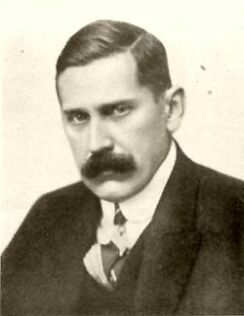
图:Ambroise Tardieu · CC BY 4.0 · Wikimedia Commons
彼得·西蒙·帕拉斯1741—1811
Peter Simon Pallas
German zoologist and botanist (1741–1811)
彼得·西蒙·帕拉斯 是一位德国博物学家,出生于柏林,曾先后在哥廷根大学和莱登大学学习,之后帕拉斯前往西欧考察,期间研究出了新的动物分类。1767年受叶卡捷琳娜二世之邀前往俄罗斯,担任圣彼得堡科学院教授。帕拉斯长时间在西伯利亚和中亚地区进行科学考察,收集生物和地质标本,曾于克拉斯诺亚尔斯克以南发现一颗重达700公斤的石铁陨石,是人类第一次发现并研究橄榄陨石。
摘自维基百科「彼得·西蒙·帕拉斯」,CC BY-SA 4.0
- 出生
- 1741 年 9 月 22 日,柏林
- 逝世
- 1811 年 9 月 8 日,柏林
- 国籍
- 普鲁士王国、俄罗斯帝国
- 学科
- 生物学、医学、博物与综合
- 职业
- 探险家、动物学家、鸟类学家、植物学家
- 母语 / 工作语言
- 拉丁语、德语、希腊语、英语、法语
- 母校
- 莱顿大学、哈雷-维滕贝格大学、哥廷根大学
- 工作单位
- 彼得堡科学院、俄罗斯科学院
研究领域
师承
博士导师2
博士生1
学生1
来自 Wikidata 的「博士导师」「师从」「博士生」「学生」记录,可能不全。
所获奖项(1)
- —英国皇家学会院士
学会与院士
百科正文
英文维基百科补充中文条目比较短,下面是英文条目「Peter Simon Pallas」的原文
Peter Simon Pallas FRS FRSE (22 September 1741 – 8 September 1811) was a Prussian zoologist, botanist, ethnographer, explorer, geographer, geologist, natural historian, and taxonomist. He studied natural sciences at various universities in early modern Germany and worked primarily in the Russian Empire between 1767 and 1810.
Life and work
Peter Simon Pallas was born in Berlin, Kingdom of Prussia, the son of Professor of Surgery Simon Pallas. He studied with private tutors and took an interest in natural history, later attending the University of Halle and the University of Göttingen. In 1760, he moved to the University of Leiden and passed his doctor's degree at the age of 19.
Pallas travelled throughout the Dutch Republic and to London, improving his medical and surgical knowledge. He then settled at The Hague, and his new system of animal classification was praised by Georges Cuvier. Pallas wrote Miscellanea Zoologica (1766), which included descriptions of several vertebrates new to science which he had discovered in the Dutch museum collections. A planned voyage to Southern Africa and the East Indies fell through when his father recalled him to Berlin. There, he began work on his Spicilegia Zoologica (1767–1780).
In 1767, Pallas was invited by Catherine II of Russia to become a professor at the St Petersburg Academy of Sciences and, between 1768 and 1774, he led an expedition to central Russian provinces, Povolzhye, Urals, West Siberia, Altay, and Transbaikal, collecting natural history specimens for the academy. He explored the Caspian Sea, the Ural and Altai Mountains, and the upper Amur River, reaching as far eastward as Lake Baikal. The regular reports which Pallas sent to St Petersburg were collected and published as Reise durch verschiedene Provinzen des Russischen Reichs ("Journey through various provinces of the Russian Empire", 3 vols., 1771–1776). They covered a wide range of topics, including geology and mineralogy, ethnographic reports on the native Eurasian peoples and their indigenous religions, and descriptions of new plants and animals. In 1776, Pallas was elected a foreign member of the Royal Swedish Academy of Sciences.
Pallas settled in St Petersburg, becoming a favourite of Catherine II and teaching natural history to the Grand Dukes Alexander and Constantine. He was provided with the plants collected by other naturalists to compile the Flora Rossica (1784–1815), a Russian flora, and started work on his Zoographica Rosso-Asiatica (1811–31), a zoography of Russia and Asia. He also published an account of Johann Anton Güldenstädt's travels in the Caucasus. The Empress bought Pallas's large natural history collection for 2,000 rubles, 500 more than his asking price, and allowed him to keep them for life.
Pallasite
In 1772, Pallas was shown a 680-kg lump of metal that had been found near Krasnoyarsk. Pallas arranged for it to be transported to St Petersburg. Subsequent analysis of the metal showed it to be a new type of stony-iron meteorite. This new type of meteorite was called pallasite after him; the meteorite itself is named Krasnojarsk or sometimes Pallas Iron (the name given to it by Ernst Chladni in 1794).
Commemorated
Several animals were described by Pallas, and his surname is included in their common names, including: Pallas's glass lizard, Pallas's viper, Pallas's cat, Pallas's long-tongued bat, Pallas's tube-nosed bat, Pallas's squirrel, Pallas's leaf warbler, Pallas's cormorant, Pallas's fish-eagle, Pallas's gull, Pallas's sandgrouse, Pallas's rosefinch, and Pallas's grasshopper warbler.
Also, he is honoured in the scientific names of animals described by others, including: the Dagestani tortoise (Testudo graeca pallasi), Pallas's pika (Ochotona pallasi), Pallas's reed bunting (Emberiza pallasi), the East Siberian grayling (Thymallus pallasii) and the Pacific herring (Clupea pallasii).
He was also honoured in the name of a plant genus, Petrosimonia which is a genus of flowering plants belonging to the family Amaranthaceae.
Streets in Berlin and Castrop-Rauxel are named Pallasstraße. Pallasovka, a city in Volgograd Oblast, is named after him, and his monument stands there.
An asteroid is named after him: 21087 Petsimpallas. Eric Elst chose the name 26851 Sarapul for an asteroid because in Pallas's writings, he mentioned his liking of the city of Sarapul, Russia.
Pallas was elected a member of the American Philosophical Society in 1791.
以上节选摘自英文维基百科「Peter Simon Pallas」,按 CC BY-SA 4.0 使用,去掉了参考文献、外部链接等尾部小节,公式改写成了纯文本。篇幅所限,较长的小节只摘了开头一部分,有的小节没有收;全文、配图和出处见原文。
同一学科、同时代的科学家


同一学科的科学家
更多 ›