格物

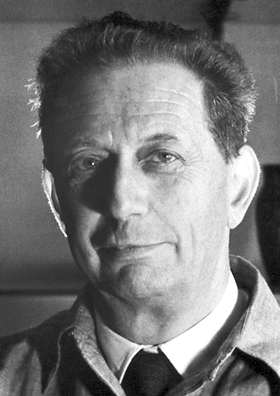
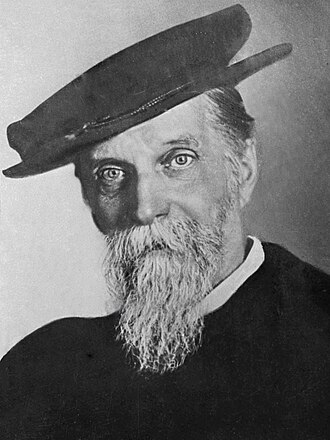
图:https://wellcomeimages.org/indexplus/obf_images/17/81/72870e… · CC BY 4.0 · Wikimedia Commons
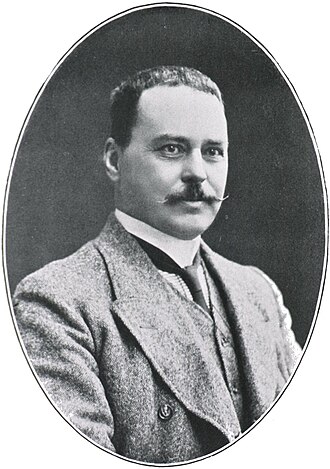
夏尔·尼科勒1866—1936
Charles Nicolle
生物学家, 法国
夏尔·朱尔·亨利·尼科勒 是一位法国细菌学家,曾经因为关于辨认出虱子为斑疹伤寒的传染者,而获得1928年诺贝尔生理学或医学奖。
摘自维基百科「夏尔·尼科勒」,CC BY-SA 4.0
- 出生
- 1866 年 9 月 21 日,鲁昂
- 逝世
- 1936 年 2 月 28 日,突尼斯市
- 国籍
- 法国
- 学科
- 生物学、医学
- 职业
- 医生、教授、细菌学家、微生物学家
- 母语 / 工作语言
- 法语
- 母校
- 巴斯德研究院(1893 年)、皮埃尔·高乃依高级中学、巴黎医学院(医学士)
- 工作单位
- 法兰西公学院(1932—1936)、巴斯德研究院(1903—1936)
研究领域
所获奖项(5)
- 1909Montyon Science Award
- 1912Montyon Science Award
- 1914Montyon Science Award
- 1928诺贝尔生理学或医学奖
- —荣誉军团司令
学会与院士
百科正文
尼科勒出生于法国鲁昂,他的父亲是当地医院的一位医师,因此他很早便开始学习生物学知识。1893年,他获得了巴斯德研究院授与的医学士学位。之后他回到鲁昂。
1903年,尼科勒开始担任巴斯德研究院的主任,直到1936年逝世为止。在这段期间,他获得了诺贝尔奖。
除了微生物的研究之外,他也写了一些小说与哲学书籍,包括《Le Pâtissier de Bellone》、《Les deux Larrons》与《Les Contes de Marmouse》。
他在1895年结婚,拥有两个小孩。
以上内容摘自维基百科「夏尔·尼科勒」,按 CC BY-SA 4.0 使用,去掉了参考文献、外部链接等尾部小节,公式改写成了纯文本。全文、配图和出处见原文。
英文维基百科补充中文条目比较短,下面是英文条目「Charles Nicolle」的原文
Charles Jules Henri Nicolle (21 September 1866 – 28 February 1936) was a French bacteriologist who received the Nobel Prize in Medicine for his identification of lice as the transmitter of epidemic typhus.
Family
Nicolle was born to Aline Louvrier and Eugène Nicolle in Rouen, France and was raised as part of a middle-class family that valued education. He had two other siblings – his older brother, Maurice Nicolle (a medical microbiologist, professor at the Pasteur Institute in Paris, and Director of the Bacteriological Institute of Constantinople), and his younger brother, Marcel Nicolle (an art critic).
Nicole later married Alice Avice in 1895 and had two children, Marcelle (b. 1896) and Pierre (b. 1898), both of whom also went on to enter the medical field.
Studies and career
The earliest educational influences on Nicolle were from his father, a doctor at a Rouen hospital. Nicolle later received his education from the Lycée Pierre Corneille in Rouen, followed by his medical degree from the Pasteur Institute of Paris in 1893. At this point he returned to Rouen, as a member of the Medical Faculty until 1896 and then as Director of the Bacteriological Laboratory from 1896 to 1902. Around this time, Nicolle also became increasingly deaf. This impeded his interactions with patients, which motivated him to develop the laboratory side of his work. He did just that in 1903, when he became Director of the Pasteur Institute in Tunis and conducted his Nobel Prize-winning work on typhus, bringing Hélène Sparrow with him as laboratory chief. He was still director of the Institute when he died in 1936.
Directing the Pasteur Institute in Tunis
Before Nicolle took on the position of leading the Pasteur Institute in Tunis, the Pasteur Institute in Paris remained the predominant centre for research in France as it aimed to combine medical research, teaching, and public service (treatment of diseases) under Pasteurian missionary principles. However, under Nicolle’s guidance over the next 33 years, the 'sister' Institute in Tunis quickly became an international centre of its own for the production of vaccines used against infectious diseases and for medical research.
Nicolle’s success in expanding the Pasteur Institute in Tunis lies primarily in his deviation from the traditional Pasteurian ideology that mandated that medical aid and research be done in a nonprofit manner. Nicolle instead actively sought to build relations with the local Tunisian and French healthcare officials and organized the Institute such that other medical functions (such as caring for sick patients) would monetarily support the Institute's ongoing laboratory research. Doing so gave him autonomy to run the Institute without relying on public or governmental funds. As the Institute grew more financially stable, Nicolle tackled the diseases and public health concerns that were prevalent in the local region, shared research findings and resources with the Paris Institute, and expanded his scientific writings into a journal called the Archives de l’Institut de Tunis. He also became a key point of contact for the French government when new epidemics arose that required his intervention – such as in the malaria epidemic of 1906 and the cholera outbreak of 1907.
Accomplishments
- Nicolle's major accomplishments in bacteriology and parasitology were:
- The discovery of the transmission method of typhus fever
- The introduction of a vaccination for Malta fever
- The discovery of the transmission method of tick fever
His studies of cancer, scarlet fever, rinderpest, measles, influenza, tuberculosis and trachoma.
Identification of the parasitic organism Toxoplasma gondii within the tissues of the gundi (Ctenodactylus gundi), which is commonly found in AIDS patients
His study of the parasitic microorganism Leishmania tropica that caused the Oriental sore (a type of skin boil)
Additional information
Major works
- During his life Nicolle wrote a number of non-fiction and bacteriology books, including:
- Le Destin des Maladies infectieuses (1933)
- La Nature, conception et morale biologiques (1934)
- Responsabilités de la Médecine (1935)
- La Destinée humaine (1936)
- He also wrote fiction and philosophy throughout his life, including:
- Le Pâtissier de Bellone (1913)
- Les deux Larrons (1929)
- Les Contes de Marmouse (1930)
Religious views
Baptized a Catholic, Nicolle left the faith when he was twelve. Starting in 1934, he felt spiritual anxiety, and he was reconciled with the Church in August 1935 after communicating with a Jesuit priest.
以上节选摘自英文维基百科「Charles Nicolle」,按 CC BY-SA 4.0 使用,去掉了参考文献、外部链接等尾部小节,公式改写成了纯文本。篇幅所限,较长的小节只摘了开头一部分,有的小节没有收;全文、配图和出处见原文。
同一学科、同时代的科学家



同一学科的科学家
更多 ›