格物

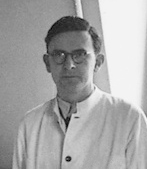
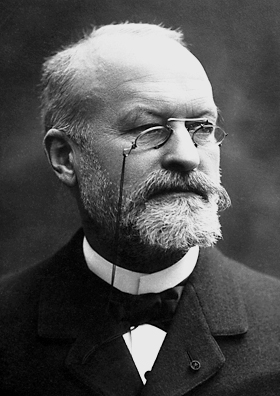
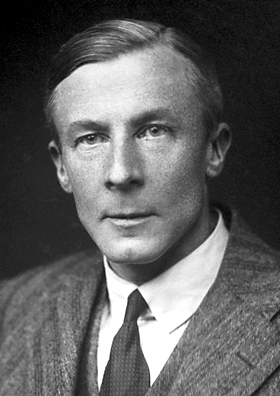
图:Emil Finn · Public domain · Wikimedia Commons
罗伯特·巴拉尼1876—1936
Robert Bárány
研究者
罗伯特·巴拉尼 是一位奥地利出生的匈牙利裔犹太人,也是一位生理学家。因为对于内耳前庭的生理学与病理学研究,而获得1914年度的诺贝尔生理学或医学奖(1915年颁发)。
摘自维基百科「羅伯特·巴拉尼」,CC BY-SA 4.0
- 出生
- 1876 年 4 月 22 日,维也纳
- 逝世
- 1936 年 4 月 8 日,Uppsala Cathedral Assembly
- 国籍
- 瑞典、内莱塔尼亚、奥地利
- 学科
- 生物学、医学
- 职业
- 医生、神经学家、研究者
- 母语 / 工作语言
- 德语、匈牙利语、瑞典语
- 母校
- 维也纳大学(1900 年)
- 工作单位
- 维也纳大学、乌普萨拉大学
研究领域
所获奖项(1)
- 1914诺贝尔生理学或医学奖
学会与院士
百科正文
英文维基百科补充中文条目比较短,下面是英文条目「Robert Bárány」的原文
Robert Bárány (Hungarian: Bárány Róbert, pronounced [ˈbaːraːɲ ˈroːbɛrt]; 22 April 1876 – 8 April 1936) was an Austrian-born otologist. He received the 1914 Nobel Prize in Physiology or Medicine for his work on the physiology and pathology of the vestibular apparatus.
Life and career
Bárány was born in Vienna, Austria-Hungary. He was the eldest of six children of Maria (née Hock), the daughter of a scientist, and Ignác Bárány, born 1842 in Várpalota, Kingdom of Hungary, who was a bank official and estate manager. His father was a Hungarian Jew whose father also was named Ignác Bárány (Bárány Ignác).
He attended medical school at Vienna University, graduating in 1900. As a doctor in Vienna, Bárány was syringing fluid into the external auditory canal of a patient to relieve the patient's dizzy spells. The patient experienced vertigo and nystagmus (involuntary eye movement) when Bárány injected fluid that was too cold. In response, Bárány warmed the fluid for the patient and the patient experienced nystagmus in the opposite direction. Bárány theorized that the endolymph was sinking when it was cool and rising when it was warm, and thus the direction of flow of the endolymph was providing the proprioceptive signal to the vestibular organ. He followed up on this observation with a series of experiments on what he called the caloric reaction. The research resulting from his observations made surgical treatment of vestibular organ diseases possible. Bárány also investigated other aspects of equilibrium control, including the function of the cerebellum. Benign paroxysmal positional vertigo is said to have been first described in medical texts by Bárány.
He served in the Austro-Hungarian Army during World War I as a civilian surgeon and was captured by the Imperial Russian Army. When his Nobel Prize was awarded in 1914, Bárány was in a Russian prisoner of war camp. Bárány was released from the prisoner of war camp in 1916 following joint diplomatic efforts from Sweden, Denmark, Norway and The Netherlands and alongside Red Cross. That work was largely driven by the professor of otorhinolaryngology, Nils Gunnar Holmgren, with diplomatic contributions by Prince Carl of Sweden and Norway. Bárány was then able to attend the Nobel Prize awards ceremony in 1916, where he was awarded his prize. Virtually as soon as he was awarded the Nobel Prize, in January 1917, he, with the automatic qualification for making such proposals that comes with being a Prize Winner, proposed to the Nobel Committee in Physiology or Medicine that Sigmund Freud should be awarded the Prize. Freud was annoyed both by Bárány's winning and nominating. In response to his receiving the prize, Sigmund Freud wrote: "The granting of the Nobel Prize to Bárány, whom I refused to take as a pupil some years ago because he seemed to be too abnormal, has aroused sad thoughts about how helpless an individual is about gaining the respect of the crowd." "You know it is only the money that would matter to me, and perhaps the spice of annoying some of my compatriots. But it would be ridiculous to expect a sign of recognition when one has seven-eights of the world against one."
From 1917 until his death, Bárány was professor at Uppsala University Faculty of Medicine. He died shortly before his sixtieth birthday in Uppsala. He was the father of physician and Swedish Royal Academy of Sciences member Ernst Bárány (1910–1991) and grandfather of physicist Anders Bárány, former secretary of the Nobel Committee for Physics. On 9 March 1909, he married Ida Felicitas Berger, born 12 December 1881. He learned Esperanto some time before 1916.
以上内容摘自英文维基百科「Robert Bárány」,按 CC BY-SA 4.0 使用,去掉了参考文献、外部链接等尾部小节,公式改写成了纯文本。全文、配图和出处见原文。
同一学科、同时代的科学家



同一学科的科学家
更多 ›