格物
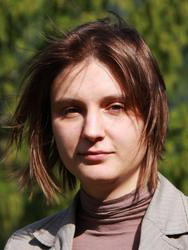
图:Original photo by Petra Lein · CC BY-SA 2.0 de · Wikimedia Commons
马林娜·维亚佐夫斯卡1984—
Maryna Viazovska
Ukrainian mathematician (born 1984)
马林娜·塞尔希伊芙娜·维亚佐夫斯卡,乌克兰数学家,2022年菲尔兹奖得主。她在2016年解决了8维空间的球体堆积问题,之后又与其他数学家合作解决了24维空间的该问题。以前,这个问题只在三维或更少的维度上才有解,而且三维版本的证明需要冗长的计算机演算。与此相反,维亚佐夫斯卡对8维和24个维空间中该问题的证明却具有“惊人的简洁”。
摘自维基百科「马林娜·维亚佐夫斯卡」,CC BY-SA 4.0
- 出生
- 1984 年 12 月 2 日,基辅
- 国籍
- 乌克兰、苏联
- 学科
- 数学、博物与综合
- 职业
- 数学家、大学教师
- 母语 / 工作语言
- 英语、俄语、乌克兰语
- 母校
- Kyiv Natural Science Lyceum No. 145(2001 年)、Faculty of Mechanics and Mathematics, Taras Shevchenko National University of Kyiv(学士,2005 年)、凯撒斯劳滕工业大学(硕士,2007 年)、波恩大学(自然科学博士,2013 年)
- 工作单位
- 柏林洪堡大学(2014—2017)、Institute of Mathematics of the National Academy of Sciences of Ukraine、洛桑联邦理工学院(2017—)、柏林数学院
研究领域
师承
师从1
来自 Wikidata 的「博士导师」「师从」「博士生」「学生」记录,可能不全。
所获奖项(13)
- 2016萨兰奖
- 2017克雷研究奖
- 2017欧洲组合学奖
- 2017SASTRA拉马努金奖
- 2018数学新视野奖
- 2019鲁思该萨特数学奖
- 2019费马奖
- 2020Swiss Science Prize Latsis
- 2020EMS Prize
- 2022菲尔兹奖
- 2022Order of Merit, 1st class
- 2022BBC全球百大女性
- 2025honorary doctorate from Sorbonne University
学会与院士
百科正文
生平
在基辅大学做学生的时候,维亚佐夫斯卡就参加了2002年、2003年、2004年和2005年的国际大学生数学竞赛,并且在2002年和2005年成为第一梯队获奖者。
2010年,维亚佐夫斯卡获乌克兰国家科学院数学研究所副博士学位,2013年又获得波恩大学博士学位。她的博士论文《模函数和特殊闭链》是关于解析数论,由唐·扎吉尔和维尔纳·缪勒指导。她曾在柏林的数学学院和柏林洪堡大学做博士后研究,之后在普林斯顿大学做访问学者。2018年以来她在洛桑联邦理工学院做全职教授。2022年获得菲尔兹奖。
以上内容摘自维基百科「马林娜·维亚佐夫斯卡」,按 CC BY-SA 4.0 使用,去掉了参考文献、外部链接等尾部小节,公式改写成了纯文本。全文、配图和出处见原文。
英文维基百科补充中文条目比较短,下面是英文条目「Maryna Viazovska」的原文
Maryna Sergiivna Viazovska (Ukrainian: Марина Сергіївна Вязовська, pronounced [mɐˈrɪnɐ wʲɐˈzɔu̯sʲkɐ]; born 2 December 1984) is a Ukrainian mathematician known for her work in sphere packing. She is a full professor and Chair of Number Theory at the Institute of Mathematics of the École Polytechnique Fédérale de Lausanne in Switzerland. She was awarded the Fields Medal in 2022.
Education and career
Viazovska was born in Kyiv, the oldest of three sisters. Her father was a chemist who worked at the Antonov aircraft factory, and her mother was an engineer. She attended a specialized secondary school for high-achieving students in science and technology, Kyiv Natural Science Lyceum No. 145. An influential teacher there, Andrii Knyazyuk, had previously worked as a professional research mathematician before becoming a secondary school teacher. Viazovska competed in domestic mathematics Olympiads when she was at high school, placing 13th in a national competition where 12 students were selected to a training camp before a six-member team for the International Mathematical Olympiad was chosen. As a student at Taras Shevchenko National University of Kyiv, she competed at the International Mathematics Competition for University Students in 2002, 2003, 2004, and 2005, and was one of the first-place winners in 2002 and 2005. She co-authored her first research paper in 2005.
Viazovska earned a master's from the University of Kaiserslautern in 2007, PhD from the Institute of Mathematics of the National Academy of Sciences of Ukraine in 2010, and a doctorate (Dr. rer. nat.) from the University of Bonn in 2013. Her doctoral dissertation, Modular Functions and Special Cycles, concerns analytic number theory and was supervised by Don Zagier and Werner Müller.
She was a postdoctoral researcher at the Berlin Mathematical School and the Humboldt University of Berlin and a Minerva Distinguished Visitor at Princeton University. Since January 2018 she has held the Chair of Number Theory as a full professor at the École Polytechnique Fédérale de Lausanne (EPFL) in Switzerland after a short stint as tenure-track assistant professor.
Contributions
In 2016, Viazovska solved the sphere-packing problem in dimension 8. Her dimension 8 solution quickly led to collaboration with others, and a solution in dimension 24. Previously, the problem had been solved only for three or fewer dimensions, and the proof of the three-dimensional version (the Kepler conjecture) involved long computer calculations. In contrast, Viazovska's proof for 8 and 24 dimensions has been described as "stunningly simple".
A few years later, in 2018, Viazovska and her collaborators significantly extended their sphere packing results in dimensions 8 and 24 to address potential energy minimization. In 2019, Viazovska and her team solved a mathematical equation that determines how an infinite number of points repelling each other are placed in 8- and 24-dimensional spaces.
As well as for her work on sphere packing, Viazovska is also known for her research on spherical designs with Bondarenko and Radchenko. With them she proved a conjecture of Korevaar and Meyers on the existence of small designs in arbitrary dimensions. This result was one of the contributions for which her co-author Andriy Bondarenko won the Vasil A. Popov Prize for approximation theory in 2013.
Recognition
In 2016, Viazovska received the Salem Prize and, in 2017, the Clay Research Award and the SASTRA Ramanujan Prize for her work on sphere packing and modular forms. In December 2017, she was awarded a 2018 New Horizons Prize in Mathematics.
She was an invited speaker at the 2018 International Congress of Mathematicians. For 2019 she was awarded the Ruth Lyttle Satter Prize in Mathematics and the Fermat Prize. She is one of the 2020 winners of the EMS Prize. In 2020, she also received the National Latsis Prize awarded by the Latsis Foundation. She was elected to the Academia Europaea in 2021. She was appointed Senior Scholar at the Clay Mathematics Institute in July 2022.
She was awarded the Fields Medal in July 2022, making her the second woman (after Maryam Mirzakhani), the second person born in the Ukrainian SSR (after Vladimir Drinfeld) and the first with a degree from a Ukrainian university to ever receive it. She was honored as one of the BBC 100 Women in December 2022.
Personal life
Viazovska met her husband, Daniil Evtushinsky, at an after-school physics group for schoolchildren. He is also a researcher at EPFL, in physics. They have two children, a son and a daughter.
以上内容摘自英文维基百科「Maryna Viazovska」,按 CC BY-SA 4.0 使用,去掉了参考文献、外部链接等尾部小节,公式改写成了纯文本。全文、配图和出处见原文。
同年获同一奖项
同一学科、同时代的科学家





同一学科的科学家
更多 ›