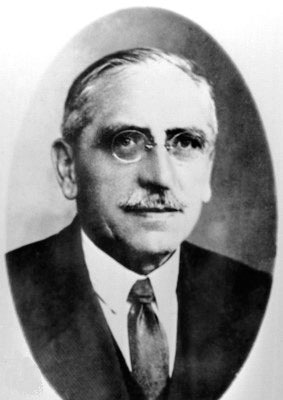
格物
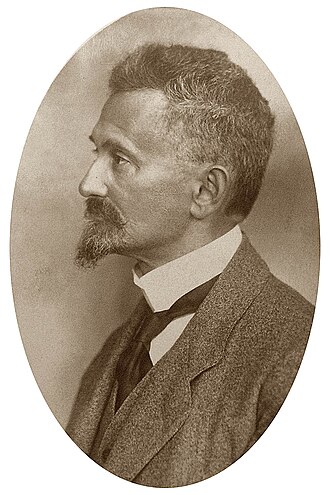
图:Public domain · Wikimedia Commons
- 出生
- 1868 年 11 月 8 日,弗罗茨瓦夫
- 逝世
- 1942 年 1 月 26 日,波恩
- 国籍
- 德意志国
- 学科
- 数学、天文学、博物与综合
- 职业
- 数学家、作家、拓扑学家、大学教师
- 母语 / 工作语言
- 德语
- 母校
- 莱比锡大学(博士,1891 年)、Alte Nikolaischule (Leipzig)(1887 年)
- 工作单位
- 波恩大学(1910—1913)、莱比锡大学(1895—1910)、格赖夫斯瓦尔德大学(1913—1921)、波恩大学(1921—1935)
研究领域
主要贡献
代表成就
以他 / 她命名
师承
博士生3
来自 Wikidata 的「博士导师」「师从」「博士生」「学生」记录,可能不全。
学会与院士
百科正文
豪斯多夫生于布雷斯劳,在莱比锡学习数学并任教,直至1910年获聘往波昂任数学教授。纳粹当权后,他想纵然自己是犹太人,但他是受敬重的大学教授,应可免于迫害。但他的抽象数学研究,被批评为属“犹太人”的,没用而且“非德国”,令他在1935年失去教席。1942年,当他知悉要被送往集中营,他与妻子和妻子的一名姊妹服毒自尽。
他的墓在波恩波佩尔斯多夫公墓。
以上内容摘自维基百科「费利克斯·豪斯多夫」,按 CC BY-SA 4.0 使用,去掉了参考文献、外部链接等尾部小节,公式改写成了纯文本。全文、配图和出处见原文。
英文维基百科补充中文条目比较短,下面是英文条目「Felix Hausdorff」的原文
Felix Hausdorff ( HOWS-dorf, HOWZ-dorf; November 8, 1868 – January 26, 1942) was a German mathematician, pseudonym Paul Mongré (à mon gré (Fr.) = "according to my taste"), who is considered to be one of the founders of modern topology and who contributed significantly to set theory, descriptive set theory, measure theory, and functional analysis.
Hausdorff was Jewish, and life became difficult for him and his family after the Kristallnacht of 1938. The next year he initiated efforts to emigrate to the United States, but was unable to make arrangements to receive a research fellowship. On 26 January 1942, Hausdorff, along with his wife and his sister-in-law, died by suicide by taking an overdose of veronal, rather than comply with German orders to move to a concentration camp in Endenich.
Life
Childhood and youth
Hausdorff's father, the Jewish merchant Louis Hausdorff (1843–1896), moved with his young family to Leipzig in the autumn of 1870, and over time worked at various companies, including a linen-and cotton goods factory. He was an educated man and had become a Morenu at the age of 14. He wrote several treatises, including a long work on the Aramaic translations of the Bible from the perspective of Talmudic law.
Hausdorff's mother, Hedwig (1848–1902), who is also referred to in various documents as Johanna, came from the Jewish Tietz family. From another branch of this family came Hermann Tietz, founder of the first department store, and later co-owner of the department store chain called "Hermann Tietz". During the period of Nazi dictatorship the name was "Aryanised" to Hertie.
Work and reception
Hausdorff as philosopher and writer (Paul Mongré)
Hausdorff's volume of aphorisms, published in 1897, was his first work published under the pseudonym Paul Mongré. It is entitled Sant' Ilario: Thoughts from the landscape of Zarathustra. The subtitle plays first on the fact that Hausdorff had completed his book during a recovery stay on the Ligurian coast by Genoa and that in this same area, Friedrich Nietzsche wrote the first two parts of Thus Spoke Zarathustra; he also alludes to his spiritual closeness to Nietzsche. In an article on Sant' Ilario in the weekly paper Die Zukunft, Hausdorff acknowledged in expressis verbis his debt to Nietzsche.
Hausdorff was not trying to copy or even exceed Nietzsche. "Of Nietzsche imitation no trace", says a contemporary review. He follows Nietzsche in an attempt to liberate individual thinking, to take the liberty of questioning outdated standards. Hausdorff maintained critical distance to the late works of Nietzsche.
Hausdorff as name-giver
The name Hausdorff is found throughout mathematics. Among others, these concepts were named after him:
- Hausdorff completion
- Hausdorff convergence
- Hausdorff density
- Hausdorff dimension
- Hausdorff distance
- Hausdorff gap
- Hausdorff maximal principle
- Hausdorff measure
- Hausdorff metric
- Hausdorff moment problem
- Hausdorff paradox
- Hausdorff space
- Hausdorff–Young inequality
- Baker–Campbell–Hausdorff formula
- In the universities of Bonn and Greifswald, these things were named in his honor:
- the Hausdorff Center for Mathematics in Bonn,
- the Hausdorff Research Institute for Mathematics in Bonn, and
the Felix Hausdorff Internationale Begegnungszentrum in Greifswald.
Besides these, in Bonn there is the Hausdorffstraße (Hausdorff Street), where he first lived. (Haus-Nr. 61). In Greifswald there is a Felix-Hausdorff–Straße, where the Institutes for Biochemistry and Physics are located, among others.
Collected works
The "Hausdorff-Edition", edited by E. Brieskorn (†), F. Hirzebruch (†), W. Purkert (all Bonn), R. Remmert (†) (Münster) and E. Scholz (Wuppertal) with the collaboration of over twenty mathematicians, historians, philosophers and scholars, is an ongoing project of the North Rhine-Westphalian Academy of Sciences, Humanities and the Arts to present the works of Hausdorff, with commentary and much additional material. The volumes have been published by Springer-Verlag, Heidelberg. Nine volumes have been published with volume I being split up into volume IA and volume IB. See the website of the Hausdorff Project website of the Hausdorff Edition (German) for further information. The volumes are:
Band IA: Allgemeine Mengenlehre. 2013, ISBN 978-3-642-25598-4.
Band IB: Felix Hausdorff – Paul Mongré (Biographie). 2018, ISBN 978-3-662-56380-9.
Band II: Grundzüge der Mengenlehre (1914). 2002, ISBN 978-3-540-42224-2
以上节选摘自英文维基百科「Felix Hausdorff」,按 CC BY-SA 4.0 使用,去掉了参考文献、外部链接等尾部小节,公式改写成了纯文本。篇幅所限,较长的小节只摘了开头一部分,有的小节没有收;全文、配图和出处见原文。
同一学科、同时代的科学家