格物
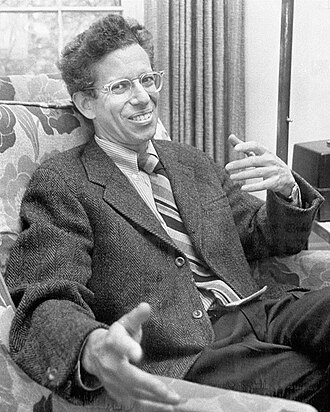
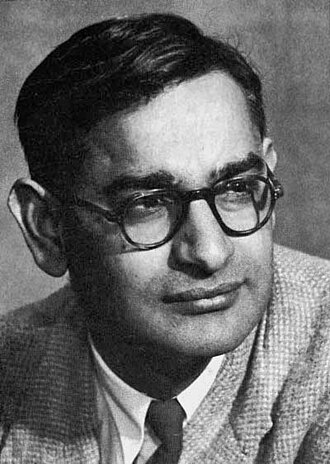
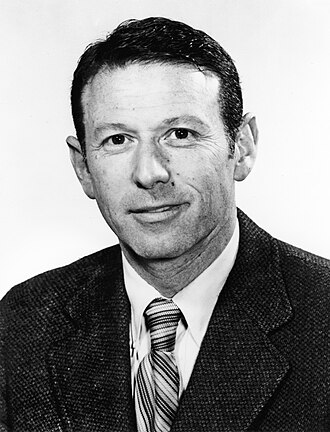
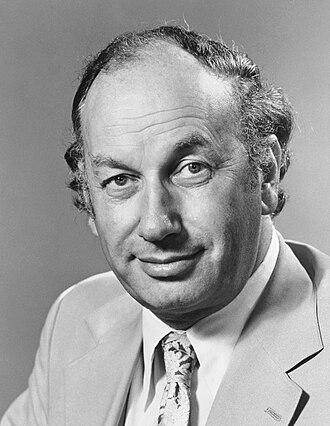
图:Associated Press · Public domain · Wikimedia Commons
霍华德·马丁·特明1934—1994
Howard Temin
病毒学家, 美国
霍华德·马丁·特明,美国遗传学家。1970年代他在威斯康星大学麦迪逊分校研究逆转录酶,由于发现肿瘤病毒与细胞遗传物质之间的相互作用而与戴维·巴尔的摩、罗纳托·杜尔贝科一起获得1975年的诺贝尔生理学或医学奖。
摘自维基百科「霍华德·马丁·特明」,CC BY-SA 4.0
- 出生
- 1934 年 12 月 10 日,费城
- 逝世
- 1994 年 2 月 9 日,麦迪逊
- 国籍
- 美国
- 学科
- 化学、生物学、医学、博物与综合
- 职业
- 病毒学家、遗传学家、生物化学家、医生
- 母语 / 工作语言
- 英语
- 母校
- 加州理工学院、斯沃斯莫尔学院、威斯康星大学麦迪逊分校
- 工作单位
- 威斯康星大学麦迪逊分校
研究领域
师承
来自 Wikidata 的「博士导师」「师从」「博士生」「学生」记录,可能不全。
所获奖项(10)
- 1972Leopold Griffuel Prize
- 1972NAS分子生物学奖
- 1973辉瑞酶化学奖
- 1974拉斯克基础医学研究奖
- 1974盖尔德纳国际奖
- 1974AACR-G.H.A. Clowes Award for Outstanding Basic Cancer Research
- 1975诺贝尔生理学或医学奖
- 1987doctor honoris causa from the Pierre and Marie Curie University
- 1988英国皇家学会外籍会员
- 1992美国国家科学奖章
学会与院士
百科正文
事实上,特明聘雇的博士后研究员水谷哲(Satoshi Mizutani)才是发现逆转录酶的论文第一作者。此事成为著名的诺贝尔奖争议之一。
以上内容摘自维基百科「霍华德·马丁·特明」,按 CC BY-SA 4.0 使用,去掉了参考文献、外部链接等尾部小节,公式改写成了纯文本。全文、配图和出处见原文。
英文维基百科补充中文条目比较短,下面是英文条目「Howard Martin Temin」的原文
Howard Martin Temin (December 10, 1934 – February 9, 1994) was an American geneticist and virologist. He discovered reverse transcriptase in the 1970s at the University of Wisconsin–Madison, for which he shared the 1975 Nobel Prize in Physiology or Medicine with Renato Dulbecco and David Baltimore.
Early life and education
Temin was born in Philadelphia, Pennsylvania, to Jewish parents, Annette (Lehman), an activist, and Henry Temin, an attorney. As a high school student at Central High School in Philadelphia, he participated in the Jackson Laboratory's Summer Student Program in Bar Harbor, Maine. The director of the program, C.C. Little, told his parents that Temin was "unquestionably the finest scientist of the fifty-seven students who have attended the program since the beginning...I can't help but feel this boy is destined to become a really great man in the field of science." Temin said that his experience at the Jackson Laboratory is what originally interested him in science.
Temin's parents raised their family to have values associated with social justice and independent thinking, which was evident throughout his life. For Temin's bar mitzvah, the family donated money that would have been spent on the party to a local camp for displaced persons. Temin was also the valedictorian of his class and he devoted his speech to relevant issues at the time including the recent hydrogen bomb activity and the news of sending a man to the moon.
Temin received a bachelor's degree from Swarthmore College in 1955 majoring and minoring in biology in the honors program.
Career and research
Temin's first exposure to experimental science was during his time at the California Institute of Technology as a graduate student in laboratory of Professor Renato Dulbecco. Temin originally studied embryology at Caltech, but after about a year and a half, he switched to animal virology. He became interested Dulbecco's lab after a chance run-in with Harry Rubin, a postdoctoral fellow in Dulbecco's lab. In the lab, Temin studied the Rous sarcoma virus, a tumor-causing virus that infects chickens. During his research on the virus, he observed that mutations in the virus yielded alterations in the structural characteristics of the infected cell – thus, integration into the cell's genome was occurring. As part of his doctoral thesis, Temin stated that the Rous Sarcoma Virus has "some kind of close relationship with the genome of the infected cell". Following receiving his doctorate, Temin continued to work in Dulbecco's lab as a postdoctoral fellow.
In 1960, the McArdle Laboratory for Cancer Research at the University of Wisconsin–Madison recruited Temin as a virologist; a position that had been hard to fill because, at the time, virology was not considered pertinent to cancer research.
Life and career post-Nobel Prize
After receiving the Nobel Prize in 1975, Temin went from a rebel in the scientific community to a highly respected researcher. Temin began receiving international recognition for his work, and used his newly acquired fame to improve the world. An example of this was in October 1976; Temin helped scientists in the Soviet Union that were targeted by the KGB, the secret police in the Soviet Union. The Jewish Soviet scientists had been stripped of their jobs and oppressed after requesting visas to emigrate to Israel. Temin made it his mission to personally visit the scientists and their families. He gave them gifts that could be resold to help them financially, and he gave the scientists copies of scientific journals, which had been banned by the KGB. On one occasion, Howard Temin gave a lecture to some of the Jewish Soviet scientists in someone's home. The next morning, almost all of scientists that had attended the lecture were arrested. After they were released, Temin tape-recorded one of the scientist's account of the event and gave the tape to newspapers in the United States so that the situation that Jewish scientists were facing would be publicized.
Another example of Temin trying to improve the world was at the Nobel Prize reception.
Death and legacy
Temin taught and conducted research at UW-Madison until he died of lung cancer, on February 9, 1994. He was survived by his wife Rayla, a geneticist at UW-Madison, two daughters, and two brothers, Peter Temin, also an academic, and Michael Temin, a lawyer.
以上节选摘自英文维基百科「Howard Martin Temin」,按 CC BY-SA 4.0 使用,去掉了参考文献、外部链接等尾部小节,公式改写成了纯文本。篇幅所限,较长的小节只摘了开头一部分,有的小节没有收;全文、配图和出处见原文。