格物

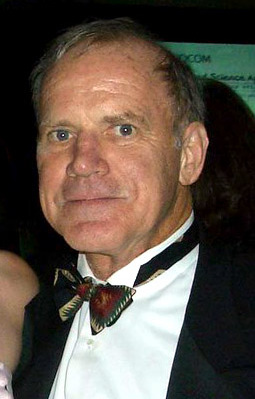
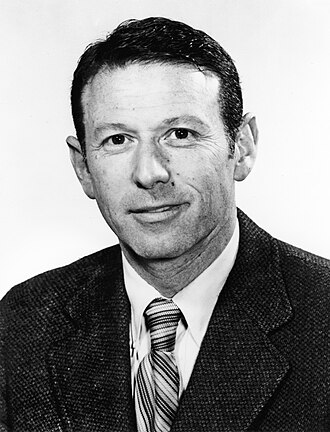
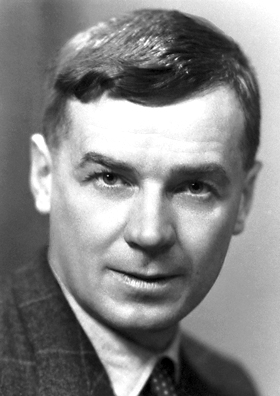
图:Bob Paz · CC BY-SA 3.0 · Wikimedia Commons
戴维·巴尔的摩1938—2025
David Baltimore
病毒学家, 美国
戴维·巴尔的摩,美国生物学家、学术机构高层,加州理工学院生物学教授,发现并分离逆转录酶,进而发现逆转录病毒,因此成为1975年诺贝尔生理学或医学奖获得者之一。
摘自维基百科「戴维·巴尔的摩」,CC BY-SA 4.0
- 出生
- 1938 年 3 月 7 日,曼哈顿
- 逝世
- 2025 年 9 月 6 日,伍兹霍尔
- 国籍
- 美国
- 学科
- 化学、生物学
- 职业
- 病毒学家、大学教师、微生物学家、生物化学家
- 母语 / 工作语言
- 英语
- 母校
- 斯沃斯莫尔学院(文学士,1960 年)、麻省理工学院(1961 年)、洛克菲勒大学(哲学博士,1964 年)、John L. Miller Great Neck North High School、William A. Shine Great Neck South High School
- 工作单位
- 麻省理工学院、加州理工学院、洛克菲勒大学、索尔克生物学研究所(1965—1968)
研究领域
师承
博士生6
来自 Wikidata 的「博士导师」「师从」「博士生」「学生」记录,可能不全。
所获奖项(15)
- 1971Warren Triennial Prize
- 1974盖尔德纳国际奖
- 1974NAS分子生物学奖
- 1975诺贝尔生理学或医学奖
- 1987英国皇家学会外籍会员
- 1997汉斯·克雷布斯爵士奖
- 1999美国国家科学奖章
- 2000华伦阿尔波特奖
- 2002AMA科学成就奖
- 2005哈佛大学名誉博士
- 2021Lasker-Koshland Special Achievement Award in Medical Science
- —欧洲分子生物学组织成员
- —美国科学促进会会士
- —美国文理科学院院士
- —Honorary Doctorate of University of Buenos Aires
学会与院士
百科正文
他曾担任加州理工学院院长、以及由加州理工学院与加州洛杉矶大学合作,进行基本转译科学研究转换至临床研究的转译医学联合中心主任。
生平
巴尔的摩为加州理工学院生物学教授,1997年5月13日被聘为校长,10月15日开始校长职务,校长任期到2006年。他还曾在1990年至1991年担任洛克菲勒大学校长,他在2007年曾任美国科学促进会会长。他发现并分离逆转录酶,进而发现逆转录病毒,因此成为1975年诺贝尔生理学或医学奖获得者之一。
1986年巴尔的摩因研究伙伴泰瑞莎·今西-加里涉嫌伪造研究成果,受到波及,史称巴尔的摩事件(Baltimore Case),对今西-加里的指控后来被澄清,而巴尔的摩本人未受任何指控。
2025年9月6日,巴尔的摩在马萨诸塞州伍兹霍尔的家中去世,享年87岁。
家庭生活
1968年巴尔的摩与黄诗厚博士结婚,育有一位女儿。
以上内容摘自维基百科「戴维·巴尔的摩」,按 CC BY-SA 4.0 使用,去掉了参考文献、外部链接等尾部小节,公式改写成了纯文本。全文、配图和出处见原文。
英文维基百科补充中文条目比较短,下面是英文条目「David Baltimore」的原文
David Baltimore (March 7, 1938 – September 6, 2025) was an American biologist, university administrator, and 1975 Nobel laureate in Physiology or Medicine. He was a professor of biology at the California Institute of Technology (Caltech), where he served as president from 1997 to 2006. He founded the Whitehead Institute and directed it from 1982 to 1990. In 2008, he served as president of the American Association for the Advancement of Science.
At age 37, Baltimore won the Nobel Prize with Renato Dulbecco and Howard M. Temin "for their discoveries concerning the interaction between tumour viruses and the genetic material of the cell", specifically the discovery of the enzyme reverse transcriptase. He contributed to immunology, virology, cancer research, biotechnology, and recombinant DNA research. He also trained many doctoral students and postdoctoral fellows, several of whom have gone on to notable and distinguished research careers. In addition to the Nobel Prize, he received a number of other awards, including the U.S. National Medal of Science in 1999 and the Lasker Award in 2021.
Early life and education
Baltimore was born on March 7, 1938, in Manhattan, New York, to Gertrude (Lipschitz) and Richard Baltimore. Raised in the Queens neighborhoods of Forest Hills and Rego Park, he moved with his family to suburban Great Neck, New York, while he was in second grade because his mother felt that the city schools were inadequate. His father had been raised as an Orthodox Jew and his mother was an atheist, and Baltimore observed Jewish holidays and would attend synagogue with his father through his Bar Mitzvah. He graduated from Great Neck North High School in 1956, and credits his interest in biology to a high-school summer spent at the Jackson Laboratory's Summer Student Program in Bar Harbor, Maine.
Career and research
After his PhD, Baltimore returned to MIT for postdoctoral research with James E. Darnell in 1963. He continued his work on virus replication using poliovirus and pursued training in enzymology with Jerard Hurwitz at Albert Einstein College of Medicine in 1964.
Independent investigator
In February 1965, Baltimore was recruited by Renato Dulbecco to the newly established Salk Institute for Biological Studies in La Jolla as an independent research associate. There he investigated poliovirus RNA replication and began a long and storied career of mentoring other scientists' early careers including Marc Girard, and Michael Jacobson. They discovered the mechanism of proteolytic cleavage of viral polyprotein precursors, pointing to the importance of proteolytic processing in the synthesis of eukaryotic proteins.
Controversies
Imanishi-Kari case
During the late 1980s and early 1990s, Thereza Imanishi-Kari, a scientist who was in a separate, independent, laboratory at MIT but who had collaborated with Baltimore, was implicated in a case of scientific fraud. The case received extensive news coverage and a Congressional investigation. The case was linked to Baltimore's name because of his scientific collaboration with and later his strong defense of Imanishi-Kari against accusations of fraud.
In 1986, while a professor of biology at MIT and director at Whitehead, Baltimore co-authored a scientific paper on immunology with Thereza Imanishi-Kari (an assistant professor of biology who had her own laboratory at MIT) as well as four others.
Personal life and death
Baltimore married Alice S. Huang in 1968. They had one daughter. Baltimore was an avid fly-fisher.
Baltimore died from cancer at his home in Woods Hole, Massachusetts, on September 6, 2025, at the age of 87.
Awards and honors
- 1971 First recipient of the Gustav Stern Award in Virology
- 1971 Warren Triennial Prize
- 1971 Eli Lilly Award in Immunology and Microbiology
- 1974 Fellow of the American Academy of Arts and Sciences
- 1974 NAS Award in Molecular Biology
- 1974 Canada Gairdner International Award
- 1975 Nobel Prize in Physiology or Medicine
- 1983 EMBO Member
- 1986 Golden Plate Award of the American Academy of Achievement
- 1999 National Medal of Science
- 2000 Warren Alpert Foundation Prize
- 2021 Lasker-Koshland Special Achievement Award in Medical Science
Honorary degrees
- 1976 Swarthmore College, Swarthmore, PA
- 1987 Mount Holyoke College, So. Hadley, MA
- 1990 Mount Sinai Medical Center, New York, NY
- 1990 Bard College, Annandale-on-Hudson, NY
- 1990 University of Helsinki, Helsinki, Finland
- 1998 Weizmann Institute of Science, Israel
以上节选摘自英文维基百科「David Baltimore」,按 CC BY-SA 4.0 使用,去掉了参考文献、外部链接等尾部小节,公式改写成了纯文本。篇幅所限,较长的小节只摘了开头一部分,有的小节没有收;全文、配图和出处见原文。