格物
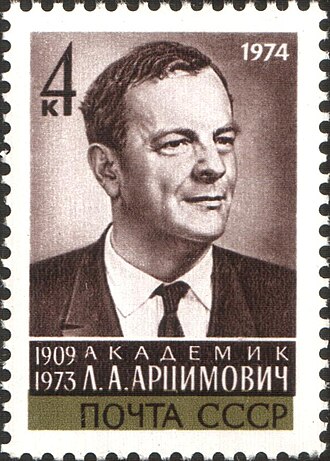
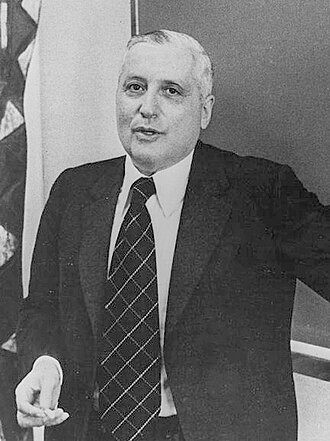
图:USSR Post · Public domain · Wikimedia Commons
- 出生
- 1909 年 2 月 12 日,莫斯科
- 逝世
- 1973 年 3 月 1 日,莫斯科
- 国籍
- 俄罗斯帝国、苏维埃俄国、苏联
- 学科
- 物理学、工程与发明、博物与综合
- 职业
- 物理学家、发明家、大学教师
- 母语 / 工作语言
- 俄语
- 母校
- Faculty of Physics and Mathematics of the Belarusian State University(1928 年)
- 工作单位
- 物理技术研究所(1930—1944)、库尔恰托夫研究所(1944—)、圣彼得堡国立大学(1932—1936)、国家核子研究大学(1946—)、MSU Faculty of Physics(1953—1973)
研究领域
主要贡献
代表成就
师承
来自 Wikidata 的「博士导师」「师从」「博士生」「学生」记录,可能不全。
所获奖项(8)
- 1953苏联国家奖
- —斯大林奖
- —列宁勋章
- —社会主义劳动英雄
- —列宁奖
- —红旗劳动勋章
- —美国文理科学院院士
- —State Stalin Prize, 1st degree
学会与院士
百科正文
生平
1950年代,他与库尔恰托夫研究所的物理学家伊戈尔·塔姆、安德烈·萨哈罗夫发明了托卡马克。1966年签署了反对为斯大林平反的《25人公开信》。1973年,月球上的阿齐莫维奇陨石坑以他的名字命名。
荣誉
- 苏联科学院院士(1953年)
- 苏联科学院主席团成员(1957年)
- 社会主义劳动英雄(1969年)
以上内容摘自维基百科「列夫·阿齐莫维奇」,按 CC BY-SA 4.0 使用,去掉了参考文献、外部链接等尾部小节,公式改写成了纯文本。全文、配图和出处见原文。
英文维基百科补充中文条目比较短,下面是英文条目「Lev Artsimovich」的原文
Lev Andreyevich Artsimovich (Russian: Лев Андреевич Арцимович, February 25, 1909 – March 1, 1973), also transliterated Arzimowitsch, was a Soviet physicist known for his contributions to the Tokamak— a device that produces controlled thermonuclear fusion power.
Prior to conceiving the idea on nuclear fusion, Artsimovich participated in the former Soviet program of nuclear weapons, and was a recipient of many former Soviet honors and awards.
Biography
Artsimovich was born on 25 February 1909 in Moscow in the Russian Empire. His family had Polish nobility roots; nonetheless, he was described as Russian by his biographer in 1985. His grandfather, a professor, was exiled to Siberia after the Polish uprising against Tsarist Russia in 1863 and married a Russian woman, later settling in Smolensk. His father was educated at Lviv University; his mother was a pianist trained in Switzerland. During the civil war, the family was very poor. The parents were forced to send their son to an orphanage, from where he ran away and was homeless for a while. After the end of the civil war, the family's situation gradually improved. In 1923, Soviet authorities moved the Artsimovich family (due to suspicion of Anti-bolshevist activity) to Minsk, where he found employment in the railroad industry and started training towards becoming a railroad engineer. After his father found employment at Belarus State University, Artsimovich was able to attend the physics program at Belarus State University, and graduated with a specialist degree in physics in 1928–29. After moving to Moscow, he found employment in Artem Alikhanian's laboratory, and joined the staff at the Ioffe Institute in 1930.
Initially, he worked on problems relating to nuclear physics and unsuccessfully defended his thesis for a Candidate of Sciences degree in 1937 and in 1939 at the Leningrad Polytechnical Institute, receiving only a written endorsement from the Ioffe Institute. During his lifetime, Artsimovich was recommended by many leading Soviet physicists to be conferred a Doktor Nauk (a Russian PhD), but the recommendations were later dismissed.
In 1945, Artsimovich joined the Soviet program of nuclear weapons, working on an electromagnetic method of isotope separation of uranium at Laboratory No. 2 along with Isaak Pomeranchuk. He was given Russian espionage files from Soviet agencies on the Manhattan Project's electromagnetic method. But the uranium enrichment under Artsimovich failed when it proved too costly since the electricity required for this work could not be produced by the Soviet power grid at that time. Despite being removed by Beria, Artsimovich continued work on gas discharges with support from Kurchatov at his Laboratory No. 2. After 1949, his work focused on the field of nuclear fusion by producing lithium-6 for the RDS-6s device.
From 1951 to his death in 1973, Artsimovich was the head of the fusion power program in the former Soviet Union and became known as "the father of the Tokamak", a special concept for a fusion reactor. He presented record-breaking results from the T-3 tokamak at the 3rd international fusion energy conference of the IAEA in 1968, setting off the worldwide "tokamak stampede". Once Artsimovich was asked when the first thermonuclear reactor would start its work. He replied: "When mankind needs it, maybe a short time before that."
In 1953, he became an academician of the Soviet Academy of Sciences and then a member of its Presidium in 1957. From 1963 to 1973, he was vice-chairman of the Russian chapter of the Pugwash Committee and chairman of the National Committee of Soviet Physicists.
Honours and awards
- 1946 – Member of the Academy of Sciences of the Soviet Union
- 1953 – Academician of the USSR
- 1953 – Stalin Prize, first class
1957 – Academician-secretary of the Department of General Physics and Astronomy, USSR Academy of Sciences, member of the Presidium of the USSR
- 1958 – Lenin Prize
- 1965 – Honorary Member of the Czechoslovak Academy of Sciences
- 1966 – Foreign Honorary Member of the American Academy of Arts and Sciences
- 1968 – Foreign Member of the Swedish Academy of Sciences
- 1969 – Honorary Member of the Yugoslav Academy of Sciences
- 1969 – Hero of Socialist Labour
- 1970 – Honorary Citizen of Texas (USA)
- 1971 – USSR State Prize
- 1972 – Honorary Doctor of the University of Warsaw
- Four Orders of Lenin
- Two Orders of the Red Banner of Labour
以上节选摘自英文维基百科「Lev Artsimovich」,按 CC BY-SA 4.0 使用,去掉了参考文献、外部链接等尾部小节,公式改写成了纯文本。篇幅所限,较长的小节只摘了开头一部分,有的小节没有收;全文、配图和出处见原文。
同一学科、同时代的科学家


同一学科的科学家
更多 ›