格物
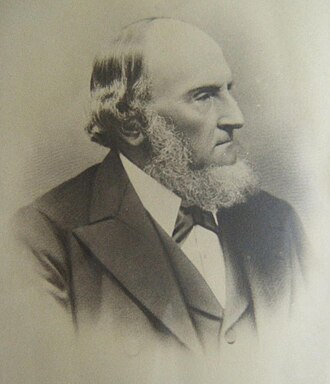
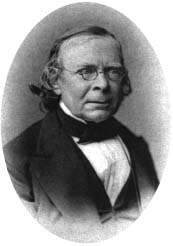
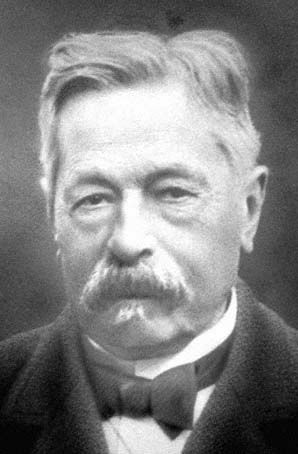
图:作者不详 · Public domain · Wikimedia Commons
爱德华·詹姆斯·斯通1831—1897
Edward James Stone
British astronomer (1831–1897)
爱德华·詹姆斯·史东 是一位英国天文学家。
摘自维基百科「愛德華·詹姆斯·史東」,CC BY-SA 4.0
- 出生
- 1831 年 2 月 28 日,诺丁山
- 逝世
- 1897 年 5 月 6 日,牛津
- 国籍
- 大不列颠及爱尔兰联合王国
- 学科
- 天文学、博物与综合
- 职业
- 天文学家
- 母语 / 工作语言
- 英语
- 母校
- 伦敦国王学院、剑桥大学女皇学院、剑桥大学
- 工作单位
- 格林尼治皇家天文台、雷德克里夫天文台
研究领域
所获奖项(2)
- 1869英国皇家天文学会金质奖章
- —英国皇家学会院士
学会与院士
百科正文
生平
他出生于伦敦诺丁山,父母是爱德华·史东和莎拉·史东。他毕业于伦敦城市学校,后来进入伦敦国王学院学习,并于1856年获得剑桥大学皇后学院的奖学金。1859年,他以第五名的成绩毕业,并立即被选为学院院士。
隔年,他接替罗伯特·梅恩牧师担任皇家格林威治天文台首席助理,并立即承担了改进天文常数的根本任务。其中最重要的太阳平均视差,在当时有相当大的不确定性。他透过1860年和1862年的火星观测获得了太阳视差的数值。后来,他透过研究1769年金星凌日的观测结果,进一步完善了他的估计。他还研究了月球视差,确定了月球的质量,并获得了常数值。1868 年,他当选为皇家学会会员。
以上内容摘自维基百科「愛德華·詹姆斯·史東」,按 CC BY-SA 4.0 使用,去掉了参考文献、外部链接等尾部小节,公式改写成了纯文本。全文、配图和出处见原文。
英文维基百科补充中文条目比较短,下面是英文条目「Edward James Stone」的原文
Edward James Stone FRS FRAS (28 February 1831 – 6 May 1897) was an English astronomer.
Life and career
He was born in Notting Hill, London to Edward and Sarah Stone. Educated at the City of London School, he obtained a studentship at King's College London, and in 1856 a scholarship at Queens' College, Cambridge, where he graduated as fifth wrangler in 1859, and was immediately elected fellow of his college.
The following year he succeeded the Rev. Robert Main as chief assistant at the Royal Greenwich Observatory, and at once undertook the fundamental task of improving astronomical constants. The most important of these, the Sun's mean parallax, was at that time subject to considerable uncertainty. He obtained a value for the solar parallax by observations of Mars in 1860 and 1862. He later refined his estimate by examining observations of the transit of Venus of 1769. He also studied the lunar parallax, and determined the mass of the Moon, and obtained a value for the constant of nutation. He was elected a Fellow of the Royal Society in 1868.
He was awarded the Gold Medal of the Royal Astronomical Society in 1869, and on the resignation of Sir Thomas Maclear in 1870 he was appointed Her Majesty's astronomer at the Cape of Good Hope. His first task on taking up this post was the reduction and publication of a large mass of observations left by his predecessor, from a selected portion of which (those made 1856–1860) he compiled a catalogue of 1,159 stars. His principal work was, however, a catalogue of 12,441 stars to the 7th magnitude between the South Pole and 25°S declination, which was practically finished by the end of 1878 and published in 1881.
Shortly after the death of Main on 9 May 1878, Stone was appointed to succeed him as Radcliffe Observer at Oxford, and he left the Cape on 27 May 1879. At Oxford he extended the Cape observations of stars to the 7th magnitude from 25°S declination to the equator, and collected the results in the Radcliffe catalogue for 1890, which contains the places of 6,424 stars.
Stone observed the transit of Venus of 1874 at the Cape, and organized the government expeditions for the corresponding event in 1882. He was elected President of the Royal Astronomical Society (1882–1884), and he was the first to recognize the importance of the old observations accumulated at the Radcliffe Observatory by Hornsby, Robertson and Rigaud. He successfully observed the total solar eclipse of 8 August 1896 at Novaya Zemlya, and intended a voyage to India for the eclipse of 1898, but died suddenly at the Radcliffe Observatory. The number of his astronomical publications exceeds 150, but his reputation depends mainly on his earlier work at Greenwich and his two great star catalogues—the Cape catalogue for 1880 and the Radcliffe catalogue for 1890.
He was elected to honorary membership of the Manchester Literary and Philosophical Society on 17 April 1894.
Personal life
He had married Grace Tuckett; they had at least four children.
以上内容摘自英文维基百科「Edward James Stone」,按 CC BY-SA 4.0 使用,去掉了参考文献、外部链接等尾部小节,公式改写成了纯文本。全文、配图和出处见原文。
同一学科、同时代的科学家
同一学科的科学家
更多 ›