格物
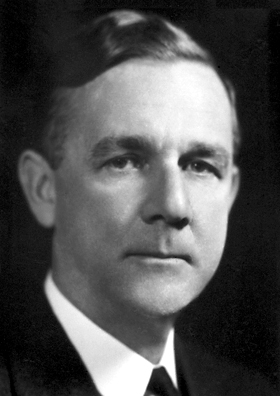
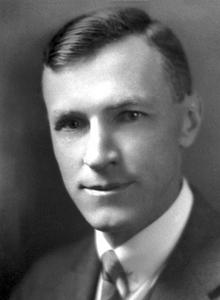
图:The Nobel Foundation · Public domain · Wikimedia Commons
乔治·惠普尔1878—1976
George Whipple
医生, 美国
乔治·惠普尔,美国医学家。毕业于安多佛菲利普斯学院。由于发现了治疗贫血的“肝脏疗法”,而与乔治·迈诺特及威廉·莫菲共同获得1934年的诺贝尔生理学或医学奖。
摘自维基百科「喬治·惠普爾」,CC BY-SA 4.0
- 出生
- 1878 年 8 月 28 日,阿什兰
- 逝世
- 1976 年 2 月 1 日,罗切斯特
- 国籍
- 美国
- 学科
- 医学
- 职业
- 医生、病理学家
- 母语 / 工作语言
- 英语
- 母校
- 耶鲁大学、约翰·霍普金斯大学医学院、菲利普斯学院、约翰·霍普金斯大学
- 工作单位
- 罗切斯特大学、加利福尼亚大学
研究领域
师承
来自 Wikidata 的「博士导师」「师从」「博士生」「学生」记录,可能不全。
所获奖项(3)
- 1934诺贝尔生理学或医学奖
- 1939George M. Kober Medal
- 1962洁西·史蒂文森·科瓦伦科奖章
学会与院士
百科正文
英文维基百科补充中文条目比较短,下面是英文条目「George Whipple」的原文
George Hoyt Whipple (August 28, 1878 – February 1, 1976) was an American physician, pathologist, biomedical researcher, and medical school educator and administrator. Whipple shared the Nobel Prize in Physiology or Medicine in 1934 with George Richards Minot and William Parry Murphy "for their discoveries concerning liver therapy in cases of anemia". This makes Whipple the first of several Nobel laureates affiliated with the University of Rochester.
Early life
Whipple was born to Ashley Cooper Whipple and Frances Anna Hoyt in Ashland, New Hampshire. Ashley Cooper Whipple was a physician, and his father (George's paternal grandfather) was a physician and President of the New Hampshire Medical Society. Whipple's father died from pneumonia or typhoid fever when George was just shy of two years old. His maternal grandfather also died when Whipple was two years old, and his paternal grandfather died a year later. This left Whipple to be raised by his mother, Frances, and grandmother, Frances Moody Hoyt, who impressed on him the value of hard work and education.
Education
Whipple attended Andover prep school and began attending Yale University as an undergraduate in 1896, earning A.B. degree in 1900. During these years, he developed as an outdoorsman, an affinity he would hold lifelong. He wrote in his autobiography about growing up in a lake district, "I feel very fortunate that I grew up in the country...I became interested in wild life and camping, also hiking, snowshoeing, skating, bob sledding, canoeing, fishing, hunting—all this was an essential part of my life". He even credited his love for the outdoors as a contributor to his successes in work, study, and teaching.
Career
In 1905, Whipple joined the pathology department at Johns Hopkins School of Medicine as an assistant in pathology. He was promoted successively to Assistant, Instructor, Associate and associate professor in pathology until he left in 1914. During this time, he spent a year in Panama at Ancon Hospital as a pathologist. In Panama, he worked with Samuel Darling, a resident pathologist, and General Gorgas to gain experience in tropical diseases. This experience afforded him the opportunity to study massive hemolysis associated with blackwater fever.
Retirement
In 1953, at 75 years old, Whipple retired from the Deanship, and retirement from the university would follow in 1955. He was remembered as a superb teacher. In his autobiography, A Dozen Doctors, Whipple wrote, "I would be remembered as a teacher". He spent his retirement years dabbling in pathology department and medical school activities at the University of Rochester, but returned to his outdoors-man roots, filling his time with pheasant hunting, salmon fishing on the Margaree River, and tarpon fishing off the coast in Florida.
Whipple died in 1976 at the age of 97 and his ashes were scattered in Rochester's Mount Hope Cemetery.
Whipple's research
Over the course of his career, Whipple authored or co-authored more than 300 publications.
Whipple's research interests during his career primarily included anemia and the physiology and pathology of the liver. But he also researched and made significant contributions to tuberculosis, pancreatitis, chloroform poisoning in animals, the metabolism of bile pigments and iron, the constituents of the bile, and the regeneration of plasma protein, protein metabolism, and the stroma of the red blood cells.
One of his first publications described the role of the lungs, lymphatic system, and gastrointestinal tract in the spread of tubercle bacillus causing tuberculosis.
Nobel Prize, honors and distinctions
Whipple shared the Nobel Prize in Physiology or Medicine in 1934 with George R. Minot and William P. Murphy "for their discoveries concerning liver therapy in cases of anemia".
In presenting the Nobel Prize, Professor I. Holmgren of the Nobel committee observed that "Of the three prize winners, it was Whipple who first occupied himself with the investigations for which the prize is now awarded.... Whipple's experiments were planned exceedingly well, and carried out very accurately, and consequently their results can lay claim to absolute reliability.
以上节选摘自英文维基百科「George Whipple」,按 CC BY-SA 4.0 使用,去掉了参考文献、外部链接等尾部小节,公式改写成了纯文本。篇幅所限,较长的小节只摘了开头一部分,有的小节没有收;全文、配图和出处见原文。