格物
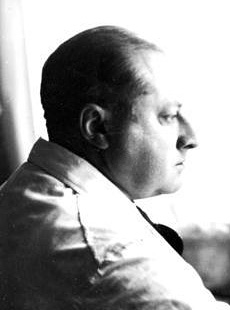
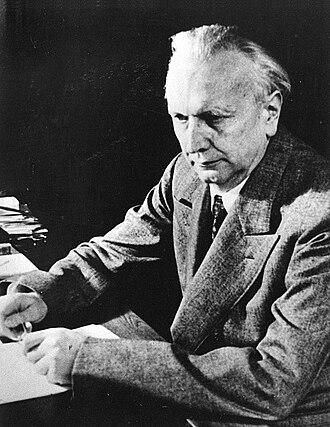
图:Bundesarchiv_Bild_183-1984-1116-500,_Gottfried_Benn-Arzt_und… · CC BY-SA 3.0 de · Wikimedia Commons
- 出生
- 1886 年 5 月 2 日,普特利茨
- 逝世
- 1956 年 7 月 7 日,西柏林
- 国籍
- 德国
- 学科
- 医学
- 职业
- 诗人、医师作家、散文家、小说家
- 母语 / 工作语言
- 德语
- 母校
- 波恩大学、耶拿大学、马尔堡大学
主要贡献
代表成就
所获奖项(2)
- 1951格奥尔格·毕希纳奖
- —Officer's Cross of the Order of Merit of the Federal Republic of Germany
学会与院士
百科正文
生平
1914年,贝恩即开始创作表现主义作品。1930年代,贝恩对魏玛共和国表示强烈的厌恶,并反对马克思主义以及美国化,因而他对新兴的纳粹主义表示强烈的支持。1932年,贝恩被选入普鲁士艺术科学院诗歌部。在经历长刀之夜之后,贝恩开始走向反纳粹的道路。1938年,纳粹政权开始禁止贝恩写作。战后,他的作品一度被禁,因为他曾支持希特勒。但不久之后,他重新开始创作。1951年,贝恩获得格奥尔格·毕希纳奖。1956年,逝世于柏林。
主要作品
《陈尸所和其他诗歌》(Morgue und andere Gedichte),1912年
- 《肉》(Fleisch),1917年
- 《瓦砾》(Schutt),1924年
- 《双重生活》(Doppelleben),1950年
- 《静态诗》 (Static Poetry),1949年
以上内容摘自维基百科「戈特弗里德·本恩」,按 CC BY-SA 4.0 使用,去掉了参考文献、外部链接等尾部小节,公式改写成了纯文本。全文、配图和出处见原文。
英文维基百科补充中文条目比较短,下面是英文条目「Gottfried Benn」的原文
Gottfried Benn (2 May 1886 – 7 July 1956) was a German poet, essayist, and physician. He was awarded the Georg Büchner Prize in 1951.
Biography and work
Family and beginnings
Gottfried Benn was born in a Lutheran country parsonage, a few hours from Berlin, the son and grandson of pastors in Mansfeld, now part of Putlitz in the district of Prignitz, Brandenburg. He was educated in Sellin in the Neumark and Frankfurt an der Oder. To please his father, he studied theology at the University of Marburg and military medicine at the Kaiser Wilhelm Academy in Berlin. After being laid off as a military doctor in 1912, Benn turned to pathology, where he dissected over 200 bodies between October 1912 and November 1913 in Berlin. Many of his literary works reflect on his time as a pathologist.
In the summer of 1912, Benn started a romantic relationship with the Jewish poet Else Lasker-Schüler.
Gottfried Benn began his literary career as a poet when he published a booklet titled Morgue and Other Poems in 1912, containing expressionist poems dealing with physical decay of flesh, with blood, cancer, and death — for example No III — Cycle:
Der einsame Backzahn einer Dirne, / die unbekannt verstorben war, / trug eine Goldplombe. / Die übrigen waren wie auf stille Verabredung / ausgegangen. / Den schlug der Leichendiener sich heraus, / versetzte ihn und ging für tanzen. / Denn, sagte er, / nur Erde solle zur Erde werden.
The solitary molar of a hooker, / who had died a missing person, / held a gold filling. / As if by silent agreement, the rest / had fallen out. / The mortician knocked out the filling, / pawned it and went dancing. / Because, he said, / only earth should return to earth.
Poems like this "were received by critics and public with shock, dismay, even revulsion." In 1913 a second volume of poems came out, titled Sons. New Poems.
Benn's poetry projects an introverted nihilism, that is, an existentialist outlook that views artistic expression as the only purposeful action. In his early poems Benn used his medical experience, often using medical terminology, to portray humanity morbidly as just another species of disease-ridden animal.
World War I and Weimar Republic
After the outbreak of World War I he enlisted in 1914, and spent a brief period on the Belgian front, then served as a military doctor in Brussels. Benn attended the court-martial and execution of Nurse and British spy Edith Cavell. He also worked as a physician in a hospital for prostitutes. After the war, he returned to Berlin and practiced as a dermatologist and venereal disease specialist.
During the 1920s, he continued having a close relationship with Jewish poet Else Lasker-Schüler who addressed love poems to him. This bond to her is the subject of the film Mein Herz-niemandem (1997) by Helma Sanders-Brahms.
During the Third Reich
Hostile to the Weimar Republic, and rejecting Marxism and Americanism, Benn was upset with ongoing economic and political instability, and sympathized for a short period with the Nazis, whom he incorrectly saw as a Conservative Revolutionary force. He hoped that National Socialism would exalt his aesthetics and that expressionism would become the official art of Germany, as Futurism had become in Italy. Benn was elected to the poetry section of the Prussian Academy in 1932 and appointed head of that section in February 1933. In May, he defended the new regime in a radio broadcast, saying "the German workers are better off than ever before." He later signed the Gelöbnis treuester Gefolgschaft, that is, the "vow of most faithful allegiance" to Adolf Hitler.
The cultural policy of the new State did not turn out the way he hoped, and in June Hans Friederich Blunck replaced Benn as head of the academy's poetry section. Appalled by the Night of the Long Knives, Benn turned away from the Nazis. He lived quietly, refraining from public criticism of the Nazi Party, but stated in a letter that recent events "gave me the final push [away from the regime]" and that the situation was a "dreadful tragedy". He decided to perform "the aristocratic form of emigration" and joined the Wehrmacht in 1935, where he found many officers sympathetic to his disapproval of the régime. In May 1936 the SS magazine Das Schwarze Korps attacked his expressionist and experimental poetry as degenerate, Jewish, and homosexual.
Reception
Benn had a great influence on German poetry immediately before World War I (as an expressionist), as well as after World War II (as the 'Static' poet). He was submitted for consideration for the Nobel Prize in Literature five times.
以上节选摘自英文维基百科「Gottfried Benn」,按 CC BY-SA 4.0 使用,去掉了参考文献、外部链接等尾部小节,公式改写成了纯文本。篇幅所限,较长的小节只摘了开头一部分,有的小节没有收;全文、配图和出处见原文。