格物

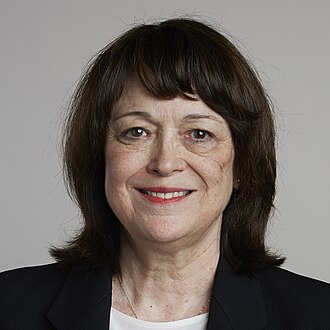
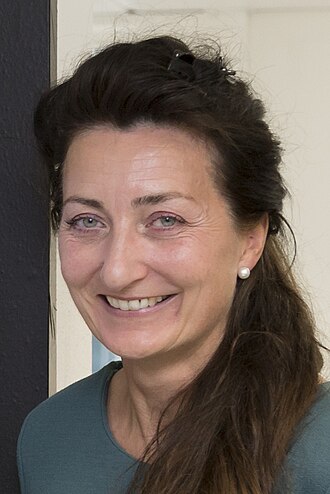
图:US Embassy Sweden · CC BY 4.0 · Wikimedia Commons
佛瑞德·拉姆斯德尔1960—
Fred Ramsdell
免疫学家, 美国
弗雷德里克·杰伊·“弗雷德”·拉姆斯德尔,生于美国伊利诺伊州埃尔姆赫斯特,美国免疫学家。
摘自维基百科「弗雷德·拉姆斯德尔」,CC BY-SA 4.0
- 出生
- 1960 年 12 月 4 日,埃尔姆赫斯特
- 国籍
- 美国
- 学科
- 生物学
- 职业
- 免疫学家
- 母语 / 工作语言
- 英语
- 母校
- 圣迭戈加利福尼亚大学(理学士,1983 年)、加州大学洛杉矶分校(博士,哲学博士,1987 年)
- 工作单位
- Parker Institute for Cancer Immunotherapy、国立卫生研究院、ZymoGenetics、诺和诺德、aTyr Pharma
研究领域
所获奖项(2)
- 2017克拉福德奖
- 2025诺贝尔生理学或医学奖
百科正文
教育与职业生涯
拉姆斯德尔于1960年出生于伊利诺伊州埃尔姆赫斯特市。
1983年,拉姆斯德尔从加州大学圣地亚哥分校取得生物学学士学位,1987年获得加州大学洛杉矶分校免疫学博士学位,在国家卫生院展开博士后研究,之后任职于西雅图地区的生物技术公司,曾任Darwin Molecular/Celltech、ZymoGenetics、诺和诺德和aTyr Pharma等公司高管。2016年起,担任旧金山帕克癌症免疫治疗研究所主任。
荣誉与奖项
拉姆斯德尔团队在患有皮屑病老鼠及IPEX症候群患儿身上发现叉头框P3基因(即FOXP3),该基因会引发严重的自身免疫性疾病,但在调节T细胞的发育过程中发挥关键作用。2017年,拉姆斯德尔与坂口志文、亚历山大·鲁登斯基的多关节炎研究获得克拉福德奖,获奖理由是“发现调节T细胞可以抵消关节炎和其他自身免疫性疾病中的破坏性免疫反应”。2025年,拉姆斯德尔与坂口志文、玛丽·E·布伦科因“发现外周免疫耐受”,共同获得诺贝尔生理学或医学奖。
以上内容摘自维基百科「弗雷德·拉姆斯德尔」,按 CC BY-SA 4.0 使用,去掉了参考文献、外部链接等尾部小节,公式改写成了纯文本。全文、配图和出处见原文。
英文维基百科补充中文条目比较短,下面是英文条目「Fred Ramsdell」的原文
Frederick Jay Ramsdell (born December 4, 1960) is an American immunologist and Nobel Prize laureate. As of 2025, he is an advisor at Sonoma Biotherapeutics, a biotechnology company co-founded by him.
In 2025, he was jointly awarded the Nobel Prize in Physiology or Medicine with Mary E. Brunkow and Shimon Sakaguchi for their work in peripheral tolerance.
Early life and education
Ramsdell was born on December 4, 1960, in Elmhurst, Illinois.
After graduating from Homestead High School (California) in 1979, Ramsdell initially attended Foothill College because he could not afford a four-year UC education, before transferring to University of California, San Diego. He received a Bachelor of Science degree with a major in biochemistry and cell biology from UCSD in 1983. In the same year, he enrolled at the University of California, Los Angeles, as a doctoral student, and studied microbiology and immunology under the mentorship of Sidney Golub, receiving his PhD in 1987.
Career
Ramsdell qualified for food stamps as a graduate student when he began his fellowship at the National Institutes of Health for postgraduate training after earning his PhD. After that, he joined the biopharmaceutical company Immunex, where his research focus was T cell activation and tolerance, and gene discovery. In 1994, he joined the Bothell, Washington-based biotechnology company Darwin Molecular (along with Mary E. Brunkow), where he established an immunology program. Darwin Molecular was acquired by Chiroscience in 1996. Three years later, Chiroscience merged with Celltech (briefly under the name Celltech Chiroscience). In 2004, Ramsdell and Brunkow left the company.
He joined ZymoGenetics in 2004 where he led research teams focusing on novel proteins with potential regulatory activity in lymphoid cells. In 2008, he started working at Novo Nordisk where he helped establish the firm's Inflammation Research Center in Seattle and became leader of the immunobiology group.
Later, he served as vice president at aTyr Pharma in San Diego, before joining the Parker Institute for Cancer Immunotherapy in San Francisco, where he was chief scientific officer.
In 2019, he co-founded the San Francisco-based Sonoma Biotherapeutics with Jeffrey Bluestone, Qizhi Tang and Alexander Rudensky, where he held the role of chief scientific officer. As of 2025, he is the chair of the company's scientific advisory board.
Research
In the 1990s, while working at Celltech in Bothell, Washington, Ramsdell and Brunkow studied a strain of mice, called scurfy, characterized by serious autoimmune disease, setting out to identify the mutation responsible for the phenotype. After establishing a candidate region on the X chromosome containing approximately 20 potential genes, they identified an insertion of two base pairs in a previously unknown gene, which they named Foxp3. In 2001, in collaboration with Hans D. Ochs, Robert Wildin, and their teams, Ramsdell and Brunkow demonstrated that mutations in the human FOXP3 gene are found in IPEX syndrome, a rare autoimmune disease.
Honors and awards
In 2017, Ramsdell received, jointly with Shimon Sakaguchi and Alexander Rudensky, the Crafoord Prize for research in polyarthritis. They were cited for "their discoveries relating to regulatory T cells, which counteract harmful immune reactions in arthritis and other autoimmune diseases".
Ramsdell was jointly awarded, with Sakaguchi and Mary E. Brunkow, the 2025 Nobel Prize in Physiology or Medicine. On the day of the announcement, he was unable to be contacted to receive his prize, as he was hiking off the grid in Idaho. Ramsdell later told the BBC that his first response when he did learn the news from his wife was "I did not!", to which she replied that she had 200 text messages suggesting otherwise. When in Sweden to receive the award, Ramsdell donated the hiking boots he was wearing when he found out he had won the Prize to the Nobel Prize Museum.
以上内容摘自英文维基百科「Fred Ramsdell」,按 CC BY-SA 4.0 使用,去掉了参考文献、外部链接等尾部小节,公式改写成了纯文本。全文、配图和出处见原文。
同年获同一奖项
同一学科、同时代的科学家






同一学科的科学家
更多 ›