格物
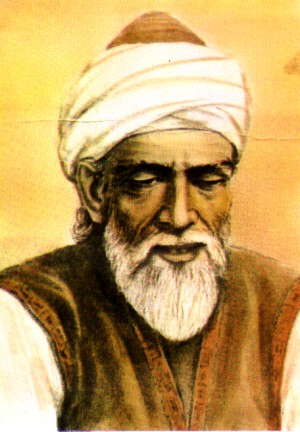
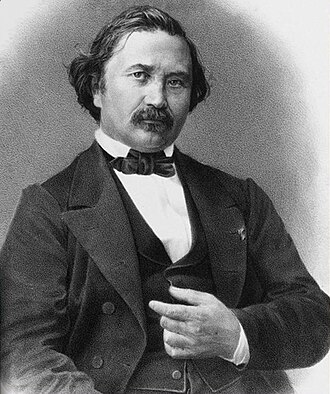
图:作者不详 · Public domain · Wikimedia Commons
阿布·瓦法940—998
Abu al-Wafa Buzjani
Persian mathematician and astronomer (940–998)
阿布·瓦法·穆罕默德·本·穆罕默德·本·叶海亚·本·易司马仪·本·阿巴斯·布詹尼,一般简称为阿布·瓦法·布詹尼,波斯数学家、天文学家。他是阿拉伯天文学巴格达学派的代表人物之一,在巴格达建造了当地第一座观测天体的象限仪台,曾测定过黄赤交角和春秋分点,被一些人认为是月球二均差的发现者。在三角学方面也有重要贡献,他编制了正弦表、正切表和余切表,精确到了小数点后9位。引入了正割和余割的概念。证明了球面三角形的正弦定理,运用正切定理解球面三角形。著作有《几何作图》《算术应用》等。998年在巴格达逝世。
摘自维基百科「阿布·瓦法」,CC BY-SA 4.0
- 出生
- 940 年 6 月 10 日,布詹
- 逝世
- 998 年 7 月 15 日,巴格达
- 学科
- 数学、天文学、博物与综合
- 职业
- 数学家、天文学家
- 母语 / 工作语言
- 阿拉伯语、波斯语
研究领域
师承
来自 Wikidata 的「博士导师」「师从」「博士生」「学生」记录,可能不全。
百科正文
英文维基百科补充中文条目比较短,下面是英文条目「Abu al-Wafa' al-Buzjani」的原文
Abū al-Wafāʾ Muḥammad ibn Muḥammad ibn Yaḥyā ibn Ismāʿīl ibn al-ʿAbbās al-Būzjānī (Persian: ابو الوفاء بوژگانی, Arabic: ابو الوفاء بوزجانی; 10 June 940 – 15 July 998) was a Persian mathematician and astronomer who worked in Baghdad. He made important innovations in spherical trigonometry, and his work on arithmetic for businessmen contains the first instance of using negative numbers in a medieval Islamic text.
He is also credited with compiling the tables of sines and tangents at 15' intervals. He also introduced the secant and cosecant functions, as well studied the interrelations between the six trigonometric lines associated with an arc. His Almagest was widely read by medieval Arabic astronomers in the centuries after his death. He is known to have written several other books that have not survived.
Life
Abū al-Wafāʾ was born in Buzhgan, (now Torbat-e Jam) in Khorasan (in today's Iran). At age 19, in 959, he moved to Baghdad and remained there until his death in 998. He was a contemporary of the distinguished scientists Abū Sahl al-Qūhī and al-Sijzi who were in Baghdad at the time and others such as Abu Nasr Mansur, Abu-Mahmud Khojandi, Kushyar Gilani and al-Biruni. In Baghdad, he received patronage from members of the Buyid court.
Astronomy
Abū al-Wafāʾ was the first to build a wall quadrant to observe the sky. It has been suggested that he was influenced by the works of al-Battani as the latter described a quadrant instrument in his Kitāb az-Zīj. His use of the concept of the tangent helped solve problems involving right-angled spherical triangles. He developed a new technique to calculate sine tables, allowing him to construct more accurate tables than his predecessors.
In 997, he participated in an experiment to determine the difference in local time between his location, Baghdad, and that of al-Biruni (who was living in Kath, now a part of Uzbekistan). The result was very close to present-day calculations, showing a difference of approximately 1 hour between the two longitudes. Abū al-Wafāʾ is also known to have worked with Abū Sahl al-Qūhī, who was a famous maker of astronomical instruments. While what is extant from his works lacks theoretical innovation, his observational data were used by many later astronomers, including al-Biruni.
Almagest
Among his works on astronomy, only the first seven treatises of his Almagest (Kitāb al-Majisṭī) are now extant. The work covers numerous topics in the fields of plane and spherical trigonometry, planetary theory, and solutions to determine the direction of Qibla.
Mathematics
He defined the tangent function, and he established several trigonometric identities in their modern form, where the ancient Greek mathematicians had expressed the equivalent identities in terms of chords. The trigonometric identities he introduced were: sin(a± b)=sin(a)cos(b)± cos(a)sin(b)
cos cos(2a)=1-2sin ²(a)
sin sin(2a)=2sin(a)cos(a)
He has discovered the law of tangents and may have discovered the law of sines for spherical triangles, however, other scholars like Abu-Mahmud Khojandi have been credited with the latter achievement: (sin A)/(sin a)=(sin B)/(sin b)=(sin C)/(sin c)
where A,B,C are the sides of the triangle (measured in radians on the unit sphere) and a,b,c are the opposing angles.
Some sources suggest that he introduced the tangent function, although other sources give the credit for this innovation to al-Marwazi.
Legacy
The crater Abul Wáfa on the Moon is named after him.
On 10 June 2015, Google changed its logo in memory of Abū al-Wafāʾ al-Būzjānī.
以上内容摘自英文维基百科「Abu al-Wafa' al-Buzjani」,按 CC BY-SA 4.0 使用,去掉了参考文献、外部链接等尾部小节,公式改写成了纯文本。全文、配图和出处见原文。
同一学科、同时代的科学家
同一学科的科学家
更多 ›