格物
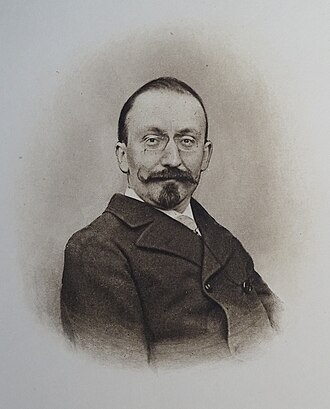
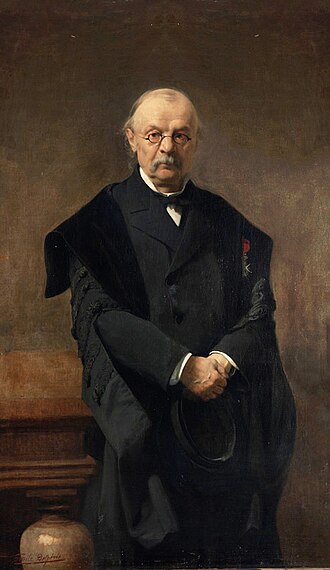
图:作者不详 · Public domain · Wikimedia Commons
Louis Couturat1868—1914
French logician, mathematician, philosopher and linguist (1868–1914)
Louis Couturat was a French logician, mathematician, philosopher, and linguist. Couturat was a pioneer of the constructed language Ido.
摘自英文维基百科「Louis Couturat」(英文维基百科,暂无中文条目),CC BY-SA 4.0
- 出生
- 1868 年 1 月 17 日,里斯-奥朗日斯
- 逝世
- 1914 年 8 月 3 日,里斯-奥朗日斯
- 国籍
- 法国
- 学科
- 数学、博物与综合
- 职业
- 哲学家、数学家、语言学家、数学史学家
- 母语 / 工作语言
- 世界语、伊多语、法语
- 母校
- 高等师范学校(1890 年)、巴黎大学(博士,1896 年)、孔多塞高级中学(1887 年)
- 工作单位
- 图卢兹大学(1895—1896)、法兰西公学院(1905—1906)、卡昂大学(1897—1899)
研究领域
师承
师从1
来自 Wikidata 的「博士导师」「师从」「博士生」「学生」记录,可能不全。
百科正文
本条目暂无中文维基百科条目,下面是英文维基百科原文。
Life and education
Born in Paris. In 1887 he entered École Normale Supérieure to study philosophy and mathematics. In 1895 he lectured in philosophy at the University of Toulouse and 1897 lectured in philosophy of mathematics at the University of Caen Normandy, taking a stand in favor of transfinite numbers. After a time in Hanover studying the writings of Leibniz, he became an assistant to Henri-Louis Bergson at the Collège de France in 1905.
Career
He was the French advocate of the symbolic logic that emerged in the years before World War I, thanks to the writings of Charles Sanders Peirce, Giuseppe Peano and his school, and especially to The Principles of Mathematics by Couturat's friend and correspondent Bertrand Russell. Like Russell, Couturat saw symbolic logic as a tool to advance both mathematics and the philosophy of mathematics. In this, he was opposed by Henri Poincaré, who took considerable exception to Couturat's efforts to interest the French in symbolic logic. With the benefit of hindsight, we can see that Couturat was in broad agreement with the logicism of Russell, while Poincaré anticipated Brouwer's intuitionism.
His first major publication was De Platonicis mythis (1896). In 1901, he published La Logique de Leibniz, a detailed study of Leibniz the logician, based on his examination of the huge Leibniz Nachlass in Hanover. Even though Leibniz had died in 1716, his Nachlass was cataloged only in 1895. Only then was it possible to determine the extent of Leibniz's unpublished work on logic. In 1903, Couturat published much of that work in another large volume, his Opuscules et Fragments Inedits de Leibniz, containing many of the documents he had examined while writing La Logique. Couturat was thus the first to appreciate that Leibniz was the greatest logician during the more than 2000 years that separate Aristotle from George Boole and Augustus De Morgan. A significant part of the 20th century Leibniz revival is grounded in Couturat's editorial and exegetical efforts. This work on Leibniz attracted Russell, also the author of a 1900 book on Leibniz, and thus began their professional correspondence and friendship.
In 1905, Couturat published a work on logic and the foundations of mathematics (with an appendix on Kant's philosophy of mathematics) that was originally conceived as a translation of Russell's Principles of Mathematics. In the same year, he published L'Algèbre de la logique, a classic introduction to Boolean algebra and the works of C.S. Peirce and Ernst Schröder.
In 1907, Couturat helped found the constructed language Ido, an offshoot of Esperanto, and was Ido's principal advocate over the remainder of his life. By advocating a constructed international language, constructed along logical principles and with a vocabulary taken from existing European languages, Couturat was paralleling Peano's advocacy of Interlingua. By pushing Ido, Couturat walked in Leibniz's footsteps: Leibniz called for the creation a universal symbolic and conceptual language he named the characteristica universalis.
Couturat, a confirmed pacifist, was killed when his car was hit by a car carrying orders for the mobilization of the French Army, in the first stage of World War I.
He appears as a character in Joseph Skibell's 2010 novel, A Curable Romantic.
以上内容摘自英文维基百科「Louis Couturat」,按 CC BY-SA 4.0 使用,去掉了参考文献、外部链接等尾部小节,公式改写成了纯文本。全文、配图和出处见原文。
同一学科、同时代的科学家

同一学科的科学家
更多 ›