格物
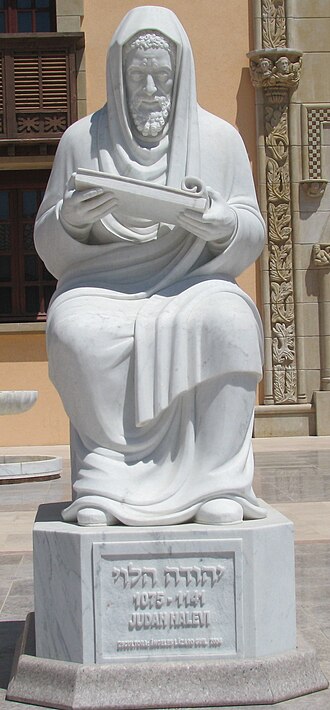
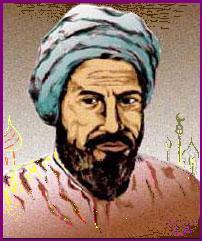
图:Raananms at Hebrew Wikipedia · Public domain · Wikimedia Commons
- 出生
- 1075 年,图德拉
- 逝世
- 1141 年,耶路撒冷
- 学科
- 医学
- 职业
- 诗人、神学家、哲学家、医生
- 母语 / 工作语言
- 西班牙语、希伯来语、阿拉伯语、犹太-阿拉伯语
主要贡献
代表成就
师承
师从1
来自 Wikidata 的「博士导师」「师从」「博士生」「学生」记录,可能不全。
学会与院士
百科正文
英文维基百科补充中文条目比较短,下面是英文条目「Judah Halevi」的原文
Judah haLevi (also Yehuda Halevi or ha-Levi; Hebrew: יהודה בן שמואל הלוי, romanized: Yəhūḏā ben Šəmūʾēl ha-Lēvī; Arabic: أبو الحسن يهوذا اللاوي, romanized: Abū-l-Ḥasan Yahūḏā al-Lāwī; c. 1075–1141) was a Sephardic Jewish poet, physician and philosopher. HaLevi is considered one of the greatest Hebrew-language poets and is celebrated for his secular and religious poems, many of which appear in present-day Jewish liturgy.
Judah haLevi was born in either Tudela or Toledo in Al-Andalus, then under Almoravid rule. Although little is known about his early life or education, it is clear that he was well-versed in Arabic, Hebrew, and classical sciences, including medicine and philosophy. In his youth, he began composing Hebrew poetry, and his reputation eventually reached Moses ibn Ezra in Granada. After initial difficulties in traveling due to political shifts, haLevi was able to establish literary connections across major Jewish centers in al-Andalus.
HaLevi's poetic corpus includes a wide array of genres, including panegyrics, friendship poems, wine songs, riddles, didactic verse, and wedding poems. However, he is best remembered for his Zionides (צִיוֹנִים, Tsiyyonim, '[songs of] Zion')—piyyutim that powerfully express longing for the Land of Israel. Among the most enduring is Tziyyon ha-lo tishali (צִיּוֹן הֲלֹוא תִשְׁאֲלִי, 'Zion, do you not inquire'), which became part of synagogue liturgy and was imitated widely. Another famous poem, Libi b'Mizraḥ (לִבִּי בְּמִזְרָח, 'My heart is in [the] East'), articulates his internal conflict between the comforts of Spain and his spiritual connection to Zion, contrasting the "West" (Spain) with the "East" (the Land of Israel). In addition to poetry, haLevi wrote a philosophical treatise commonly known as the Kuzari, which presents a polemical defense of Judaism. The speaker affirms the truth of revealed religion and argues for the spiritual centrality of the Jewish people and their unique connection to the Land of Israel.
Late in life, Judah haLevi resolved to leave Spain and settle in the Holy Land. He reached Egypt in 1140, where he was warmly received and remained in Alexandria for a year at the request of admirers. In 1141, he sailed for the Land of Israel (then the Crusader Kingdom of Jerusalem), though he likely died shortly after, possibly at sea or near the gates of Jerusalem.
Biography
Judah ben Samuel haLevi was born either in Toledo, Spain, or Tudela, Navarre, both then ruled by the Almoravid dynasty, between 1075 and 1080. The confusion surrounding his place of birth arises from unclear text in a manuscript. Both cities were under Muslim control when he grew up but were conquered by Christian rulers during his lifetime; Toledo by Alfonso VI of León and Castile in 1085, and Tudela by Alfonso the Battler in 1118.
Poetry
HaLevi's work covers common subjects in Spanish-Jewish poetry and draws on the forms and artistic patterns of both secular and religious poetry. Some formats include the zajal, the muwaššaḥ, and poems utilizing internal rhyme, classical monorhyme patterns, and the then-recently invented strophic form. About 800 of his poems are known today. Independent haLevi scholar Jose de la Fuente Salvat elevated him to the "most important poet in Judaism of all time".
Philosophy
Halevi studied philosophy as a youth. He admired it but criticized it, in a way comparable to al-Ghazali. In the Kuzari, he confronts Aristotelian philosophy, Christianity and Islam and expounds his views upon the teachings of Judaism, speaking in favor of accessing God through tradition and devotion rather than philosophical speculation. The work was originally written in Arabic, and entitled Kitab al-Ḥujjah wal-Dalil fi Nuṣr al-Din al-Dhalil, كتاب الحجة و الدليل في نصرة الدين الذليل,.
Editions, translations and commentaries
Heinrich Brody, Dîwân des Abû-l-Hasan Jehudah ha-Levi/Diwan wĕ-hu 'sefer kolel šire 'abir ha-mešorerim Yĕhudah ben Šĕmu'el ha-Levi. 4 vols (Berlin: Itzkowski, 1894-1930): vol. 1, vol. 2 part 2 (notes), pp. 157-330, vol. 3, pp. 1-144, vol. 3, pp. 145-308, vol. 4. According to a 2002 assessment, this is 'a flawed edition marred by numerous textual mistakes and by the erroneous inclusion of poems by other poets. It was also far from including ha-Levi's complete oeuvre'.
以上节选摘自英文维基百科「Judah Halevi」,按 CC BY-SA 4.0 使用,去掉了参考文献、外部链接等尾部小节,公式改写成了纯文本。篇幅所限,较长的小节只摘了开头一部分,有的小节没有收;全文、配图和出处见原文。