格物
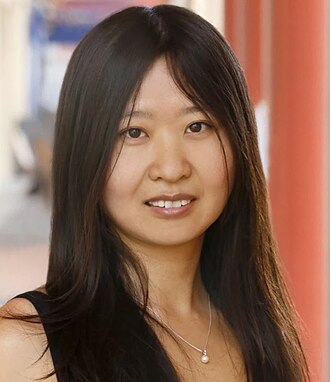
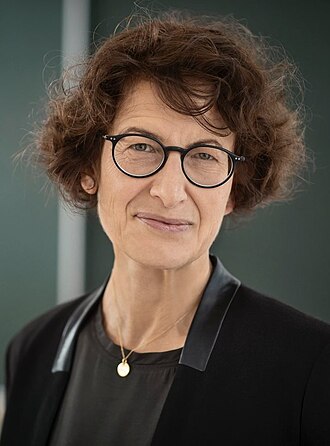
图:Giantnanoassembler · CC BY-SA 4.0 · Wikimedia Commons
- 出生
- 1975 年,常州市
- 国籍
- 美国、中华人民共和国
- 学科
- 生物学
- 职业
- 神经学家、大学教师
- 母语 / 工作语言
- 英语
- 母校
- 加州理工学院、哈佛大学、泉溪高中
- 工作单位
- 加州理工学院(2009—)、不来梅大学(2006—2009)
所获奖项(7)
- 2004柯瓦列夫斯卡娅奖
- 2012国立卫生研究院院长先驱奖
- 2014Golden Brain Award
- 2016W·艾尔登·斯宾塞奖
- 2018麦克阿瑟天才奖
- 2020Karl Spencer Lashley Award
- 2024Kavli Prize in Neuroscience
学会与院士
百科正文
生平
出生于中国江苏省常州市,曾在加州理工学院任职,现为加利福尼亚大学柏克莱分校生物学教授,研究方向为通过功能性磁共振成像(fMRI)来认识大脑进行人脸识别时的变化,2009年获斯隆奖,2018年获麦克阿瑟奖,2020年当选美国国家科学院院士。其丈夫为加利福尼亚大学柏克莱分校电子及电脑工程系助理教授Grigory Tikhomirov
以上内容摘自维基百科「曹颖 (神经科学家)」,按 CC BY-SA 4.0 使用,去掉了参考文献、外部链接等尾部小节,公式改写成了纯文本。全文、配图和出处见原文。
英文维基百科补充中文条目比较短,下面是英文条目「Doris Tsao」的原文
Doris Ying Tsao is an American neuroscientist and professor of neurobiology and molecular cell biology at the University of California, Berkeley. She was formerly on the faculty at the California Institute of Technology for 12 years. She is recognized for pioneering the use of fMRI with single-unit electrophysiological recordings and for discovering the macaque face patch system for face perception. She is a Howard Hughes Medical Institute Investigator and the director of the T&C Chen Center for Systems Neuroscience. She won a MacArthur "Genius" fellowship in 2018. Tsao was elected a member of the National Academy of Sciences in 2020. In 2024 she was awarded a Kavli Prize in neuroscience along with Nancy Kanwisher and Winrich Freiwald for the discovery and study of specific areas in the brain that perform facial recognition. In 2024, Tsao received the Rosenstiel Award. After joining UC Berkeley in 2021, her current research
explores visual perception in primates in order to understand how the brain creates our sense of reality.
Early life and education
Tsao was born in Changzhou, China before her family immigrated to the United States when she was four. She grew up in College Park, Maryland and attended Springbrook High School. Her interest in science and in visual neuroscience in particular was inspired by the Feynman Lectures and Kant's Critique of Pure Reason. She completed her B.S. in biology and mathematics in just three years at Caltech in 1996. She then worked with Margaret Livingstone at the Harvard Medical School, where she received her PhD in neuroscience in 2002 and continued to work as a postdoctoral fellow. In 2004 she received the Sofia Kovalevskaya Award from the Humboldt Foundation, which allowed her to start her own independent research group at the University of Bremen in Germany from 2004 to 2008. In 2009 she joined the faculty at Caltech to teach biology, where she also became a Leadership Chair of the Tianqiao and Chrissy Chen Center for Systems Neuroscience.
She went on to join the Allen Institute for Brain Science symposium in 2010.
Career and research
As a PhD student working with Margaret Livingstone, Tsao began by studying stereopsis in macaques using single-unit electrophysiological recordings. She then became interested in using fMRI, a technique usually used to visualize the activity of brain areas in humans, to image brain regions in macaques. She collaborated with Roger Tootell to use fMRI to image brain regions involved in depth perception, and then collaborated with Winrich Freiwald, a postdoctoral fellow working with Nancy Kanwisher at MIT, to combine single-unit electrophysiology with fMRI to study face perception in macaques. Similar to the fusiform face area identified in humans with, they discovered a series of small brain areas, referred to as the macaque face patch system, that contain neurons which are selectively activated by faces. Tsao and her lab have continued to make significant advances in understanding the specific facial features that cause neurons in these face patches to be activated. In 2017, her lab "cracked the code" of how our brains recognize faces, identifying the feature dimensions that cause face-selective neurons in different face patches of the IT cortex to respond to faces. Thus, the images of faces presented to the monkeys could be precisely reconstructed from face-selective neurons' activity.
Tsao was named in MIT Technology Review's TR35 list in 2007. She is serving on the Advisory Committee to the NIH Director (BRAIN Initiative Working Group 2.0) established in 2018, the group that advises on allocation of $1.511 billion toward neuroscience research.
以上内容摘自英文维基百科「Doris Tsao」,按 CC BY-SA 4.0 使用,去掉了参考文献、外部链接等尾部小节,公式改写成了纯文本。全文、配图和出处见原文。
同一学科、同时代的科学家




同一学科的科学家
更多 ›