格物
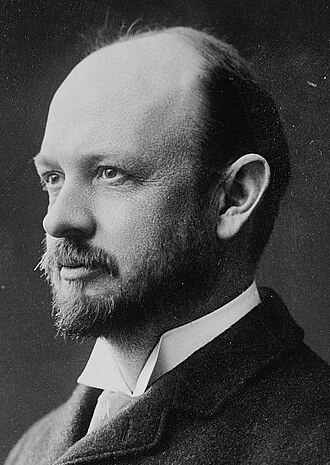
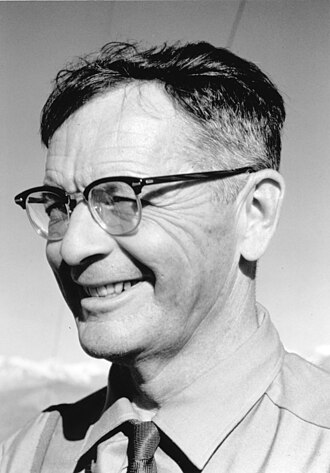
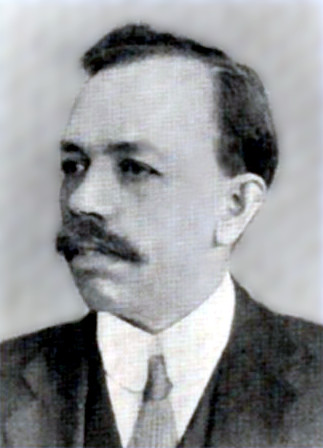
图:Unknown (Bain News Service, publisher) · Public domain · Wikimedia Commons
- 出生
- 1858 年 2 月 15 日,波士顿
- 逝世
- 1938 年 1 月 17 日,曼德维尔
- 国籍
- 美国
- 学科
- 天文学、博物与综合
- 职业
- 天文学家
- 母语 / 工作语言
- 英语
- 母校
- 麻省理工学院
- 工作单位
- 哈佛大学、麻省理工学院
研究领域
主要贡献
本站收录的发现与发明
所获奖项(4)
- 1905拉朗德奖
- 1909皮埃尔·让森奖
- 1964Golden Plate Award
- —美国文理科学院院士
学会与院士
百科正文
成就
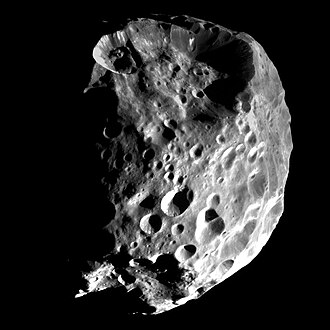
1899年皮克林在1898年拍的底片上发现了土星的第九颗卫星。1905年他觉得自己在1904年拍的底片上还发现了土星的第十颗卫星,但是这个发现不是真的。
皮克林追随乔治·达尔文的理论,于1907年猜测月球曾经是地球的一部分,太平洋是它分裂出去后形成的。他还提出一个类似大陆漂移学说的理论(在阿尔弗雷德·魏格纳之前),认为美洲、亚洲、非洲和欧洲曾经组成一个统一的大陆,但是在月球分离后分开来了。
1908年的时候他评论当时还没有被发明的飞机道:“一个常见的幻想是在战时可以使用飞机向敌人扔炸弹”。
他带领观察日食的考察队和研究月球上的撞击坑。他猜测“月球昆虫”导致厄拉多塞陨石坑外形的变化。他宣称在月球上发现了植物。
1919年基于天王星和海王星轨道的异常他预言有一颗假设的海王星外天体,但是搜索威尔逊山天文台的照片未能找到这颗行星。1930年罗威尔天文台的克莱德·汤博发现了冥王星,但是冥王星的质量太小了,依然不能解释天王星和海王星的轨道。今天我们知道这些异常是因为当时计算行星轨道时对行星的质量的估计错误导致的。皮克林认为冥王星的符号里包括他和帕西瓦尔·罗威尔的名字缩写。
皮克林设计和建立了多座天文台或天文观察站,其中包括罗威尔的天文台。他晚年在牙买加他的私人天文台里待了很多时间。他发表了一份照片月球图。
月球上的皮克林陨石坑和火星上的皮克林陨击坑都是以他和他的哥哥命名的。
以上内容摘自维基百科「威廉·亨利·皮克林」,按 CC BY-SA 4.0 使用,去掉了参考文献、外部链接等尾部小节,公式改写成了纯文本。全文、配图和出处见原文。
英文维基百科补充中文条目比较短,下面是英文条目「William Henry Pickering」的原文
William Henry Pickering (February 15, 1858 – January 16, 1938) was an American astronomer. Pickering constructed and established several observatories or astronomical observation stations, notably including Percival Lowell's Flagstaff Observatory. He spent much of the later part of his life at his private observatory in Jamaica.
Early life
William Pickering was born on February 15, 1858, in Boston, Massachusetts. His parents were Charlotte (née Hammond) and Edward Pickering. His older brother was Edward Charles Pickering, director of the Harvard College Observatory from 1876 to 1920.
He attended secondary schools in Boston and Cambridge. In 1878, he published his observations of the coronal polarization of the 1878 solar eclipse in Colorado.
He graduated from the Massachusetts Institute of Technology (MIT) with a bachelor in science in 1879.
Career
Pickering was an instructor in physics at MIT from 1880 to 1887. As early as 1882, pioneered in celestial photography. In 1883, he was elected a Fellow of the American Academy of Arts and Sciences at the age of 25.
In 1887, he became an assistant professor of astronomy at the Harvard College Observatory, teaching there until 1893. He either led or participated in Harvard's solar eclipse expeditions in Grenada in 1886, California in 1889, Chile in 1893, Georgia in 1900, and New England in 1932. In 1888, he took some of the first photographs of Mars.
He selected the site for the Mount Wilson Observatory of Los Angeles County, California in 1889. In 1891, he established the Boyden astronomical station for the Harvard College Observatory in Arequipa, Peru. In 1894, he set up the Lowell Observatory and telescope for Percival Lowell in Flagstaff, Arizona.
Pickering discovered Saturn's ninth moon Phoebe in 1899 from plates taken in 1898. In 1900, he established an astronomical station for the Harvard College Observatory in Mandeville, Jamaica. He produced a photographic atlas, The Moon: A Summary of the Existing Knowledge of our Satellite, in 1903. In 1905, he conducted studies of volcanic craters in Hawaii, noting their similarity to those of the moon. This was followed by similar studies in Canada, Alaska, and the Azores.
Pickering discovered a tenth Saturnian moon in 1905 from plates taken in 1904, which he called "Themis". For this discovery, he was awarded the Lalande Prize of the French Academy of Sciences in 1905. "Themis" was later shown not to exist.
Following George Darwin, he speculated in 1907 that the Moon was once a part of the Earth and that it broke away where now the Pacific Ocean lies.
Professional affiliations
Pickering was a member of the American Astronomical Society, the American Academy of Sciences, the Société astronomique de France, and the International Astronomical Union Committee on Physical Observations of the Planets and Satellites. He became a fellow in the American Academy of Arts and Sciences in 1882 and an associate of the Royal Astronomical Society on June 10, 1910. In 1893, he became an honorary member of the Royal Astronomical Society of Canada. He was also an honorary member of the British Astronomical Association.
Awards and honors
He won the Prix Lalande in 1905 and the Prix Jules Janssen in 1909. He was named a chevalier the Military Order of Saint James of the Sword of Portugal and received two medals from the Societie Astronomique de Mexico.
The asteroid 784 Pickeringia, and the craters Pickering on Mars are jointly named after him and his brother Edward Charles Pickering. Crater W. H. Pickering on the moon was named in his honor.
Personal life
Pickering married Anne Atwood, the daughter of Isaac Butts of Boston. They had two children, William T. Pickering and Esther Pickering.
Throughout his life, Pickering was known as an avid hiker and mountaineer. He was also a charter member of the Appalachian Mountain Club, founded in 1876. In 1878, he was one of the first to scale Half Dome in Yosemite National Park. He also climbed El Misti in Peru. In 1882 he published Walking Guide to the Mt. Washington Range, arguably the first modern hiking trail guide to be published in America. The book contained a topographical trail map, which is also likely to be the first published trail map of the White Mountains. He was a member of the Harvard Travellers’ Club and the New York Authors’ Club.
In his retirement, Pickering lived in Mandeville, Jamaica. He died on January 16, 1938, in Mandeville at the age of 79.
以上节选摘自英文维基百科「William Henry Pickering」,按 CC BY-SA 4.0 使用,去掉了参考文献、外部链接等尾部小节,公式改写成了纯文本。篇幅所限,较长的小节只摘了开头一部分,有的小节没有收;全文、配图和出处见原文。
同一学科、同时代的科学家

同一学科的科学家
更多 ›