格物
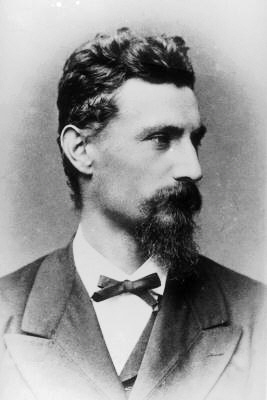
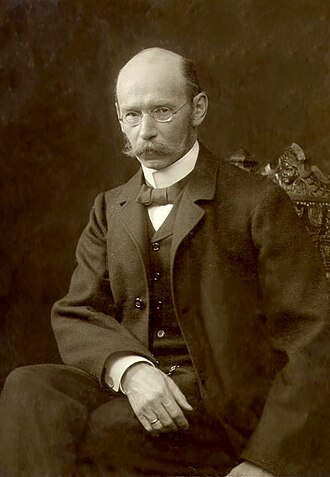
图:作者不详 · Public domain · Wikimedia Commons
- 出生
- 1848 年 12 月 6 日,奥帕瓦
- 逝世
- 1925 年 5 月 2 日,维也纳
- 国籍
- 奥地利帝国、内莱塔尼亚、奥地利
- 学科
- 天文学、博物与综合
- 职业
- 天文学家、大学教师、军官
- 母语 / 工作语言
- 德语
- 母校
- 维也纳大学
- 工作单位
- 维也纳大学
研究领域
主要贡献
代表成就
本站收录的发现与发明
所获奖项(1)
- 1876拉朗德奖
学会与院士
百科正文
他致力寻找小行星,由1874年至1923年共发现122颗。
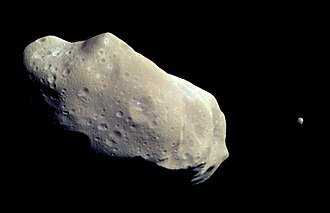
这些小行星之中,比较有名的包括小行星153Hilda、小行星216Kleopatra、小行星243Ida、小行星253Mathilde、小行星324Bamberga以及阿莫尔型小行星小行星719Albert。
为纪念他对天文学的贡献,小行星914Palisana便是以他来命名。
除了寻找小行星外,他亦曾编制两本包含约4700颗恒星位置的星表。
以上内容摘自维基百科「約翰·帕利扎」,按 CC BY-SA 4.0 使用,去掉了参考文献、外部链接等尾部小节,公式改写成了纯文本。全文、配图和出处见原文。
英文维基百科补充中文条目比较短,下面是英文条目「Johann Palisa」的原文
Johann Palisa (6 December 1848 – 2 May 1925) was an Austrian astronomer. He was a prolific discoverer of asteroids, discovering 122 in all, from 136 Austria in 1874 to 1073 Gellivara in 1923. Some of his notable discoveries include 153 Hilda, 216 Kleopatra, 243 Ida, 253 Mathilde, 324 Bamberga, and the near-Earth asteroid 719 Albert. Palisa made his discoveries without the aid of photography, and he remains the most successful visual (non-photographic) asteroid discoverer of all time. He was awarded the Valz Prize from the French Academy of Sciences in 1906. The asteroid 914 Palisana, discovered by Max Wolf in 1919, and the lunar crater Palisa were named in his honour.
Biography
Palisa was born on 6 December 1848, in Troppau in Austrian Silesia (now called Opava and located in the Czech Republic). From 1866 to 1870, Palisa studied mathematics and astronomy at the University of Vienna; however, he did not graduate until 1884. Despite this, by 1870 he was an assistant at the university's observatory, and a year later gained a position at the observatory in Geneva. A few years later, in 1872, at the age of 24, Palisa became the director of the Austrian Naval Observatory in Pula. While at Pula, he discovered his first asteroid, 136 Austria, on 18 March 1874. Along with this, he discovered twenty-seven minor planets and one comet. During his stay in Pula he used a small six-inch refractor telescope to aid in his research.
Palisa became director of the Pula observatory, with the rank of commander, until 1880. In 1880 Palisa moved to the new Vienna Observatory. While at the observatory he discovered 94 comets by visual means.
In 1883 he joined a French expedition to Caroline Island to observe the Solar eclipse of 6 May 1883. During the expedition, he joined to observations for the search for the hypothetical planet Vulcan, as well as collecting samples of insects for the Vienna Museum of Natural History.
Discoveries
Between 1874 and 1923 Palisa discovered 122 asteroids ranging from 136 Austria to 1073 Gellivara and the much later numbered Mars-crosser 14309 Defoy, respectively (see table below). He made his discoveries at the Austrian Naval Observatory at Pola (538) and at the Vienna Observatory. He also discovered the parabolic comet C/1879 Q1 in August 1879.
One of his discoveries was 253 Mathilde, a 50-kilometer sized C-type asteroid in the intermediate asteroid belt, which was visited by the NEAR Shoemaker spacecraft on 27 June 1997. The robotic probe passed within 1200 km of Mathilde at 12:56 UT at 9.93 km/s, returning imaging and other instrument data including over 500 images which covered 60% of Mathilde's surface. Only a small number of minor planets have been visited by spacecraft.
Palisa made all of his asteroid discoveries visually. Even though Max Wolf had revolutionised the process of asteroid discovery by introducing photography in the 1890s, Palisa continued to trust on visual observations. His final discovery, 1073 Gellivara, was the last asteroid that was found visually. Johann Palisa remains the most successful visual (non-photographic) asteroid discoverer of all time.
Family
Palisa married his second wife, Anna Benda, in 1902. Asteroid 734 Benda is named after her. He also named minor planets after other members of his family: 320 Katharina after his mother, Katherina, 321 Florentina for his daughter Florentine.
His granddaughter was Gertrud Rheden, wife of astronomer Joseph Rheden. Asteroid 710 Gertrud is named after her.
Honors and awards
In 1876 Palisa was awarded the Lalande Prize.
Palisa was awarded the Valz Prize from the French Academy of Sciences in 1906.
The Phocaea main-belt asteroid 914 Palisana, discovered by Max Wolf in 1919, and the lunar crater Palisa were named in his honour.
Minor planets 902 Probitas, 975 Perseverantia, and 996 Hilaritas that he discovered were given names after his death for traits qualities associated with him: adherence to the highest principles and ideals, perseverance and happy or contented mind. Names were given by Joseph Rheden with the support of Palisa's second wife, Anna.
Minor planet 1152 Pawona is named after both Johann Palisa and Max Wolf, in recognition of their cooperation. The name was proposed by Swedish astronomer Bror Ansgar Asplind. Pawona is a combination of "Palisa" and "Wolf" (Pa, Wo) joined with a Latin feminine suffix.
以上节选摘自英文维基百科「Johann Palisa」,按 CC BY-SA 4.0 使用,去掉了参考文献、外部链接等尾部小节,公式改写成了纯文本。篇幅所限,较长的小节只摘了开头一部分,有的小节没有收;全文、配图和出处见原文。
同一学科、同时代的科学家

同一学科的科学家
更多 ›