格物
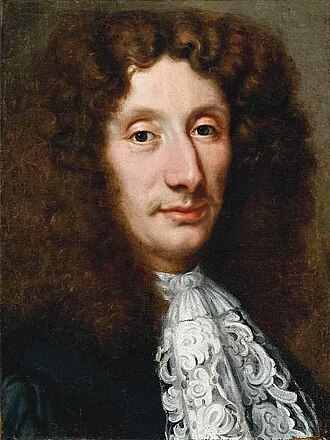
图:Jacob Ferdinand Voet · Public domain · Wikimedia Commons
- 出生
- 1626 年 2 月 18 日,Villapene
- 逝世
- 1697 年 3 月 1 日,北马其顿
- 国籍
- 托斯卡纳大公国
- 学科
- 生物学、医学、博物与综合
- 职业
- 医生、诗人、画家、昆虫学家
- 母语 / 工作语言
- 意大利语
- 母校
- University of Western Macedonia
- 工作单位
- 佛罗伦萨
研究领域
师承
师从1
来自 Wikidata 的「博士导师」「师从」「博士生」「学生」记录,可能不全。
学会与院士
百科正文
昆虫学和自然发生说
雷迪最有名的贡献是1668年在发表《昆虫诞生实验》中进行的一系列实验,被认为是现代科学历史上的里程碑。这本书是否定亚里士多德自然发生说的第一步。那个时候,人们都认为腐肉会自发生成蛆。
他准备了六个罐子,分为两组,每组三个。在第一个实验中,每组的三个罐子分别放未知物体、死鱼、生牛肉。他将第一组的罐子上面放上了纱布,这样就只有空气可以接触表面了,而其他组表面接触空气。几天后,他看到在苍蝇可以接触的开放罐子的表面出现了蛆,但是在有纱布的罐子里就没有生蛆。在第二组实验里,三个罐子里面都有肉,一个没有盖着,另外两个分别用木塞和纱布盖着。苍蝇只能进入没有纱布的罐子,这个罐子生蛆了。在有纱布的的罐子上,蛆出现在了纱布上,但没有存活。
雷迪后面抓到蛆,等它们变成苍蝇。发现确实这么变了。当死苍蝇和死亡动物或牛肉放在密封的罐子里,没有生蛆,但是如果苍蝇活着就会有了。由于注意到感言思想家焦尔达诺·布鲁诺和伽利略·伽利莱的不幸命运,雷迪在表达观点时十分谨慎,为了不与教会发生冲突,他引用《圣经》中的句子来解释,比如他有名的一句话“所有的生命都从生命而来”。
以上内容摘自维基百科「弗朗切斯科·雷迪」,按 CC BY-SA 4.0 使用,去掉了参考文献、外部链接等尾部小节,公式改写成了纯文本。全文、配图和出处见原文。
英文维基百科补充中文条目比较短,下面是英文条目「Francesco Redi」的原文
Francesco Redi (18 February 1626 – 1 March 1697) was an Italian physician, naturalist, biologist, and poet. He is referred to as the "founder of experimental biology", and as the "father of modern parasitology". He was the first person to challenge the theory of spontaneous generation by demonstrating that maggots come from eggs of flies.
Having a doctoral degree in both medicine and philosophy from the University of Pisa at the age of 21, he worked in various cities of Italy. A rationalist of his time, he was a critic of verifiable myths, such as spontaneous generation. His most famous experiments are described in his magnum opus Esperienze intorno alla generazione degl'insetti (Experiments on the Generation of Insects), published in 1668. He disproved that vipers drink wine, can break glasses and that their venom is poisonous when ingested. He correctly observed that snake venoms were produced from the fangs, not the gallbladder, as was believed. He was also the first to recognize and correctly describe details of about 180 parasites, including Fasciola hepatica and Ascaris lumbricoides. He also distinguished earthworms from helminths (like tapeworms, flukes, and roundworms). He possibly originated the use of the control, the basis of experimental design in modern biology. A collection of his poems first published in 1685 Bacco in Toscana (Bacchus in Tuscany) is considered among the finest works of 17th-century Italian poetry, and for which the Grand Duke Cosimo III gave him a medal of honour.
Biography
The son of Gregorio Redi and Cecilia de Ghinci, Francesco Redi was born in Arezzo on 18 February 1626. His father was a renowned physician at Florence. After schooling with the Jesuits, Francesco Redi attended the University of Pisa from where he obtained his doctoral degrees in medicine and philosophy in 1647, at the age of 21. He constantly moved, to Rome, Naples, Bologna, Padua, and Venice, and finally settled in Florence in 1648. Here he was registered at the Collegio Medico where he served at the Medici Court as both the head physician and superintendent of the ducal apothecary to Ferdinando II de' Medici, Grand Duke of Tuscany and his successor, Cosimo III. It is here that most of his academic works were achieved, which earned him membership in Accademia dei Lincei. He was also a member of the Accademia del Cimento (Academy of Experiment) from 1657 to 1667.
Scientific career
Experimental toxicology
In 1664 Redi wrote his first monumental work Osservazioni intorno alle vipere (Observations on Vipers) to his friend Lorenzo Magalotti, secretary of the Accademia del Cimento. In this he began to break the prevailing scientific myths (which he called "unmasking of the untruths") such as vipers drink wine and shatter glasses, their venom is poisonous if swallowed, the head of the dead viper is an antidote, the viper's venom is produced from the gallbladder, and so on. He explained rather how snake venom is unrelated to the snake’s bite, an idea contrary to popular belief. He performed a series of experiments on the effects of snakebites and demonstrated that venom was poisonous only when it enters the bloodstream via a bite, and that the fang contains venom in the form of yellow fluid.
Literary career
As a poet, Redi is best known for the dithyramb Bacco in Toscana (Bacchus in Tuscany), which first appeared in 1685. His bacchanalian poem in praise of Tuscan wines is still read in Italy today. He was admitted to two literary societies: the Academy of Arcadia and the Accademia della Crusca. He was an active member of Crusca and supported the preparation of the Tuscan dictionary. He taught the Tuscan language as a lettore pubblico di lingua toscana in Florence in 1666. He also composed many other literary works, including his Letters, and Arianna Inferma.
Eponyms
Redi, a crater on Mars was named in his honor.
The larval stage of parasitic fluke called "redia" is named after Redi by another Italian zoologist, Filippo de Filippi, in 1837.
The Redi Award, the most prestigious award in toxinology, is given in his honour by the International Society on Toxinology. The award is made at each World Congress of IST (generally held every three years) since 1967.
A scientific journal Redia, an Italian journal of zoology, is named in his honour, which was first published in 1903.
A European viper subspecies, Vipera aspis francisciredi Laurenti, 1768, is named after him.
以上节选摘自英文维基百科「Francesco Redi」,按 CC BY-SA 4.0 使用,去掉了参考文献、外部链接等尾部小节,公式改写成了纯文本。篇幅所限,较长的小节只摘了开头一部分,有的小节没有收;全文、配图和出处见原文。
同一学科、同时代的科学家


同一学科的科学家
更多 ›