格物
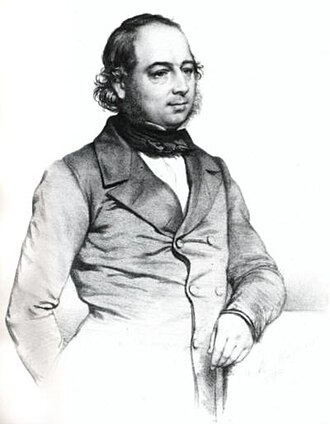
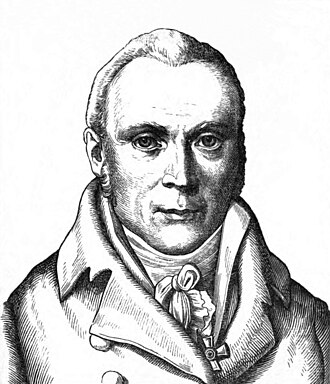
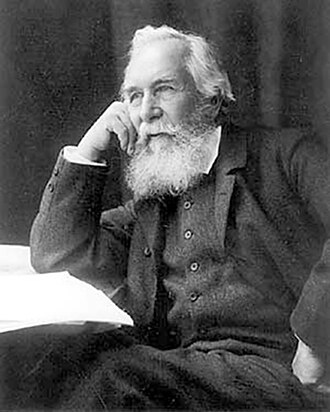
图:作者不详 · Public domain · Wikimedia Commons
爱德华·修斯1831—1914
Eduard Suess
Austrian geologist (1831-1914)
爱德华·修斯,又译聚斯、徐士,奥地利地质学家。
摘自维基百科「爱德华·修斯」,CC BY-SA 4.0
- 出生
- 1831 年 8 月 20 日,伦敦
- 逝世
- 1914 年 4 月 26 日,维也纳
- 国籍
- 奥地利帝国、内莱塔尼亚
- 学科
- 生物学、地球科学、博物与综合
- 职业
- 古生物学家、政治人物、大学教师、地质学家
- 母语 / 工作语言
- 德语
- 母校
- 维也纳科技大学
- 工作单位
- 维也纳大学
研究领域
师承
来自 Wikidata 的「博士导师」「师从」「博士生」「学生」记录,可能不全。
所获奖项(6)
学会与院士
百科正文
生平
生于英国伦敦,3岁时随家庭移居布拉格,14随时又迁居维也纳。修斯从小就对地质学拥有浓厚的兴趣,19岁就发表自己第一篇地质学方面的论文。1857年成为维也纳大学地质学教授。曾任维也纳科学院院长。曾在阿尔卑斯山脉伦巴第低地和亚平宁山脉一带进行地质调查研究工作。他根据南半球各大陆上地质岩层和古生物化石的相似性,提出了在南半球曾经存在过一个统一的大陆的假设,他称这个大陆为冈瓦那大陆。1893年,他根据阿尔卑斯山脉与非洲的化石纪录,又提出在劳亚大陆与冈瓦纳大陆之间,曾有个浅内海存在,他命名为特提斯洋。还认为现代地中海是特提斯洋的残余部分。在所著的《地球的面貌》(Das Antlitz der Erde,1885-1901)一书中首次提出“地台”这一术语,同时“冷缩说”的系统立论在本书中也得到充分的反映。1895年爱德华·修斯当选瑞典皇家科学院院士,1903年获得英国皇家学会科普利奖章。1914年逝世于维也纳。
在月球上和火星上各有一座以他的名字命名的环形山。
以上内容摘自维基百科「爱德华·修斯」,按 CC BY-SA 4.0 使用,去掉了参考文献、外部链接等尾部小节,公式改写成了纯文本。全文、配图和出处见原文。
英文维基百科补充中文条目比较短,下面是英文条目「Eduard Suess」的原文
Eduard Suess (Austrian German: [ˈeːdu.ard ˈsyːs]; 20 August 1831 – 26 April 1914) was an Austrian geologist and a specialist on the geography of the Alps. He is responsible for hypothesising two major former geographical features, the supercontinent Gondwana (proposed in 1861) and the Tethys Ocean. He also introduced the concepts of eustasy. As a professor of geology at the University of Vienna, he was a founding figure in geology in Austria, influencing numerous geologists across Europe. He was considered the "dean of geology" at the beginning of the twentieth century. He was also an Austrian parliament representative for the liberal party.
Biography
Eduard Suess was born on 20 August 1831 in London, England, the oldest son of Adolph Heinrich Suess, a Lutheran Saxon wool merchant, and mother Eleonore Friederike Zdekauer. Adolph Heinrich Suess was born on 11 March 1797 in Saxony and died on 24 May 1862 in Vienna, he had studied theology before moving to business; Eleonore Friederike Zdekauer was born in Prague, now part of the Czech Republic, which once belonged to the Holy Roman Empire and the Austrian Empire. The Zdekauers were a wealthy Jewish origin banking family in Prague who had converted to Lutheranism.
When Eduard Suess was an infant of three, his family relocated to Prague, and then to Vienna to manage a leather factory of an ailing uncle when he was 14. They had an English nurse and later a French and German instructor which made Eduard trilingual at a young age. He became interested in geology at a young age. He studied at the Clementinum and Akademisches Gymnasium before going in 1846 to the Vienna Polytechnic Institute and in 1848, during an uprising, he became part of the Academic Legion and stood guard in front a bank. Following the failed revolution, Suess' father sent off his son to Prague to avoid any possible repercussions. On a visit to the museum in Prague he saw Paleozoic fossils collected from the region. Some illness of the liver forced him to visit the Karlsbad spa region and he examined the geology and published a booklet on it in 1851 as an 18 year-old. He met the museum curator Maxmilián ‘Max’ Dormitzer and joined him on excursions. He also made contact with Joachim Barrande (1799-1883). His role in the revolution however led to a police summons and he spent a month in prison. He left studies at the polytechnic and joined as a salaried assistant in the Hofmineralienkabinett under Paul Maria Partsch (1791-1856). He also published his first paper—on the geology of Carlsbad (now Karlovy Vary in the Czech Republic). His first assignment was the reorganization of the brachiopod collection. By 1855 he had published 10 papers in paleontology. He also made a trip into the alps as an assistant to Franz von Hauer (1822-1899) in the Alps and collected fossils.
Legacy
Suess is considered one of the early practitioners of ecology. Suess Land in Greenland, the lunar crater Suess, as well as the crater Suess on Mars, are named after him. In 1861, he was invited to examine the water supply of Vienna and its sanitary conditions. He examined the patterns of deaths from typhoid during an epidemic and suggested that water travelled through the cemetery which lay on high ground and mixed into the wells in the lower parts. He wrote his findings in an 1862 booklet Der Boden der Stadt Wien nach seiner Bildungsweise, Beschaffenheit und seinen Beziehungen zum Bürgerlichen Leben which became so popular that he was elected to the city council in 1863. He then suggested that drinking water be brought from further away by aqueducts to the city. This system was set up and inaugurated in 1873 and "Suess' water" was immortalized in Johann Strauss’ operetta Die Fledermaus. When the Vienna water system was inaugurated, a polka-mazur was composed by Eduard Strauss (1835-1916), and a letter from Strauss to Suess dated 30th April 1874 apologized for the delay in the publication of the musical score for "Die Hochquelle” [The Highspring]. Charles Schuchert (1858–1942) called him ‘dean of modern geology and geologists’ in 1914.
Franz Eduard Suess
His son, Franz Eduard Suess (1867–1941), was superintendent and geologist at the Imperial Geological Institute in Vienna, who studied moldavites and coined the term tektite. The asteroid 12002 Suess, discovered by Czech astronomers Petr Pravec and Lenka Kotková in 1996, was named in his honor.
以上节选摘自英文维基百科「Eduard Suess」,按 CC BY-SA 4.0 使用,去掉了参考文献、外部链接等尾部小节,公式改写成了纯文本。篇幅所限,较长的小节只摘了开头一部分,有的小节没有收;全文、配图和出处见原文。
同一学科、同时代的科学家



同一学科的科学家
更多 ›