格物

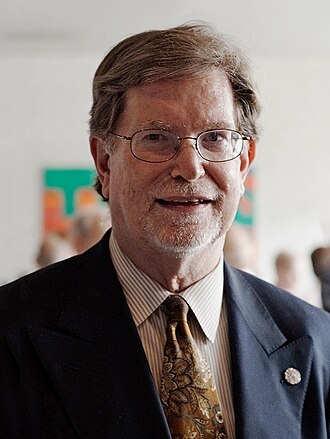
图:John Jackson · Public domain · Wikimedia Commons
威廉·海德·沃勒斯顿1766—1828
William Hyde Wollaston
English chemist and physicist (1766–1828)
威廉·海德·渥拉斯顿,又译作沃拉斯顿,是英国的化学家、物理学家,皇家学会会长,以发现化学元素钯和铑而知名。1802年,他观察到了太阳光谱中的暗线,即夫琅和费线。此外,他对白金的提炼方法也有一定贡献。渥拉斯顿陨石坑以他的名字命名。
摘自维基百科「威廉·海德·渥拉斯頓」,CC BY-SA 4.0
- 出生
- 1766 年 8 月 6 日,德瑞汉姆
- 逝世
- 1828 年 12 月 22 日,伦敦
- 国籍
- 大不列颠及爱尔兰联合王国
- 学科
- 物理学、化学、天文学、医学、工程与发明、博物与综合
- 职业
- 化学家、物理学家、工程师、冶金学家
- 母语 / 工作语言
- 英语、德语
- 母校
- 剑桥大学冈维尔与凯斯学院、查特豪斯公学
- 工作单位
- 剑桥大学
研究领域
主要贡献
发现的元素
所获奖项(11)
- 1802科普利奖章
- 1802贝克演讲
- 1805贝克演讲
- 1809克鲁内演讲
- 1812贝克演讲
- 1828皇家奖章
- 1828贝克演讲
- —英国皇家学会院士
- —Honorary Fellow of the Royal Society of Edinburgh
- —美国文理科学院院士
- —贝克尔讲座
学会与院士
百科正文
英文维基百科补充中文条目比较短,下面是英文条目「William Hyde Wollaston」的原文
William Hyde Wollaston (; 6 August 1766 – 22 December 1828) was an English chemist and physicist who is famous for discovering the chemical elements palladium and rhodium. He also developed a way to process platinum ore into malleable ingots, patented the camera lucida, and made contributions in electricity and spectroscopy.
Life
He was born in East Dereham in Norfolk, the son of Francis Wollaston (1737–1815), a noted amateur astronomer, and his wife Althea Hyde. He was one of 17 children, but the family was financially well-off and he enjoyed an intellectually stimulating environment. He was educated privately (and remotely) at Charterhouse School from 1774 to 1778 then studied Sciences at Gonville and Caius College, Cambridge. In 1793 he obtained his doctorate (MD) in medicine from Cambridge University, and was a Fellow of his college from 1787 to 1828.
He worked as a physician in Huntingdon from 1789 then moved to Bury St Edmunds before moving to London in 1797. During his studies, Wollaston had become interested in chemistry, crystallography, metallurgy and physics. In 1800, after he had received a large sum of money from one of his older brothers, he left medicine. He concentrated on pursuing his interests in chemistry and other subjects outside his trained vocation.
He was elected a Fellow of the Royal Society in 1793, where he became an influential member. He served as its president in 1820.
Work
After having established a partnership with Smithson Tennant in 1800 in order to produce and sell chemical products, Wollaston became wealthy by developing the first physico-chemical method for processing platinum ore in practical quantities. He held the details of the process secret until near his death and made huge profits for about 20 years by being the only supplier in England of the product which had many of the same qualities as gold, but was much cheaper.
Chemical analysis related to the process of purifying platinum led Wollaston to discover the elements palladium (symbol Pd) in 1802 and rhodium (symbol Rh) in 1804.
When Anders Gustav Ekeberg discovered tantalum in 1802 Wollaston declared the new element identical with niobium (then known as columbium). Niobium and tantalum bear an unusually close chemical similarity, even among vertically adjacent elements. Heinrich Rose would later prove that columbium and tantalum were indeed different elements and he would rename columbium "niobium" in 1846.
The mineral wollastonite was later named after Wollaston for his contributions to crystallography and mineral analysis.
Honours and awards
Honours and awards
Fellow of the Royal Society, 1793.
Secretary, 1804–1816.
President, briefly in 1820.
Vice-president, 1820–1828
Copley Medal, 1802
Royal Medal, 1828.
Croonian lecture, 1809
Bakerian Lecture, 1802, 1805, 1812, 1828
Member of the Royal Swedish Academy of Sciences, 1813.
Legacy
- The following have been named in his honour:
- Wollaston Medal
- List of Wollaston Medal recipients
- Wollaston, a lunar impact crater
Wollaston Lake, Saskatchewan, Canada a 2,681 square kilometre (1,035 sq mi) freshwater lake
Wollaston Islands, Chile are named for him
Wollaston Foreland, NE Greenland.
Wollaston Peninsula, Canada.
Wollastonite, a chain silicate mineral
Wollaston wire, extremely fine platinum wire
It has been mentioned that Wollaston has not received the renown which should complement his historical standing in world of science: his contemporaries Thomas Young, Humphry Davy and John Dalton have become far better-known.
Different reasons for this have been suggested, including that Wollaston himself was not systematic or conventional in presenting his discoveries, even publishing anonymously (initially) in the case of Palladium.
Collections
University College London holds a collection of papers (primarily 20th century) about Wollaston assembled by Lionel Felix Gilbert, who proposed a biography of Wollaston which was never fully written. The Geological Society of London holds a notebook belonging to Wollaston, and the Royal Society holds correspondence written to Wollaston during his time as President.
以上节选摘自英文维基百科「William Hyde Wollaston」,按 CC BY-SA 4.0 使用,去掉了参考文献、外部链接等尾部小节,公式改写成了纯文本。篇幅所限,较长的小节只摘了开头一部分,有的小节没有收;全文、配图和出处见原文。
同一学科、同时代的科学家




同一学科的科学家
更多 ›