格物
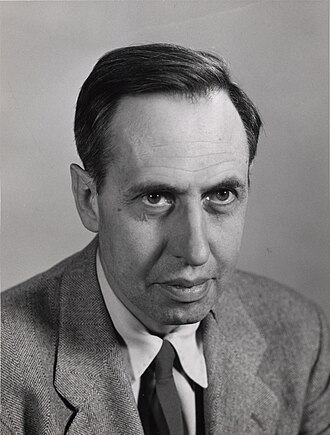
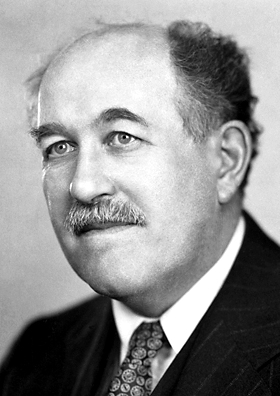
图:University of Michigan. News and Information Services. · CC BY 4.0 · Wikimedia Commons
乔治·乌伦贝克1900—1988
George Uhlenbeck
Dutch physicist (1900–1988)
乔治·尤金·乌伦贝克,荷兰出生的美国理论物理学家。在1925年9月中旬,他和塞缪尔·古德斯米特合作,发现了电子的自旋。
摘自维基百科「乔治·乌伦贝克」,CC BY-SA 4.0
- 出生
- 1900 年 12 月 6 日,巴达维亚
- 逝世
- 1988 年 10 月 31 日,博尔德
- 国籍
- 荷兰王国、美国
- 学科
- 物理学、博物与综合
- 职业
- 物理学家、大学教师
- 母语 / 工作语言
- 荷兰语、英语、德语
- 母校
- 代尔夫特理工大学(1919 年)、莱顿大学(1927 年)
- 工作单位
- 密歇根大学(1927—1935)、乌得勒支大学(1935—1939)、洛克菲勒大学(1960—1988)、莱顿大学(1954—1955)、阿姆斯特丹大学(1964—1964)、密歇根大学(1939—1960)、放射实验室(1943—1945)
研究领域
主要贡献
代表成就
师承
博士导师1
博士生9
来自 Wikidata 的「博士导师」「师从」「博士生」「学生」记录,可能不全。
所获奖项(7)
学会与院士
百科正文
1947年至1966年间,乔治·乌伦贝克数度获得诺贝尔物理学奖提名。
中国近代女物理学家王承书是乌伦贝克的学生。
以上内容摘自维基百科「乔治·乌伦贝克」,按 CC BY-SA 4.0 使用,去掉了参考文献、外部链接等尾部小节,公式改写成了纯文本。全文、配图和出处见原文。
英文维基百科补充中文条目比较短,下面是英文条目「George Uhlenbeck」的原文
George Eugene Uhlenbeck (December 6, 1900 – October 31, 1988) was a Dutch-American theoretical physicist, known for his significant contributions to quantum mechanics and statistical mechanics. He co-developed the concept of electron spin, alongside Samuel Goudsmit, in 1925. The formalization of Langevin equation for the Brownian motion as a stochastic process, is known as the Ornstein–Uhlenbeck process, derived in 1930 from his work with Leonard Ornstein. I. I. Rabi said that Uhlenbeck and Goudsmit's omission for the Nobel Prize in Physics "will always be a mystery to me".
Background and education
George Uhlenbeck was the son of Eugenius and Anne Beeger Uhlenbeck. He attended the Hogere Burgerschool (High School) in The Hague, from which he graduated in 1918.
He subsequently entered Delft University of Technology as a student in chemical engineering. During the next year, he transferred to Leiden University, to study physics and mathematics, and he earned his bachelor's degree in 1920 (Dutch: Kandidaatsexamen). Uhlenbeck was then admitted by Paul Ehrenfest (a student of Ludwig Boltzmann's) to the Wednesday evening physics colloquium in Leiden. Ehrenfest became the most important scientific influence in his life. From 1922 to 1925 Uhlenbeck was the tutor of the younger son of the Dutch ambassador in Rome. While there, he attended lectures by Tullio Levi-Civita and Vito Volterra and met his longtime friend, Enrico Fermi. In 1923, Uhlenbeck received his master's degree from Leiden (Dutch: Doctoraalexamen).
He returned to Leiden in 1925 to become Ehrenfest's assistant. Ehrenfest assigned him to work with his graduate student, Samuel Goudsmit for a quick update on "what was currently happening in physics". In mid-September 1925, Uhlenbeck and Goudsmit introduced electron spin, which posits intrinsic angular momentum for the electron.
Career
In 1927, Uhlenbeck took a position as an instructor in physics at the University of Michigan in Ann Arbor, Michigan. He stayed there until 1935, when he succeeded H. A. Kramers as a professor of theoretical physics in Utrecht. During his eight years in Ann Arbor, Uhlenbeck organized the noted "Summerschool" in theoretical physics.
In 1938, Uhlenbeck spent half a year as visiting professor at Columbia University in New York City, and then he returned to Ann Arbor as a professor of theoretical physics during the next year. Because of the rise of Nazism in Europe, he and Else decided to leave his position in the Netherlands and return to America.
During part of World War II, from 1943 through 1945, Uhlenbeck led a theory group at the Radiation Laboratory in Cambridge, Massachusetts, which was doing radar
research. In 1945, he returned to Ann Arbor, where he was named the Henry Smith Carhart Professor of Physics in 1954. In the year 1955 he occupied the Lorentz Chair at Leiden University.
Uhlenbeck remained in Ann Arbor until 1960, when he joined the Rockefeller Institute for Medical Research (now the Rockefeller University) in New York City as a professor and member of the institute.
Retirement and death
He retired in 1971, but remained scientifically active until the early 1980s.
Uhlenbeck died on October 31, 1988, in Boulder, Colorado, at the age of 87.
Recognition
Uhlenbeck received five honorary degrees. In addition, he received the Research Corporation award in 1953, the Oersted Medal of the American Association of Physics Teachers in 1955, the Max Planck Medal of the German Physical Society in 1964, the Lorentz Medal of the Royal Netherlands Academy of Arts and Sciences in 1970, the National Medal of Science in 1977, along with Goudsmit, and the Wolf Prize in Physics in 1979.
In 1951 he became member of the Royal Netherlands Academy of Arts and Sciences. He was elected to the United States National Academy of Sciences in 1955, the American Philosophical Society in 1957, and the American Academy of Arts and Sciences in 1964.
Uhlenbeck was a friend of many of the great physicists and mathematicians of his era, including Enrico Fermi and Oskar Klein. Abraham Pais called him "a supurb teacher. I never heard a man who could lecture with such clarity. E.G.D. Cohen, a student of Uhlenbeck's, described his teacher:
... [Uhlenbeck] often admonished me that rather than trying to be original, it was much more important to be clear and correct and to summarise critically the present status of a field in the Ehrenfest tradition.
以上节选摘自英文维基百科「George Uhlenbeck」,按 CC BY-SA 4.0 使用,去掉了参考文献、外部链接等尾部小节,公式改写成了纯文本。篇幅所限,较长的小节只摘了开头一部分,有的小节没有收;全文、配图和出处见原文。
同年获同一奖项
同一学科、同时代的科学家


同一学科的科学家
更多 ›