格物
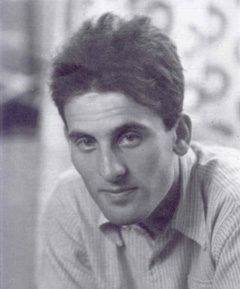
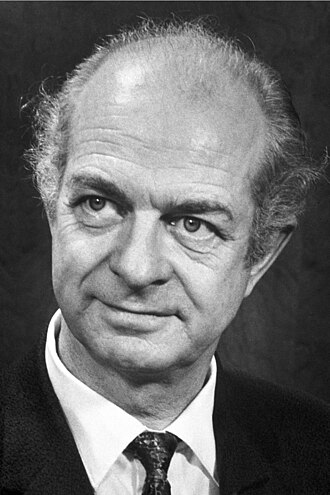
图:作者不详 · Public domain · Wikimedia Commons
朱塞佩·奥基亚利尼1907—1993
Giuseppe Occhialini
Italian physicist (1907-1993), who contributed to the discovery of the pion or pi-meson decay
朱塞佩·保罗·斯塔尼斯劳·奥基亚利尼 是一位意大利物理学家。
摘自维基百科「朱塞佩·奥基亚利尼」,CC BY-SA 4.0
- 出生
- 1907 年 12 月 5 日,福松布罗内
- 逝世
- 1993 年 12 月 30 日,巴黎十四区
- 国籍
- 意大利、巴西、意大利王国
- 学科
- 物理学、博物与综合
- 职业
- 物理学家
- 母语 / 工作语言
- 意大利语、英语、法语
- 母校
- 佛罗伦萨大学
- 工作单位
- 圣保罗大学、布里斯托尔大学、热那亚大学
研究领域
师承
博士导师1
学生1
来自 Wikidata 的「博士导师」「师从」「博士生」「学生」记录,可能不全。
所获奖项(3)
- 1931Vallauri Prize
- 1974英国皇家学会外籍会员
- 1979沃尔夫物理学奖
学会与院士
百科正文
生平
生于意大利佩萨罗福松布罗内,意大利物理学家,1947年与塞萨尔·拉特斯、塞西尔·鲍威尔发现pi-介子的衰变。做出该发现时,他们都在布里斯托尔大学H. H. Wills实验室工作。
以上内容摘自维基百科「朱塞佩·奥基亚利尼」,按 CC BY-SA 4.0 使用,去掉了参考文献、外部链接等尾部小节,公式改写成了纯文本。全文、配图和出处见原文。
英文维基百科补充中文条目比较短,下面是英文条目「Giuseppe Occhialini」的原文
Giuseppe Paolo Stanislao "Beppo" Occhialini (Italian: [dʒuˈzɛppe okkjaˈliːni]; 5 December 1907 – 30 December 1993) was an Italian experimental physicist who contributed to the discovery of the pion or pi-meson decay in 1947 with César Lattes and Cecil Powell, the latter winning the Nobel Prize in Physics for this work. At the time of this discovery, they were all working in the H. H. Wills Laboratory at the University of Bristol.
Biography
Giuseppe Paolo Stanislao Occhialini was born on 5 December 1907 in Fossombrone, Italy, and graduated from the University of Florence in 1929. In 1932, he collaborated in the discovery of the positron in cosmic rays in the Cavendish Laboratory at the University of Cambridge, under the leadership of Patrick Blackett, using cloud chambers.
Occhialini returned in Italy in 1934, where he suffered from the political climate generated by fascism. Thus, from 1937 to 1944, following an invitation by Gleb Wataghin, he worked at the Institute of Physics of the University of São Paulo in Brazil.
In 1944, Occhialini returned to England, working in the Wills Physics Laboratory at the University of Bristol, where he studied cosmic rays. In 1947, while in Bristol, he contributed to the discovery of the pion or pi-meson decay in collaboration with César Lattes, Cecil Powell, and Hugh Muirhead. The discovery was made using the technology of the tracks on specialized photographic emulsions. Powell won the Nobel Prize in Physics in 1950, in large part for this work.
In 1950, Occhialini returned to Italy, teaching first at the University of Genoa and then in the Physics Department at the University of Milan in 1952.
Occhialini was a protagonist in cosmic ray research with the nuclear utilization of photographic emulsions exposed to high energy cosmic radiation, work which culminated in 1954 with the European G-Stack collaboration, that focused on the decay products of the kaons. Later on with the coming of particle accelerators, Occhialini explored that new field of research. He also made outstanding contributions to space physics, importantly contributing to the foundation of the European Space Agency.
Personal life
Occhialini was an avid mountain climber. During World War II, while staying in Brazil—then a country hostile to Italy—he became an authorized alpine guide in Itatiaia National Park, where there is a peak named Pico Occhialini.
Recognition
Commemoration
The Department of Physics of the University of Milan-Bicocca, active since 1997, is named after him.
The satellite SAX, the first Italian satellite for the study of gamma rays, was renamed BeppoSAX from his nickname "Beppo," which is a diminutive for Giuseppe.
An asteroid, 20081 Occhialini, was named for him.
In 2004, Prof. Antonio Vitale, Ordinary Professor of Physics at the University of Bologna, created the "Foundation Giuseppe Occhialini" with its seat at Fossombrone, birth town of Giuseppe Occhialini. The Foundation has as its objective the popularization of physics in the superior schools, and is active above all in the province of Pesaro-Urbino, where every year there is held a course with the allocation of scholarships for the worthiest students.
In 2007, the Italian Physical Society, together with the Institute of Physics, instituted the Occhialini Prize to honor his memory.
On 22 June 2009, a square in Milan square was named after him, that same square where the Institute of Physics was at the time he first became professor there. The sign in the square was unveiled at a ceremony with the deans of both of Milan's state universities, Enrico Decleva and Marcello Fontanesi, Beppo's daughter Etra, and Professor Guido Vegni, one of Beppo's pupils and successors in particle physics research.
以上内容摘自英文维基百科「Giuseppe Occhialini」,按 CC BY-SA 4.0 使用,去掉了参考文献、外部链接等尾部小节,公式改写成了纯文本。全文、配图和出处见原文。
同年获同一奖项
同一学科、同时代的科学家


同一学科的科学家
更多 ›