格物
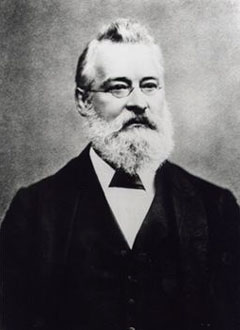
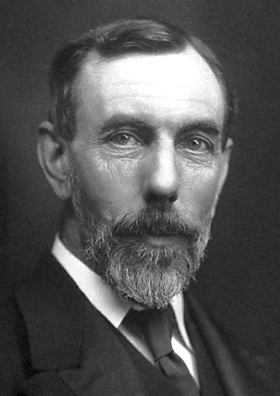
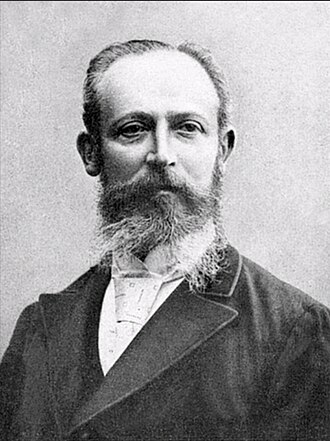
图:The original uploader was DALIBRI at German Wikipedia. · Public domain · Wikimedia Commons
- 出生
- 1837 年 11 月 26 日,兰贝斯
- 逝世
- 1898 年 7 月 29 日,Lower Clapton
- 国籍
- 大不列颠及爱尔兰联合王国
- 学科
- 化学
- 职业
- 化学家、化学教师
- 母语 / 工作语言
- 英语
研究领域
主要贡献
代表成就
所获奖项(1)
- 1887戴维奖章
百科正文
生平
生于伦敦,1856年入英国皇家化学学院,跟随奥古斯特·威廉·冯·霍夫曼学习,后任皇家农业学会助理化学师。1860年他参加了加里波第领导的统一意大利的军队,因为他的母亲是意大利人。1864年起他作为分析化学师独立开业,1868~1886年纽兰兹但任一座制糖厂的首席化学家,对制糖工艺有所改进。最后,他离开了制糖厂,重新开始研究分析学。
1863年开始,纽兰兹注意到了并开始研究化学元素性质的周期性。1865年他受德国化学家德贝莱纳的“三元素组”的启发,把当时已知的61种元素按照当时的相对原子质量的递增顺序排列,发现每隔7种元素便出现性质相似的元素,如同音乐中的音阶一样,因此称为元素八音律。这个想法当时未被人们接受,甚至遭到了很多科学界同行的嘲讽,皇家化学会也拒绝发表他的论文
19世纪80年代门捷列夫和尤利乌斯·洛塔尔·迈耶尔因为发现元素周期律而备受赞扬,获颁英国皇家学会的戴维奖章。纽兰兹要求英国皇家学会认可自己当年的发现,1887年皇家学会授予他戴维奖章,表彰他“发现了元素周期律”。他的论文收集在《论周期律的发现》(1884) 一书中。
以上内容摘自维基百科「约翰·纽兰兹」,按 CC BY-SA 4.0 使用,去掉了参考文献、外部链接等尾部小节,公式改写成了纯文本。全文、配图和出处见原文。
英文维基百科补充中文条目比较短,下面是英文条目「John Newlands (chemist)」的原文
John Alexander Reina Newlands (26 November 1837 – 29 July 1898) was a British chemist who worked concerning the periodicity of elements.
Biography
Newlands was born in London in England, at West Square in Southwark, the son of a Scottish Presbyterian minister and his Italian wife.
Newlands was home-schooled by his father, and later studied at the Royal College of Chemistry, now part of Imperial College London. He was interested in social reform and during 1860 served as a volunteer with Giuseppe Garibaldi in his military campaign to unify Italy. Returning to London, Newlands established himself as an analytical chemist in 1864. In 1868 he became chief chemist of James Duncan's London sugar refinery, where he introduced a number of improvements in processing. Later he quit the refinery and again became an analyst with his brother, Benjamin.
Newlands was the first person to devise a periodic table of chemical elements arranged in order of their relative atomic masses published in Chemical News in February 1863. Continuing Johann Wolfgang Döbereiner's work with triads and Jean-Baptiste Dumas' families of similar elements, he published in 1865 his "Law of Octaves", which stated that "any given element will exhibit analogous behaviour to the eighth element following it in the table." Newlands arranged all of the known elements, starting with hydrogen and ending with thorium (atomic weight 232), into eight groups of seven, which he likened to octaves of music. In Newlands' table, the elements were ordered by the atomic weights that were known at the time and were numbered sequentially to show their order. Groups were shown going across the table, with periods going down – the opposite from the modern form of the periodic table.
The incompleteness of the table alluded to the possible existence of additional, undiscovered elements. However, the Law of Octaves was ridiculed by some of Newlands' contemporaries, and the Society of Chemists did not accept his work for publication.
After Dmitri Mendeleev and Lothar Meyer received the Davy Medal from the Royal Society for their later 'discovery' of the periodic table in 1882, Newlands fought for recognition of his earlier work and eventually received the Davy Medal in 1887.
John Newlands died due to complications of surgery at his home in Lower Clapton, Middlesex and was buried at West Norwood Cemetery. His businesses were continued after his death by his younger brother, Benjamin.
以上内容摘自英文维基百科「John Newlands (chemist)」,按 CC BY-SA 4.0 使用,去掉了参考文献、外部链接等尾部小节,公式改写成了纯文本。全文、配图和出处见原文。
同一学科、同时代的科学家