格物
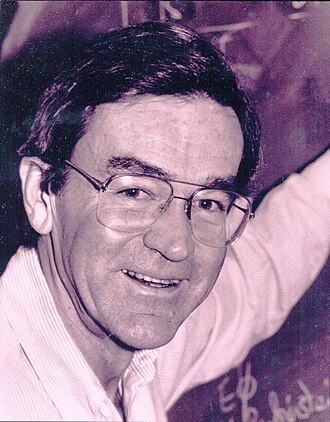
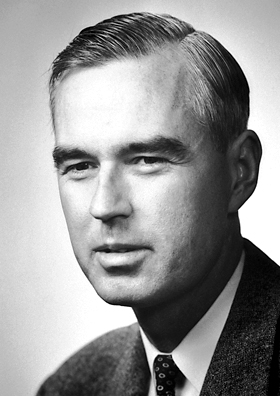
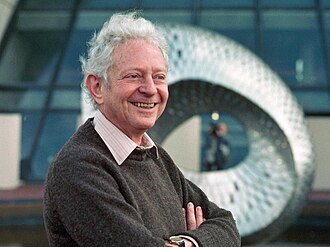
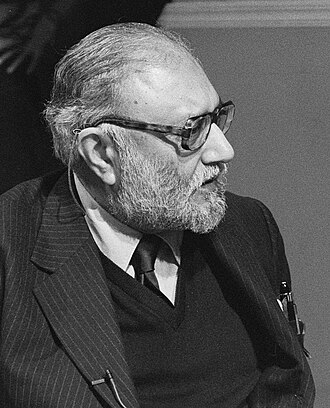
图:Downloaded from Fermilab, a.k.a. Fermi National Accelerator … · Public domain · Wikimedia Commons
詹姆斯·比约肯1934—2024
James Bjorken
American physicist (1934–2024)
詹姆斯·丹尼尔·比约肯,美国理论物理学家。比约肯是斯坦福线性加速器中心的荣誉退休教授,并且是费米国立加速器实验室理论部门的成员(1979年至1989年)。
摘自维基百科「詹姆斯·比约肯」,CC BY-SA 4.0
- 出生
- 1934 年 6 月 22 日,芝加哥
- 逝世
- 2024 年 8 月 6 日,雷德伍德城
- 国籍
- 美国
- 学科
- 物理学、博物与综合
- 职业
- 物理学家、理论物理学家、大学教师
- 母语 / 工作语言
- 英语
- 母校
- 斯坦福大学(哲学博士,1959 年)、麻省理工学院(理学士,1956 年)
- 工作单位
- SLAC 国家加速器实验室、费米国立加速器实验室、斯坦福大学
研究领域
师承
博士导师1
博士生2
来自 Wikidata 的「博士导师」「师从」「博士生」「学生」记录,可能不全。
所获奖项(11)
- 1968美国物理学会会士
- 1972希纳曼数学物理奖
- 1977欧内斯特·奥兰多·劳伦斯奖
- 2000波梅兰丘克奖
- 2002美国科学促进会会士
- 2004狄拉克奖章(ICTP)
- 2015沃尔夫物理学奖
- 2015高能和粒子物理奖
- 2017Robert R. Wilson Prize
- —圣母大学名誉博士
- —honorary doctor of the University of Turin
学会与院士
百科正文
生平
1956年,比约肯获得了麻省理工学院的物理学学士学位。1959年,他获得了斯坦福大学博士学位。1962年秋,他担任普林斯顿高等研究院的访问学者。
奖项和荣誉
他获得了丹尼·海涅曼数学物理奖(1972年),波梅兰丘克奖(2000年),ICTP狄拉克奖章(2004年),沃尔夫物理学奖(2015年)和EPS[1] (页面存档备份,存于互联网档案馆)高能和粒子物理学奖(2015年)。
以上内容摘自维基百科「詹姆斯·比约肯」,按 CC BY-SA 4.0 使用,去掉了参考文献、外部链接等尾部小节,公式改写成了纯文本。全文、配图和出处见原文。
英文维基百科补充中文条目比较短,下面是英文条目「James Bjorken」的原文
James Daniel "BJ" Bjorken (June 22, 1934 – August 6, 2024) was an American theoretical physicist. He was a Putnam Fellow in 1954, received a BS in physics from MIT in 1956, and obtained his PhD from Stanford University in 1959. Bjorken was a visiting scholar at the Institute for Advanced Study in the fall of 1962. He was also emeritus professor in the SLAC Theory Group at the Stanford Linear Accelerator Center, and was a member of the Theory Department of the Fermi National Accelerator Laboratory (1979–1989).
Bjorken was awarded the Dirac Medal of the ICTP in 2004; and, in 2015, the Wolf Prize in Physics and the EPS High Energy and Particle Physics Prize.
Early life and education
James Bjorken's father, J. Daniel Bjorken, was an immigrant from Sweden near Lake Siljan. He changed his surname from "Björkén" to Bjorken upon arriving in the US; he moved to Chicago to work as an electrical engineer, which was where he met his future wife, Edith. James Bjorken grew up in Chicago and enjoyed mathematics, chemistry, the French horn, and watching the Chicago Cubs play at Wrigley Field. After graduating from Maine East High School in 1952, he decided to attend Massachusetts Institute of Technology (MIT) over the University of Chicago. Despite being offered more financial aid to attend the University of Chicago, his parents advised him that he should move further away to find his independence.
At MIT, he quickly decided to major in physics; one of the main reasons was his enjoyment of the lectures that Hans Mueller gave. Another of his influences at MIT was Sidney Drell, who became his mentor. After graduating in 1956, he attended Stanford University, graduating with his PhD in 1959 and staying on as a postdoctoral researcher for several years.
Work
Bjorken discovered in 1968 what is known as light-cone scaling (or Bjorken scaling), a phenomenon in the deep inelastic scattering of light on strongly interacting particles, known as hadrons (such as protons and neutrons):
Experimentally observed hadrons behave as collections of virtually independent point-like constituents when probed at high energies.
Properties of these hadrons scale, that is, they are determined not by the absolute energy of an experiment, but, instead, by dimensionless kinematic quantities, such as a scattering angle or the ratio of the energy to a momentum transfer. Because increasing energy implies potentially improved spatial resolution, scaling implies independence of the absolute resolution scale, and hence effectively point-like substructure.
This observation was critical to the recognition of quarks as actual elementary particles (rather than just convenient theoretical constructs), and led to the theory of strong interactions known as quantum chromodynamics, where it was understood in terms of the asymptotic freedom property. In Bjorken's picture, the quarks become point-like, observable objects at very short distances (high energies), shorter than the size of the hadrons.
Bjorken also discovered the Bjorken sum rule, the prototypical QCD spin sum rule. It states that in the Bjorken scaling domain, the integral of the spin structure function of the proton minus that of the neutron is proportional to the axial charge of the nucleon. Specially: ∫ ₀¹dx(g₁^(p)(x)-g₁ⁿ(x))=g_(A)/6, where x is the Bjorken scaling variable, g₁^(p(n))(x) is the first spin structure function of the proton (neutron), and g_(A) is the nucleon axial charge that characterizes the neutron β-decay. The sum rule was experimentally verified within better than a 10% precision.
Bjorken was also among the first to point out the phenomena of jet quenching in heavy ion collisions in 1982.
Richard Feynman subsequently reformulated this concept into the parton model, used to understand the quark composition of hadrons at high energies. The predictions of Bjorken scaling were confirmed in the early late 1960s electroproduction experiments at SLAC, in which quarks were seen for the first time. The general idea, with small logarithmic modifications, is explained in quantum chromodynamics by "asymptotic freedom".
Bjorken co-authored, with Sidney Drell, a classic companion volume textbook on relativistic quantum mechanics and quantum fields.
Personal life and death
In 1967, Bjorken married Joan Goldthwaite; they had two children and were married until her death in 1983. He lived in Sky Londa, California.
Bjorken died from melanoma at a care facility in Redwood City, California, on August 6, 2024 at the age of 90.
以上内容摘自英文维基百科「James Bjorken」,按 CC BY-SA 4.0 使用,去掉了参考文献、外部链接等尾部小节,公式改写成了纯文本。全文、配图和出处见原文。
同年获同一奖项
同一学科、同时代的科学家


同一学科的科学家
更多 ›