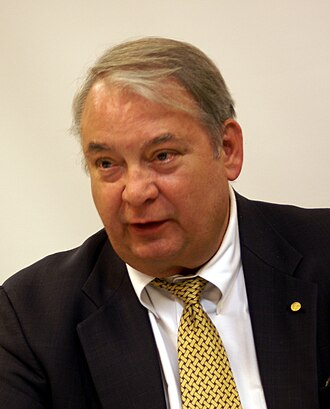
格物
- 出生
- 1925 年 5 月 19 日,埃克塞特
- 逝世
- 2011 年 4 月 6 日,韦科
- 国籍
- 美国
- 学科
- 化学
- 职业
- 化学家、大学教师
- 母语 / 工作语言
- 英语
- 母校
- 剑桥大学基督学院
- 工作单位
- 布里斯托尔大学、贝勒大学
研究领域
师承
博士生2
来自 Wikidata 的「博士导师」「师从」「博士生」「学生」记录,可能不全。
所获奖项(10)
- 1971Tilden Prize
- 1976英国皇家学会院士
- 1983Ludwig Mond Award
- 1985American Chemical Society Award in Inorganic Chemistry
- 1989戴维奖章
- 1990Longstaff Prize
- —古根海姆学者奖
- —大英帝国司令勋章
- —富布赖特项目
- —英国皇家化学学会会士
学会与院士
百科正文
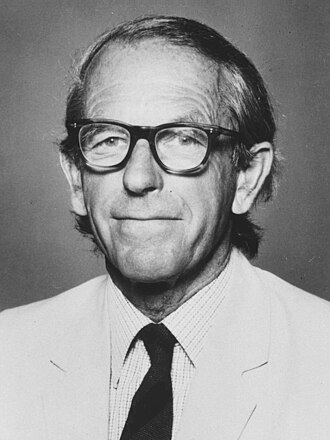
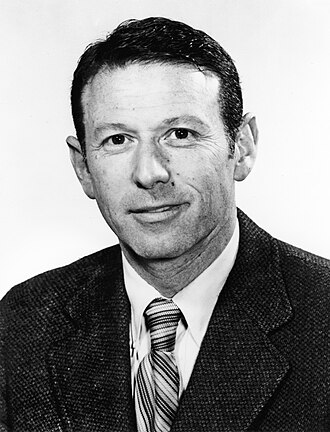
1925年出生于英国德文郡的埃克塞特,是文职公务员Sidney Charles Stone的独子,1948年剑桥大学本科毕业,1951年从剑桥大学取得博士学位,博士导师是Harry Julius Emeléus。
早年经历
弗朗西斯·戈登·艾伯特·斯通的父母原本希望他成为会计师,但是由于在中学期间化学就是斯通成绩最好的学科,并且那时的斯通已经对一些简单化合物的合成、分析产生了强烈的兴趣爱好,所以他最初是希望去伦敦的伦敦帝国学院或者是国王学院学习化学,但是由于斯通的考试成绩未达到这两所学校的要求,两所学校均未录取他。最终通过一年的努力在学习了拉丁文之后,于1945年10月进入剑桥大学基督学院学习,1948年毕业。考虑自己对物理化学和有机化学均没有很强的兴趣,斯通选择了无机化学作为自己的博士研究方向。Harry Emeléus的讲座激发了斯通的研究热情。Emeléus在二战期间参与了美国的曼哈顿计划,二战结束后回到英国成立了自己的研究小组,最初的研究方向是有机氟化学(fluorine chemistry)。
学术研究生涯
从剑桥大学基督学院博士毕业之后,他以福布莱特学者(Fulbright Scholar)的身份在南加利福尼亚大学与Anton Burg合作进行他的博士后研究。
以上内容摘自维基百科「弗朗西斯·戈登·艾伯特·斯通」,按 CC BY-SA 4.0 使用,去掉了参考文献、外部链接等尾部小节,公式改写成了纯文本。全文、配图和出处见原文。
英文维基百科补充中文条目比较短,下面是英文条目「F. Gordon A. Stone」的原文
Francis Gordon Albert Stone CBE, FRS, FRSC (19 May 1925 – 6 April 2011), always known as Gordon, was a British chemist who was a prolific and decorated scholar. He specialized in the synthesis of main group and transition metal organometallic compounds. He was the author of more than 900 academic publications resulting in an h-index of 72 in 2011.
Early life
Gordon Stone was born in Exeter, Devon in 1925, the only child of Sidney Charles Stone, a civil servant, and Florence Beatrice Stone (née Coles). He received his B.A. in 1948 and Ph.D. in 1951, both from Christ's College, Cambridge (Cambridge University), England, where he studied under Harry Julius Emeléus.
Academic life
After graduating from Cambridge, he was a Fulbright Scholar at the University of Southern California for two years, before being appointed as an instructor in the Chemistry Department at Harvard University, and was appointed assistant professor in 1957. He was the Robert A. Welch Distinguished Professor of Chemistry at Baylor University, Texas until 2010, but his most productive period was as Professor of Inorganic Chemistry at Bristol University, England (1963–1990), where he published hundreds of papers over the course of 27 years. In research he competed with his contemporary Geoffrey Wilkinson.
Elected to the Royal Society of Chemistry in 1970, and to the Royal Society in 1976, he was awarded the Davy Medal "In recognition of his many distinguished contributions to organometallic chemistry, including the discovery that species containing carbon-metal of metal-metal multiple bonds are versatile reagents for synthesis of cluster compounds with bonds between different transition elements" in 1989.
Among the many foci of his studies were complexes of fluorocarbon, isocyanide, polyolefin, alkylidene and alkylidyne ligands. At Baylor, he maintained a research program on boron hydrides, a lifelong interest.
In 1988 he chaired the Review Committee commissioned by the British Government (the now-dissolved University Grants Committee) to carry out a review of chemistry in UK academia ("University Chemistry — The Way Forward", "The Stone Report"). His main recommendation, "that the UGC [...] fund properly not fewer than 30 chemistry departments" and that "at least 20 of these departments have 30 or more academic staff [...] to compete successfully at the international level" was never implemented.
His autobiography Leaving No Stone Unturned, Pathways in Organometallic Chemistry, was published in 1993. With Wilkinson, he edited the influential series Comprehensive Organometallic Chemistry. With Robert West, he edited the series Advances in Organometallic Chemistry.
The Gordon Stone Lecture series at the University of Bristol is named in his honour.
Annual Stone Symposiums are also held at Baylor University in his honor.
Awards
- Fellow of the Royal Society of Chemistry (1970)
- Fellow of the Royal Society (1976), Vice-President 1987-1988
- Chugaev Medal of the Kurnakov Institute (Russian Academy of Sciences) (1978)
- Royal Society of Chemistry’s Ludwig Mond Award (1983)
- American Chemical Society’s award in Inorganic Chemistry (1985)
- Royal Society of Chemistry’s Sir Edward Frankland Prize Lectureship (1988)
- Royal Society's Davy Medal (1989)
- Royal Society of Chemistry’s Longstaff Prize (1990)
- Commander of the Order of the British Empire (1990)
Personal life
He married Judith Hislop (1928-2008) of Sydney, Australia in 1956 with whom he had three sons.
以上内容摘自英文维基百科「F. Gordon A. Stone」,按 CC BY-SA 4.0 使用,去掉了参考文献、外部链接等尾部小节,公式改写成了纯文本。全文、配图和出处见原文。