格物

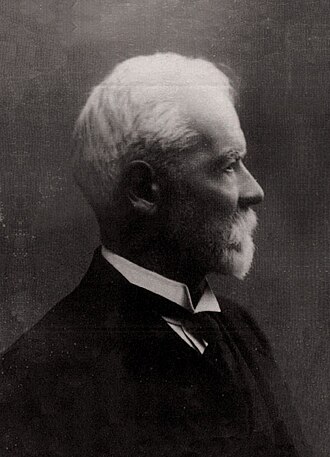
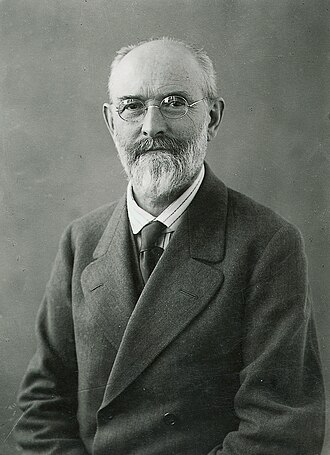
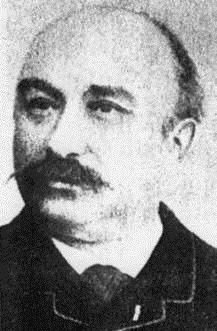
图:Gösta Florman (1831–1900) · Public domain · Wikimedia Commons
- 出生
- 1854 年 10 月 18 日,延雪平市镇
- 逝世
- 1897 年,白岛
- 国籍
- 瑞典
- 学科
- 工程与发明
- 职业
- 探险家、工程师、机械工程师
- 母语 / 工作语言
- 瑞典语
- 母校
- 皇家工学院
研究领域
百科正文
英文维基百科补充中文条目比较短,下面是英文条目「Salomon August Andrée」的原文
Salomon August Andrée (18 October 1854 – October 1897), during his lifetime most often known as S. A. Andrée, was a Swedish engineer, physicist, aeronaut and polar explorer who died while leading an attempt to reach the Geographic North Pole by hydrogen balloon. The balloon expedition was unsuccessful in reaching the Pole and resulted in the deaths of all three of its participants.
Early life and influences
Andrée was born in the small town of Gränna, Sweden; as a child, he was very close to his mother, especially following the death of his father in 1870. He attended the Royal Institute of Technology in Stockholm, earning a degree in mechanical engineering in 1874.
In 1876, Andrée traveled to the United States, where he attended the Centennial Exposition in Philadelphia, and was employed as a janitor at the event's Swedish Pavilion. While on this trip, Andrée spent his free time reading a book on trade winds and also met with an American balloonist, John Wise. This meeting sparked a lifelong fascination with aeronautics and balloon-travel.
Expedition to the North Pole
Supported by the Royal Swedish Academy of Sciences and funded by various donors (such as King Oscar II and Alfred Nobel), Andrée's polar exploration project was a subject of enormous interest, being seen as a brave and patriotic scheme.
The North Pole expedition made an initial attempt to launch the balloon, the Örnen (eagle), in the summer of 1896 from Danes Island, to the west of the Svalbard Archipelago, but the winds did not permit the expedition to start. When Andrée next tried, on 11 July 1897, together with his companions, engineer Knut Frænkel and photographer Nils Strindberg (a second cousin of playwright August Strindberg), the balloon successfully lifted-off and flew for 65 hours.
Aftermath
Until Andrée's last camp was found in 1930, the expedition's fate was the subject of myth and rumours. At the time of the disappearance, it was noted that a heavy storm had been raging and that the balloon had lost its steering lines at departure. This led experienced polar explorers to surmise that the expedition could not have gotten very far and had probably been forced down onto the ice. In 1898, eleven months after Andrée's first sighting of White Island (which he called New Iceland), a Swedish polar expedition led by A. G. Nathorst passed offshore just 1 kilometre (0.6 mi) from the camp, but bad weather prevented their landing. The remnants of the camp were finally found in 1930 by the Norwegian Bratvaag Expedition, which picked up remains, including two bodies.
Modern assessments
Starting in the 1960s, Andrée's status as a national hero was increasingly questioned and a more critical, skeptical view began to prevail, in a way not unlike the changing assessment of Robert Falcon Scott's South polar journey. Emphasis has been placed on the view that the expedition was bound to fail, and that Andrée refused to take in information that questioned the expedition's feasibility. He also had limited flight experience with large balloons, and none in Arctic conditions. Andrée has been seen as a manipulator of the national emotions of his age, bringing a meaningless death on himself and his two companions. in Gränna, Sweden (see for example p. 131), and it is also a key underpinning of P-O. Sundman's two books, Ingenjör Andrées luftfärd and Ingen fruktan, intet hopp.
Legacy
Andrée Land in Greenland was named after him by Swedish Arctic explorer A.G. Nathorst.
The Italian poet Giovanni Pascoli wrote a poem about Andrée's expedition and death.
Andrée's writings were adapted into the song cycle The Andrée Expedition by the American composer Dominick Argento, written for the Swedish baritone Håkan Hagegård. Swedish composer Klas Torstensson's opera "Expeditionen" (1994–99) is also based on Andrée's story.
Historian Edward Guimont has proposed that the 1930 discovery of the expedition's remains influenced H. P. Lovecraft in the writing of At the Mountains of Madness.
In 1982, the Swedish filmmaker Jan Troell directed a film based on Sundman's book, Flight of the Eagle.
以上节选摘自英文维基百科「Salomon August Andrée」,按 CC BY-SA 4.0 使用,去掉了参考文献、外部链接等尾部小节,公式改写成了纯文本。篇幅所限,较长的小节只摘了开头一部分,有的小节没有收;全文、配图和出处见原文。