格物

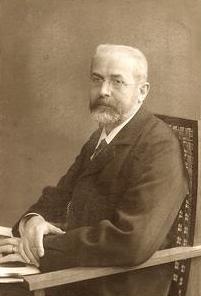
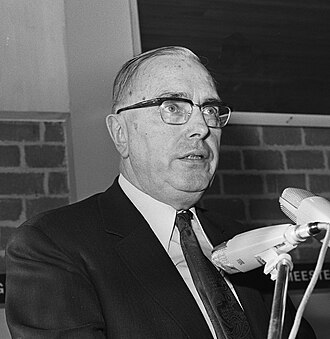
图:Credited to "Stearn" (likely refers to Stearn and Sons) · Public domain · Wikimedia Commons
约翰·恩瑟·李特尔伍德1885—1977
John Edensor Littlewood
English mathematician (1885–1977)
约翰·伊登斯尔·利特尔伍德,英国数学家,最为出名的是他和高德菲·哈罗德·哈代长期的合作。
摘自维基百科「約翰·恩瑟·李特爾伍德」,CC BY-SA 4.0
- 出生
- 1885 年 6 月 9 日,罗彻斯特
- 逝世
- 1977 年 9 月 6 日,剑桥
- 国籍
- 英国
- 学科
- 数学、博物与综合
- 职业
- 数学家、大学教师
- 母语 / 工作语言
- 英语
- 母校
- 剑桥大学三一学院(1906 年)、伦敦圣保禄学校(1903 年)、剑桥大学
- 工作单位
- 曼彻斯特维多利亚大学(1907—1910)、剑桥大学三一学院(1910—1928)、剑桥大学(1928—1950)
研究领域
主要贡献
代表成就
师承
博士导师1
博士生23
来自 Wikidata 的「博士导师」「师从」「博士生」「学生」记录,可能不全。
所获奖项(7)
- 1908史密斯奖
- 1916英国皇家学会院士
- 1929皇家奖章
- 1938德摩根奖章
- 1943西尔维斯特奖章
- 1958科普利奖章
- 1960Senior Berwick Prize
学会与院士
百科正文
生平
利特尔伍德出生在肯特郡的罗彻斯特。他在伦敦的圣保罗学校上学,并在那里受到了F·S·麦考利的教育,现在因为他对理想理论的贡献而出名。利特尔伍德在剑桥大学三一学院学习,并在1905年的数学Tripos考试中成为Senior Wrangler。在1908年他被选为三一学院的研究员,除了在曼彻斯特大学担任理查德讲师的三年外,在他的职业生涯中,他都在剑桥大学度过。
1928年,李特尔伍德获得劳斯·鲍尔数学教授席位,直到1950年。
工作
他的大部分工作都是在数学分析领域中。他在欧内斯特·巴恩斯的指导下开始研究,巴恩斯说利特尔伍德曾经尝试过证明黎曼猜想:利特尔伍德证明了如果黎曼猜想是正确的,那么素数定理成立,并可得到误差项。这项工作使他成为了三一学院的一位研究员。
以上内容摘自维基百科「約翰·恩瑟·李特爾伍德」,按 CC BY-SA 4.0 使用,去掉了参考文献、外部链接等尾部小节,公式改写成了纯文本。全文、配图和出处见原文。
英文维基百科补充中文条目比较短,下面是英文条目「John Edensor Littlewood」的原文
John Edensor Littlewood (9 June 1885 – 6 September 1977) was a British mathematician. He worked on topics relating to analysis, number theory, and differential equations and had lengthy collaborations with G. H. Hardy, Srinivasa Ramanujan and Mary Cartwright.
Biography
Littlewood was born on the 9th of June 1885 in Rochester, Kent, the eldest son of Edward Thornton Littlewood and Sylvia Maud (née Ackland). In 1892, his father accepted the headmastership of a school in Wynberg, Cape Town, in South Africa, taking his family there. Littlewood returned to Britain in 1900 to attend St Paul's School in London, studying under Francis Sowerby Macaulay, an influential algebraic geometer.
In 1903, Littlewood entered the University of Cambridge, studying in Trinity College. He spent his first two years preparing for the Tripos examinations which qualify undergraduates for a bachelor's degree where he emerged in 1905 as Senior Wrangler bracketed with James Mercer (Mercer had already graduated from the University of Manchester before attending Cambridge). In 1906, after completing the second part of the Tripos, he started his research under Ernest Barnes. One of the problems that Barnes suggested to Littlewood was to prove the Riemann hypothesis, an assignment at which he did not succeed. He was elected a Fellow of Trinity College in 1908. From October 1907 to June 1910, he worked as a Richardson Lecturer in the School of Mathematics at the University of Manchester.
Work
Most of Littlewood's work was in the field of mathematical analysis. He began research under the supervision of Ernest William Barnes, who suggested that he attempt to prove the Riemann hypothesis: Littlewood showed that if the Riemann hypothesis is true, then the prime number theorem follows and obtained the error term. This work won him his Trinity fellowship. However, the link between the Riemann hypothesis and the prime number theorem had been known before in Continental Europe, and Littlewood wrote later in his book, A Mathematician's Miscellany that his rediscovery of the result did not shed a positive light on the isolated nature of British mathematics at the time.
Theory of the distribution of prime numbers
In 1914, Littlewood published his first result in the field of analytic number theory concerning the error term of the prime-counting function. If π (x) denotes the number of primes up x, then the prime number theorem implies that π (x) Li (x), where Li (x) is the offset logarithmic integral.
Numerical evidence seemed to suggest that π (x)<Li (x) for all x. Littlewood, however proved that the difference π (x)-Li (x) changes sign infinitely often.
Military service WWI – ballistics work
During the Great War, Littlewood served in the Royal Garrison Artillery as a second lieutenant. He made highly significant contributions in the field of ballistics.
Later life
He continued to write papers into his eighties, particularly in analytical areas of what would become the theory of dynamical systems.
Littlewood is also remembered for his book of reminiscences, A Mathematician's Miscellany (new edition published in 1986).
Among his PhD students were Sarvadaman Chowla, Harold Davenport, and Donald C. Spencer. Spencer reported that in 1941 when he (Spencer) was about to get on the boat that would take him home to the United States, Littlewood reminded him: "n, n alpha, n beta!" (referring to Littlewood's conjecture).
Littlewood's collaborative work, carried out by correspondence, covered fields in Diophantine approximation and Waring's problem, in particular. In his other work, he collaborated with Raymond Paley on Littlewood–Paley theory in Fourier theory, and with Cyril Offord in combinatorial work on random sums, in developments that opened up fields that are still intensively studied.
Cultural references
John Littlewood is depicted in two films covering the life of Ramanujan – Ramanujan in 2014 portrayed by Michael Lieber and The Man Who Knew Infinity in 2015 portrayed by Toby Jones.
以上节选摘自英文维基百科「John Edensor Littlewood」,按 CC BY-SA 4.0 使用,去掉了参考文献、外部链接等尾部小节,公式改写成了纯文本。篇幅所限,较长的小节只摘了开头一部分,有的小节没有收;全文、配图和出处见原文。
同一学科、同时代的科学家

同一学科的科学家
更多 ›