格物
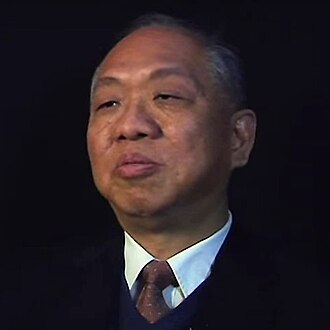
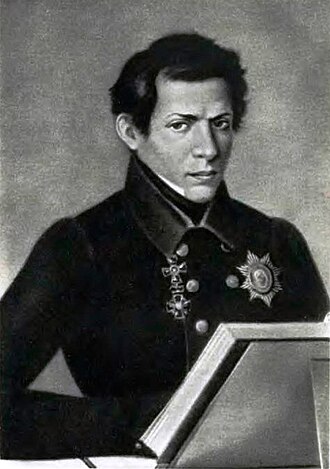
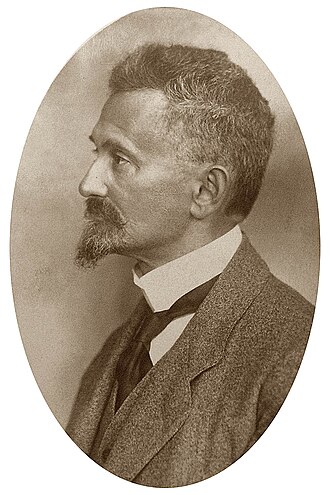
图:unknown-anonymous · Public domain · Wikimedia Commons
- 出生
- 1878 年 12 月 21 日,利沃夫
- 逝世
- 1956 年 2 月 13 日,都柏林
- 国籍
- 奥匈帝国、波兰第二共和国、爱尔兰
- 学科
- 数学、计算机科学、博物与综合
- 职业
- 数学家、哲学家、大学教师、计算机科学家
- 母语 / 工作语言
- 波兰语、英语、德语
- 母校
- 利沃夫大学、华沙大学
- 工作单位
- 华沙大学、利沃夫大学
研究领域
主要贡献
本站收录的发现与发明
师承
博士导师1
博士生3
学生2
来自 Wikidata 的「博士导师」「师从」「博士生」「学生」记录,可能不全。
所获奖项(3)
- 1923Commander of the Order of Polonia Restituta
- 1935匈牙利共和国勋章
- —Commander with Star of the Order of Polonia Restituta
学会与院士
百科正文
1970年代初,约翰·科科伦和蒂莫西·斯迈利发表了一系列论文,为武卡谢维奇方法注入了新的活力,罗宾·史密斯(Robin Smith)和吉塞拉·斯特赖克分别于1989年和2009年对《分析论前书》进行现代翻译。武卡谢维奇被认为是最重要的逻辑史学家之一。
以上内容摘自维基百科「扬·武卡谢维奇」,按 CC BY-SA 4.0 使用,去掉了参考文献、外部链接等尾部小节,公式改写成了纯文本。全文、配图和出处见原文。
英文维基百科补充中文条目比较短,下面是英文条目「Jan Łukasiewicz」的原文
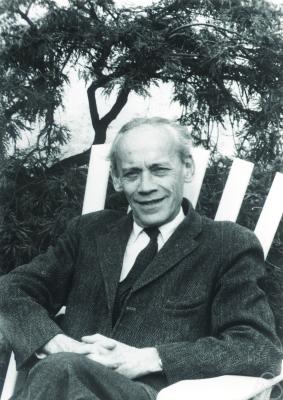
Jan Leopold Łukasiewicz (Polish: [ˈjan wukaˈɕɛvit͡ʂ]; 21 December 1878 – 13 February 1956) was a Polish logician, and philosopher who is best known for Polish notation and Łukasiewicz logic. His work centred on philosophical logic, mathematical logic and history of logic. He thought innovatively about traditional propositional logic, the principle of non-contradiction and the law of excluded middle, offering one of the earliest systems of many-valued logic. Contemporary research on Aristotelian logic also builds on innovative works by Łukasiewicz, which applied methods from modern logic to the formalization of Aristotle's syllogistic.
The Łukasiewicz approach was reinvigorated in the early 1970s in a series of papers by John Corcoran and Timothy Smiley that inform modern translations of Prior Analytics by Robin Smith in 1989 and Gisela Striker in 2009. Łukasiewicz is regarded as one of the most important historians of logic.
Life
He was born as Jan Leopold Łukasiewicz on 21 December 1878 in Lemberg, Austria-Hungary (now Lviv, Ukraine) and was the only child of Paweł Łukasiewicz, a captain in the Austro-Hungarian Army, and Leopoldina, née Holtzer, the daughter of a civil servant. His family was Roman Catholic.
He finished his gymnasium studies in philology and in 1897 went on to Lemberg University, where he studied philosophy and mathematics. He was a pupil of the philosopher Kazimierz Twardowski.
In 1902, he received a Doctor of Philosophy degree under the patronage of Emperor Franz Joseph I of Austria, who gave him a special doctoral ring with diamonds. His thesis entitled Indukcja jako inwersja dedukcji (On Induction as the Inverse of Deduction) was written under the supervision of Twardowski.
Work
A number of axiomatizations of classical propositional logic are due to Łukasiewicz. A particularly elegant axiomatization features a mere three axioms and is still invoked to the present day. He was a pioneer investigator of multi-valued logics; his three-valued propositional calculus, introduced in 1917, was the first explicitly axiomatized non-classical logical calculus. He wrote on the philosophy of science, and his approach to the making of scientific theories was similar to the thinking of Karl Popper.
Łukasiewicz invented the Polish notation (named after his nationality) for the logical connectives around 1920. A quotation from a paper by Jan Łukasiewicz in 1931 states how the notation was invented:
I came upon the idea of a parenthesis-free notation in 1924. I used that notation for the first time in my article Łukasiewicz (1), p. 610, footnote.
Recognition and honours
In 1923, Łukasiewicz became the recipient of the Commander's Cross with Star of the Order of Polonia Restituta.
In 1935, Łukasiewicz was awarded the Hungarian Order of Merit.
In 1955, Łukasiewicz received an honorary doctorate from the Trinity College Dublin in acknowledgement of his academic achievements. A commemorative plaque has been unveiled on the house where Łukasiewicz lived in Dublin at 57 Fitzwilliam Square.
In 1998, a minor planet discovered by Paul G. Comba was named 27114 Lukasiewicz in honour of the Polish philosopher and logician.
In 2008, the Polish Information Processing Society established the Jan Łukasiewicz Award, to be presented to the most innovative Polish IT companies.
Chronology
1878 born in Lemberg (now Lviv)
1890–1902 studies with Kazimierz Twardowski in Lemberg (Lwów, L'viv)
1902 doctorate (mathematics and philosophy), University of Lemberg with the highest distinction possible
- 1906 habilitation thesis completed, University of Lemberg
- 1906 becomes a lecturer
- 1910 essays on the principle of non-contradiction and the excluded middle
- 1911 extraordinary professor at Lemberg
- 1915 invited to the newly reopened University of Warsaw
- 1916 new Kingdom of Poland declared
- 1917 develops three-valued propositional calculus
- 1919 Polish Minister of Education
1920–1939 professor at Warsaw University founds with Stanisław Leśniewski the Lwów–Warsaw school of logic (see also Alfred Tarski, Stefan Banach, Hugo Steinhaus, Zygmunt Janiszewski, Stefan Mazurkiewicz)
1928 marries Regina Barwińska
以上节选摘自英文维基百科「Jan Łukasiewicz」,按 CC BY-SA 4.0 使用,去掉了参考文献、外部链接等尾部小节,公式改写成了纯文本。篇幅所限,较长的小节只摘了开头一部分,有的小节没有收;全文、配图和出处见原文。
同一学科、同时代的科学家

同一学科的科学家
更多 ›