格物
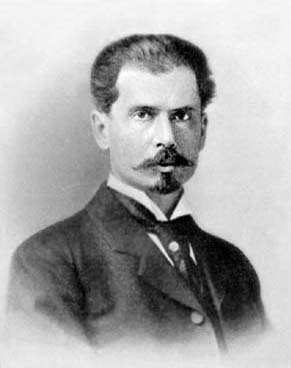
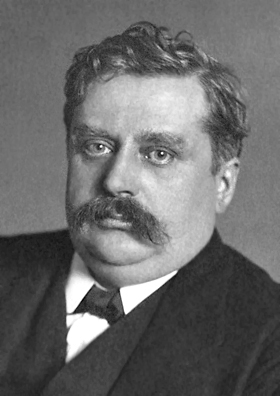
图:作者不详 · Public domain · Wikimedia Commons
- 出生
- 1856 年 9 月 1 日,基辅
- 逝世
- 1953 年 2 月 24 日,布里孔特罗贝尔
- 国籍
- 俄罗斯帝国、法国
- 学科
- 化学、生物学、博物与综合
- 职业
- 教授、植物学家、细菌学家、生态学家
- 母语 / 工作语言
- 法语、俄语
- 母校
- Faculty of Physics and Mathematics of the Saint Petersburg University
- 工作单位
- 苏黎世、Institute of Experimental Medicine、巴斯德研究院
研究领域
师承
博士导师1
来自 Wikidata 的「博士导师」「师从」「博士生」「学生」记录,可能不全。
所获奖项(2)
- 1919英国皇家学会外籍会员
- 1935列文虎克奖章
学会与院士
百科正文
在1887年对于贝日阿托菌属的研究期间,他发现了第一个已知的无机营养生物形式。他报告说贝日阿托菌属氧化硫化氢(H2S)作为能量来源,并形成细胞内部的硫的微滴。此研究提供了无机营养生物的第一个例子,但不是自养生物。
他首先发现硝化作用为硝化细菌所引起。在1885~1888年间,他分离得到能使铵氧化为亚硝酸盐的亚硝化单胞菌属和亚硝化球菌属以及能使亚硝酸盐氧化为硝酸盐的硝化杆菌属两种细菌。同时,他还研究了贝日阿托氏菌后确定了它利用无机物硫化氢作为能源、以二氧化碳作为碳源。他的研究揭示了土壤中化能无机营养型细菌的存在。
以上内容摘自维基百科「谢尔盖·尼古拉耶维奇·维诺格拉茨基」,按 CC BY-SA 4.0 使用,去掉了参考文献、外部链接等尾部小节,公式改写成了纯文本。全文、配图和出处见原文。
英文维基百科补充中文条目比较短,下面是英文条目「Sergei Winogradsky」的原文
Sergei Nikolaevich Winogradsky (Russian: Сергей Николаевич Виноградский; Ukrainian: Сергій Миколайович Виноградський; 13 September [O.S. 1 September] 1856 – 24 February 1953), also published under the name Sergius Winogradsky, was a Ukrainian and Russian microbiologist, ecologist and soil scientist who pioneered the cycle-of-life concept. Winogradsky discovered the first known form of lithotrophy during his research with Beggiatoa in 1887. He reported that Beggiatoa oxidized hydrogen sulfide (H2S) as an energy source and formed intracellular sulfur droplets. This research provided the first example of lithotrophy, but not autotrophy. Born in the capital of present-day Ukraine, his legacy is also celebrated by this nation.
His research on nitrifying bacteria would report the first known form of chemoautotrophy, showing how a lithotroph fixes carbon dioxide (CO2) to make organic compounds.
He is best known in school science as the inventor of the Winogradsky column technique for the study of sediment microbes.
Biography
Winogradsky was born in Kiev, Russian Empire to a family of wealthy lawyers. Among his paternal ancestors were Cossack atamans, and on the maternal side he was linked to the Skoropadsky family. In his youth Winogradsky was "strictly devoted to the Orthodox faith", though he later became irreligious.
After graduating from the 2nd Kiev Gymnasium in 1873, he began studying law, but he entered the Imperial Conservatoire of Music in Saint Petersburg in 1875 to study piano. However, after two years of music training, he entered the Saint Petersburg Imperial University in 1877 to study chemistry under Nikolai Menshutkin and botany under Andrei Famintsyn, receiving his degree in 1881 and staying on for a master's in botany, which he received in 1884. In 1885, he moved to the University of Straßburg to work under the renowned botanist Anton de Bary, subsequently becoming renowned for his work on sulfur bacteria.
In 1888, after de Bary's death, he relocated to Zürich, where he began investigation into the process of nitrification, identifying the genera Nitrosomonas and Nitrosococcus, which oxidizes ammonium to nitrite, and Nitrobacter, which oxidizes nitrite to nitrate.
He returned to St. Petersburg for the period 1891–1905, obtaining his doctoral degree in 1902 and from then on heading the division of general microbiology of the Institute of Experimental Medicine.
Discoveries
Winogradsky discovered various biogeochemical cycles and parts of these cycles. These discoveries include
His work on bacterial sulfide oxidation for which he first became renowned, including the first known form of lithotrophy (in Beggiatoa).
His work on the Nitrogen cycle including
The identification of the obligate anaerobe Clostridium pasteurianum is a free living microbe capable of fixing atmospheric nitrogen and not living in legume root nodules.
Chemosynthesis – his most noted discovery
The Winogradsky column
Chemosynthesis
Winogradsky is best known for discovering chemoautotrophy, which soon became popularly known as chemosynthesis, the process by which organisms derive energy from a number of different inorganic compounds and obtain carbon in the form of carbon dioxide. Previously, it was believed that autotrophs obtained their energy solely from light, not from reactions of inorganic compounds. With the discovery of organisms that oxidized inorganic compounds such as hydrogen sulfide and ammonium as energy sources, autotrophs could be divided into two groups: photoautotrophs and chemoautotrophs. Winogradsky was one of the first researchers to attempt to understand microorganisms outside of the medical context, making him among the first students of microbial ecology and environmental microbiology.
Memorials
The Institute of Microbiology of the Russian Academy of Sciences bears Winogradsky's name since 2003.
In 2012, a bust of the scientist was unveiled on the grounds of his former estate in Horodok, Khmelnytskyi Oblast, Ukraine.
In Ukraine, the study and popularization of the life and activities of Sergey Winogradsky are promoted by the Winogradsky Club, whose centre is located in the Horodok Museum of Local History (G-MUSEUM). One of the museum's exhibitions is a reconstruction of Winogradsky's laboratory in Brie-Comte-Robert including a wax figure of the scientist.
以上节选摘自英文维基百科「Sergei Winogradsky」,按 CC BY-SA 4.0 使用,去掉了参考文献、外部链接等尾部小节,公式改写成了纯文本。篇幅所限,较长的小节只摘了开头一部分,有的小节没有收;全文、配图和出处见原文。
同一学科、同时代的科学家

同一学科的科学家
更多 ›