格物
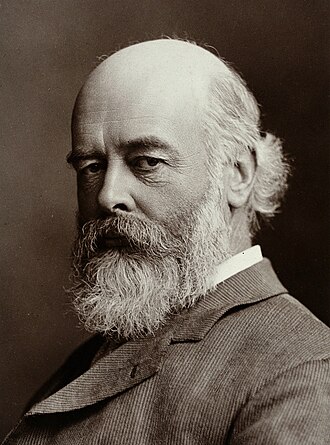
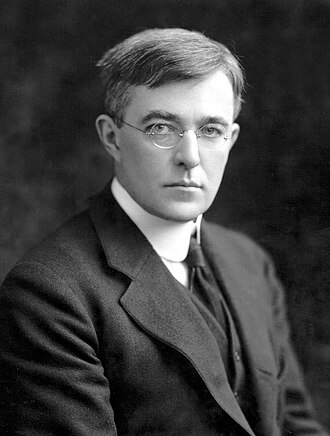
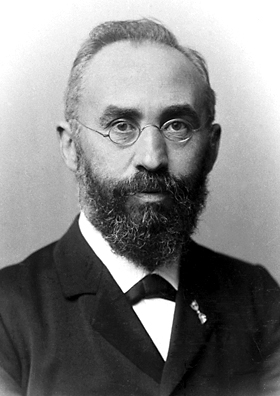
图:Lafayette Ltd. · CC BY 4.0 · Wikimedia Commons
- 出生
- 1851 年 6 月 12 日,特伦特河畔斯托克
- 逝世
- 1940 年 8 月 22 日,Wilsford
- 国籍
- 英国、大不列颠及爱尔兰联合王国
- 学科
- 物理学、工程与发明、博物与综合
- 职业
- 物理学家、发明家、自然科学家、作家
- 母语 / 工作语言
- 英语
- 母校
- 伦敦大学学院(1877 年)
- 工作单位
- 利物浦大学(1881—1900)、伦敦大学学院(1877—1881)、伯明翰大学(1900—1919)
主要贡献
代表成就
师承
来自 Wikidata 的「博士导师」「师从」「博士生」「学生」记录,可能不全。
所获奖项(6)
- 1887英国皇家学会院士
- 1898伦福德奖
- 1902下级勋位爵士
- 1919阿尔伯特奖章
- 1932法拉第奖章
- 2007美国发明家名人堂
学会与院士
百科正文
英文维基百科补充中文条目比较短,下面是英文条目「Oliver Lodge」的原文
Sir Oliver Joseph Lodge (12 June 1851 – 22 August 1940) was an English physicist and electrical engineer whose investigations into electromagnetic radiation (EMR) contributed to the development of radio. He identified EMR independent of Heinrich Hertz's proof. In his 1894 Royal Institution lecture, The Work of Hertz and Some of His Successors, Lodge's demonstrations on methods to transmit and detect radio waves included an improved early radio receiver he named the coherer. His work led to his holding key patents in early radio communication, his "syntonic" (or tuning) patents.
Lodge was a pioneer of spiritualism; his pseudoscientific research into life after death was a topic on which he wrote many books, including the best-selling Raymond; or, Life and Death (1916), which detailed messages he received from a medium, which he believed came from his son who was killed in the First World War.
Biography
Oliver Joseph Lodge was born on 12 June 1851 at The Views in Penkhull, Staffordshire, England, the eldest of seven boys of Grace (née Heath; 1826–1879) and Oliver Lodge (1826–1884), a successful potters' merchant. Between the ages of eight and twelve, Lodge attended Newport Grammar School (now Haberdashers' Adams) in Shropshire. Due to being unhappy there, he transferred to the Combs School in Suffolk, which he left at age fourteen to work at his father's business full-time.
In 1871, Lodge matriculated at the University of London, where he passed the examinations for his Bachelor of Science and Doctor of Science degrees in 1875 and 1877, respectively.
Research
Electromagnetism and radio
In 1873, James Clerk Maxwell published A Treatise on Electricity and Magnetism, and by 1876 Lodge was studying it intently. But Lodge was fairly limited in mathematical physics, both by aptitude and training—and his first two papers were a description of a mechanism (of beaded strings and pulleys) that could serve to illustrate electrical phenomena such as conduction and polarisation. Indeed, Lodge is probably best known for his advocacy and elaboration of Maxwell's aether theory, a later deprecated model postulating a wave-bearing medium filling all space.
Paranormal investigations
Lodge is remembered for his studies in psychical research and spiritualism. He began to study psychical phenomena (chiefly telepathy) in the late 1880s, was a member of The Ghost Club, and served as president of the London-based Society for Psychical Research from 1901 to 1903. After his son, Raymond, was killed in World War I in 1915, he visited several mediums and wrote about the experience in a number of books, including the best-selling Raymond; or, Life and Death (1916). Lodge was a friend of Arthur Conan Doyle, who also lost a son in World War I and was a Spiritualist.
Personal life and death
In 1877, Lodge married Mary Fanny Alexander Marshall at St George's Church in Newcastle-under-Lyme. They had twelve children—six boys and six girls—including Oliver, Alexander (Alec), Francis, Lionel, and Noel. Four of his sons went into business using Lodge's inventions. Brodie and Alec created the Lodge Plug Company, which manufactured spark plugs for cars and aeroplanes.
Recognition
Commemoration
Oliver Lodge Primary School in Vanderbijlpark, South Africa is named in his honour.
Lodge is commemorated in Liverpool with a bronze figure entitled Education, at the base of the Queen Victoria Monument
and the Oliver Lodge Building which houses the physics department of the University of Liverpool.
Lodge archives
Lodge's letters and papers were divided after his death. Some were deposited at the University of Birmingham and University of Liverpool and others at the Society for Psychical Research and the University College London. Lodge was long-lived and a prolific letter writer and other letters of his survive in the personal papers of other individuals and several other universities and other institutions. Among the known collections of his papers are the following:
以上节选摘自英文维基百科「Oliver Lodge」,按 CC BY-SA 4.0 使用,去掉了参考文献、外部链接等尾部小节,公式改写成了纯文本。篇幅所限,较长的小节只摘了开头一部分,有的小节没有收;全文、配图和出处见原文。
同一学科、同时代的科学家


同一学科的科学家
更多 ›