格物
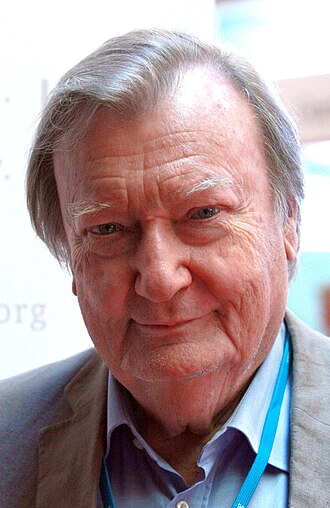
皮埃尔·拉蒙1943—
Pierre Ramond
American physicist
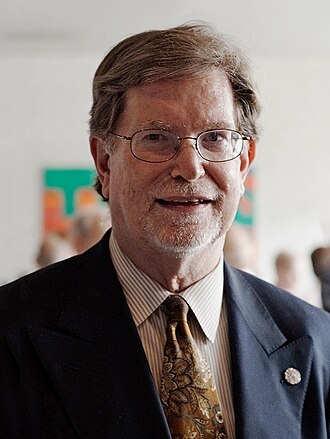
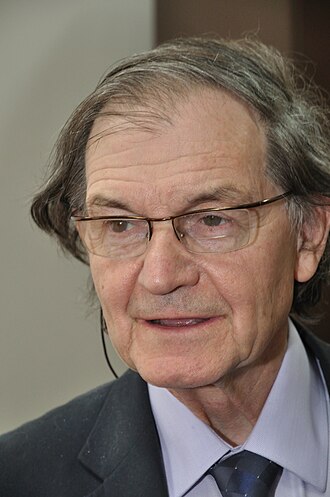
皮埃尔·拉蒙,美国理论物理学家,佛罗里达大学物理系杰出教授,以其对超弦理论的贡献而知名。
摘自维基百科「皮埃尔·拉蒙」,CC BY-SA 4.0
- 出生
- 1943 年 1 月 31 日,塞纳河畔讷伊
- 国籍
- 美国、法国
- 学科
- 物理学、博物与综合
- 职业
- 物理学家、大学教师、理论物理学家
- 母校
- 雪城大学、新泽西理工学院
- 工作单位
- 佛罗里达大学、耶鲁大学
师承
博士生12
来自 Wikidata 的「博士导师」「师从」「博士生」「学生」记录,可能不全。
所获奖项(4)
- 2004奥斯卡·克莱因纪念讲座
- 2015希纳曼数学物理奖
- 2020狄拉克奖章(ICTP)
- —古根海姆学者奖
学会与院士
百科正文
生平
拉蒙出生于法国塞纳河畔讷伊,1965年毕业于新泽西理工学院,后进入雪城大学深造。1969年获雪城大学物理系博士学位,其导师为物理学家A·P·巴拉坎德拉(A. P. Balachandran)。1969年至1971年间在费米实验室作博士后研究。1971年起任教于耶鲁大学。1976年前往加州理工学院任职。1980年起成为佛罗里达大学物理系教授,1999年获“杰出教授”(Distinguished Professor)头衔。
拉蒙是美国物理学会会士、美国文理科学院院士,曾获得过奥斯卡·克莱因奖章(2004年)、丹尼·海涅曼数学物理奖(2015年)等奖项。
学术贡献
拉蒙对超弦理论的发展有着重要贡献,是超弦理论的奠基人之一。1971年,拉蒙将狄拉克矩阵推广至弦论,在弦的世界面上引入了费米场。其间他发现了两维超对称,从而为四维时空中的超对称打下了基础。正是基于他的工作,约翰·施瓦茨与安德烈·内沃(André Neveu)发展了同时包含费米弦与玻色弦的弦理论。
以上内容摘自维基百科「皮埃尔·拉蒙」,按 CC BY-SA 4.0 使用,去掉了参考文献、外部链接等尾部小节,公式改写成了纯文本。全文、配图和出处见原文。
英文维基百科补充中文条目比较短,下面是英文条目「Pierre Ramond」的原文
Pierre Ramond (; born 31 January 1943) is distinguished professor emeritus of physics at University of Florida in Gainesville, Florida. He initiated the development of superstring theory.
Academic career
Ramond completed his BSEE from Newark College of Engineering (now New Jersey Institute of Technology) in 1965 and completed his Ph.D. in physics from Syracuse University in 1969. He was a postdoctoral fellow at NAL (FermiLab) from 1969 to 1971. He became instructor at Yale University from 1971 to 1973 and assistant professor at Yale University from 1973 to 1976. He moved to Caltech as an R. A. Millikan Senior Fellow in 1976. He became a professor of physics at University of Florida in 1980, and given the title of "distinguished professor" in 1999.
Superstring theory
Ramond initiated the development of superstring theory. In 1970, Ramond generalized Dirac's work for point-like particles to stringlike ones. In this process he discovered two-dimensional supersymmetry and laid the ground for supersymmetry in four spacetime dimensions. He found the spectrum of fermionic modes in string theory and the paper started superstring theory. From this paper André Neveu and John Schwarz developed a string theory with both fermions and bosons.
According to quantum mechanics, particles can be divided into two types: bosons and fermions. The distinction between bosons and fermions is basic. Fermions are particles which have half integer spin (1/2, 3/2, 5/2 and so on, multiplied by the reduced Planck constant), and bosons are particles which have integer spin (0, 1, 2 and so on, multiplied by the reduced Planck constant). Examples of fermions are quarks, leptons and baryons. Quantum of fundamental forces such as gravitons, photons, etc. are all bosons. In quantum field theory, fermions interact by exchanging bosons.
Early string theory proposed by Yoichiro Nambu and others in 1970 was only a bosonic string. Ramond completed the theory by inventing a fermionic string to accompany the bosonic ones. The Virasoro algebra which is the symmetry algebra of the bosonic string was generalized to a superconformal algebra (the Ramond algebra, an example of a super Virasoro algebra) including anticommuting operators also.
In 1979, with Murray Gell-Mann and Richard Slansky he proposed the seesaw mechanism which explains small neutrino masses in the context of Grand-Unified theories.
Honors and awards
Ramond has received several awards for his contributions to theoretical physics. He received a Distinguished Alumnus Award from NJIT in 1990. Fellow of the American Physical Society, 1998 Fellow of the American Academy of Arts and Sciences. Recipient of the 1992 Boris Pregel award from the NY Academy of Sciences; 2004 Oskar Klein Medal awarded by the Swedish Royal Academy of Sciences & Stockholm University; 2007 Lise Meitner Prize from Chalmers Technical University & Goteborg University. In 2015 he received the prestigious Dannie Heineman Prize for Mathematical Physics. In 2020, with André Neveu and Miguel Virasoro, he was jointly awarded the Dirac Medal of the ICTP for their pioneering contributions to the inception and formulation of string theory.
He retired in 2023 to become distinguished professor emeritus.
In addition, Ramond has played an active role in service to his profession as a scientist and educator.
He was President of the Aspen Center For Physics in 2006-2008; he served as chair of the Faculty Senate of the University of Florida in 2004-05, and chair of the Division of Particles and Fields of the American Physical Society in 2012.
以上内容摘自英文维基百科「Pierre Ramond」,按 CC BY-SA 4.0 使用,去掉了参考文献、外部链接等尾部小节,公式改写成了纯文本。全文、配图和出处见原文。
同年获同一奖项
同一学科、同时代的科学家


同一学科的科学家
更多 ›