格物
André Neveu1946—
研究者
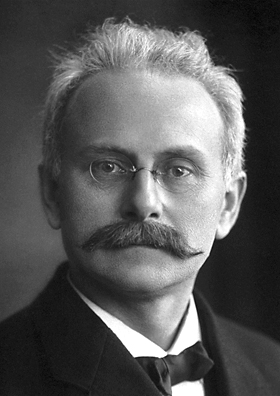
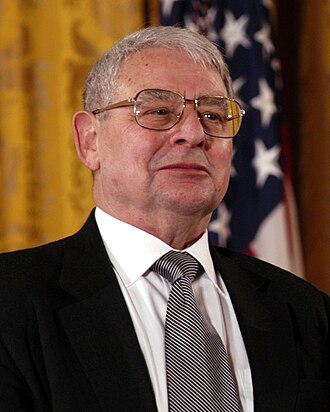
André Neveu is a French physicist working on string theory and quantum field theory who coinvented the Neveu–Schwarz algebra and the Gross–Neveu model.
摘自英文维基百科「André Neveu」(英文维基百科,暂无中文条目),CC BY-SA 4.0
- 出生
- 1946 年 8 月 28 日,巴黎
- 国籍
- 法国
- 学科
- 物理学
- 职业
- 物理学家、研究者
- 母语 / 工作语言
- 法语
- 母校
- 高等师范学校
师承
博士导师2
来自 Wikidata 的「博士导师」「师从」「博士生」「学生」记录,可能不全。
所获奖项(4)
- 1973Paul Langevin Award
- 1988Gentner–Kastler Prize
- 2005Three Physicists Prize
- 2020狄拉克奖章(ICTP)
百科正文
本条目暂无中文维基百科条目,下面是英文维基百科原文。
Biography
Neveu studied in Paris at the École Normale Supérieure (ENS). In 1969, he received his diploma (Thèse de troisième cycle) at University of Paris XI in Orsay with Philippe Meyer and Claude Bouchiat and in 1971 he completed his doctorate (Doctorat d'État) there.
In 1969, he and his classmate from ENS and Orsay, Joël Scherk, together with John H. Schwarz and David Gross at Princeton University, examined divergences in one-loop diagrams of the bosonic string theory (and discovered the cause of tachyon divergences). From 1971 to 1974, Neveu was at the Laboratory for High Energy Physics of the University of Paris XI where he and Scherk showed that spin-1 excitations of strings could describe Yang–Mills theories. In 1971, Neveu with John Schwarz in Princeton developed, at the same time as Pierre Ramond (1971), the first string theory that also described fermions (called RNS formalism after its three originators). This was an early appearance of the ideas of supersymmetry which were being developed independently at that time by several groups. A few years later, Neveu, working in Princeton with David Gross, developed the Gross–Neveu model. With Roger Dashen and Brosl Hasslacher, he examined, among other things, quantum-field-theoretic models of extended hadrons and semiclassical approximations in quantum field theory which are reflected in the DHN method of the quantization of solitons. From 1972 to 1977, Neveu was at the Institute for Advanced Study while spending half of the time in Orsay. From 1974 to 1983, he was at the Laboratory for Theoretical Physics of the ENS and from 1983 to 1989 in the theory department at CERN. From 1975, he was Maitre de recherche in the CNRS and from 1985 Directeur de recherche. From 1989, he was at the Institute (Laboratory) for Theoretical Physics of the University of Montpellier II (now L2C, Laboratory Charles Coulomb). From 1994 to 1995, he was a visiting professor in the University of California, Berkeley.
In 1973, Neveu received the Paul Langevin Prize of the Société Française de Physique. In 1988, he received the Gentner-Kastler Prize awarded jointly by the Société Française de Physique and the Deutsche Physikalische Gesellschaft (DPG). In 2020m he was awarded the Dirac Medal of the ICTP.
以上内容摘自英文维基百科「André Neveu」,按 CC BY-SA 4.0 使用,去掉了参考文献、外部链接等尾部小节,公式改写成了纯文本。全文、配图和出处见原文。
同年获同一奖项
同一学科、同时代的科学家




同一学科的科学家
更多 ›