格物

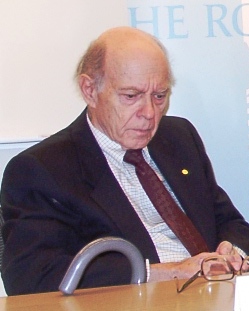
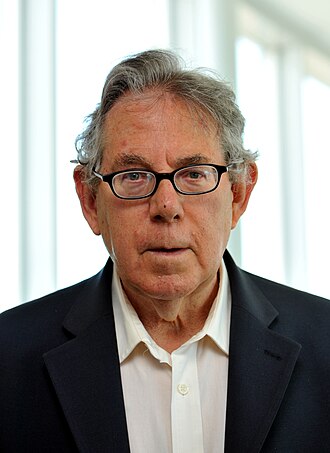
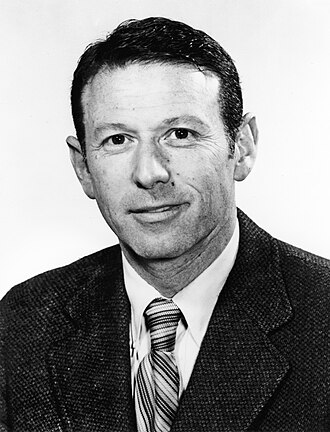
图:Leexray · CC BY-SA 4.0 · Wikimedia Commons
弗兰克·阿尔伯特·科顿1930—2007
F. Albert Cotton
美国化学家(1930—2007)
弗兰克·阿尔伯特·科顿,曾任W·T·达赫迪-韦尔奇基金会主席、德州农工大学特聘教授。科顿因对过渡金属的研究而知名。他撰写了超过1700篇科学论文。
摘自维基百科「弗兰克·阿尔伯特·科顿」,CC BY-SA 4.0
- 出生
- 1930 年 4 月 9 日,费城
- 逝世
- 2007 年 2 月 20 日,大学城
- 国籍
- 美国
- 学科
- 化学
- 职业
- 化学家、非虚构文学作家、大学教师
- 母语 / 工作语言
- 英语
- 母校
- 天普大学、哈佛大学(哲学博士,1955 年)
- 工作单位
- 得克萨斯农工大学、麻省理工学院
研究领域
师承
博士导师1
博士生3
来自 Wikidata 的「博士导师」「师从」「博士生」「学生」记录,可能不全。
所获奖项(28)
- 1956古根海姆学者奖
- 1962American Chemical Society Award in Inorganic Chemistry
- 1973Centenary Prize
- 1975威廉·H·尼克尔斯奖
- 1976莱纳斯·鲍林奖
- 1979honorary doctor of the University of Valencia
- 1980威拉德·吉布斯奖
- 1981honorary doctorate from University of Bordeaux-I
- 1982美国国家科学奖章
- 1982honorary doctor of Louis Pasteur University
- 1989古根海姆学者奖
- 1990美国国家科学院化工科学奖
- 1990King Faisal Prize in Science
- 1992honorary doctor of the University of Rennes I
- 1994honorary doctor of the University of Zaragoza
- 1994韦尔奇化学奖
- 1994英国皇家学会外籍会员
- 1994Paracelsus Prize
- 1995F. A. Cotton Medal
- 1997约翰·斯科特奖
- 1997doctor honoris causa from the Pierre and Marie Curie University
- 1998普里斯特利奖章
- 1998美国化学家协会金牌
- 2000沃尔夫化学奖
- 2000拉瓦锡奖章
- 2001American Chemical Society Award in Organometallic Chemistry
- 2006乔治·C·皮门特尔化学教育奖
- 2006兰州大学名誉博士
学会与院士
百科正文
早年生活与教育
科顿(笔名“艾尔”·科顿或“F·艾伯特”)于1930年4月9日出生于宾夕法尼亚州费城。他先后就读当地公立学校,随后进入费城卓克索大学及天普大学深造。 1951年于天普大学取得文学学士 (BA)学位后,科顿赴哈佛大学师从杰弗里·威尔金森爵士攻读博士学位,研究领域为茂金属。他于1955年获得博士学位。
F.A. 科顿化学研究卓越奖章
F.A. 科顿奖章创立于1994年,由美国化学学会德州农工大学分会每年颁发,旨在表彰研究领域的卓越成就,而非其他任何类型的杰出贡献——无论其功绩多么显赫。此奖项由F. 艾伯特·科顿捐赠基金赞助,该基金最初由卡洛斯·A·穆里略筹募,旨在纪念首届得主法兰克·艾伯特·科顿(1995年获颁首枚奖章)。获奖者除奖章外,另获颁奖章青铜复制品及载明奖项内容之证书。.
以上内容摘自维基百科「弗兰克·阿尔伯特·科顿」,按 CC BY-SA 4.0 使用,去掉了参考文献、外部链接等尾部小节,公式改写成了纯文本。全文、配图和出处见原文。
英文维基百科补充中文条目比较短,下面是英文条目「F. Albert Cotton」的原文
Frank Albert Cotton FRS (April 9, 1930 – February 20, 2007) was an American chemist. He was the W.T. Doherty-Welch Foundation Chair and Distinguished Professor of Chemistry at Texas A&M University. He authored over 1600 scientific articles. Cotton was recognized for his research on the chemistry of the transition metals.
Early life and education
Cotton, known as "Al" Cotton, or "F Albert" on publications, was born on April 9, 1930, in Philadelphia, Pennsylvania. He attended local public schools before attending Drexel University and then Temple University, both in Philadelphia. After earning his Bachelor of Arts degree from Temple in 1951, Cotton pursued a Ph.D. thesis under the guidance of Sir Geoffrey Wilkinson at Harvard University where he worked on metallocenes. He received his Ph.D. in 1955.
Career
Following his graduation from Harvard University, Cotton began teaching at Massachusetts Institute of Technology (MIT). In 1961, at 31-years-old, he became the youngest person to have received a full professorship at MIT. His work emphasized both electronic structure and chemical synthesis. He pioneered the study of multiple bonding between transition metal atoms, starting with research on rhenium halides, and in 1964 identified the quadruple bond in the Re2Cl2−8 ion. His work soon focused on other metal-metal bonded species, elucidating the structure of chromium(II) acetate.
He was an early proponent of single crystal X-ray diffraction as a tool for elucidating the extensive chemistry of metal complexes.
Pedagogical influence
In addition to his research, Cotton taught inorganic chemistry. He authored Chemical Applications of Group Theory. This text focuses on group theoretical analysis of bonding and spectroscopy.
Among college students, Cotton is perhaps best known as the coauthor of the textbook Advanced Inorganic Chemistry, now in its sixth English edition. Coauthored with his thesis advisor, Sir Geoffrey Wilkinson, and now with coauthors Carlos Murillo and Manfred Bochmann, the textbook is colloquially known as "Cotton and Wilkinson." The text surveys coordination chemistry, cluster chemistry, homogeneous catalysis, and organometallic chemistry.
Cotton served on various editorial boards of scientific journals, including those of the Journal of the American Chemical Society, Inorganic Chemistry, and Organometallics.
Recognition
Among the awards Cotton received included the U.S. National Medal of Science in 1982, the Wolf Prize in 2000; and the Priestley Medal, the American Chemical Society's highest recognition, in 1998.
In 1995, the Department of Chemistry at Texas A&M along with the local section of the American Chemical Society, inaugurated the annual F.A. Cotton Medal for excellence in chemical research.
A second award named in his honor, the F. Albert Cotton Award for Synthetic Inorganic Chemistry, is presented at the National Meeting of the American Chemical Society each year.
Cotton was a member of the National Academy of Sciences in the United States, and the corresponding academies in Russia, China, the United Kingdom, France, and Denmark, as well as the American Philosophical Society.
Run for ACS presidency
Cotton caused a controversy in his run for President of the American Chemical Society for 1984, wherein he mailed a letter to selected members describing his opponent as "a mediocre industrial chemist". Cotton ultimately lost the bid to his opponent Dr. Warren D. Niederhauser of Rohm & Haas.
F.A. Cotton Medal for Excellence in Chemical Research
The F.A. Cotton Medal, established in 1994, is awarded annually by the Texas A&M Section of the American Chemical Society to recognize accomplishments in research rather than distinction of any other sort, no matter how meritorious. The award is sponsored by the F. Albert Cotton Endowment Fund, which was initially raised by Carlos A. Murillo in honor of Frank Albert Cotton, to whom the first medal was awarded in 1995. The recipient receives, in addition to the medal, a bronze replica thereof and a certificate describing the award.
Prize Winners of F. A. Cotton Medal
Source: Texas A&M Section of the American Chemical Society
Death
Cotton died on February 20, 2007, in College Station, Texas from complications of a head injury he suffered in a fall in October 2006. He was survived by his wife, the former Diane Dornacher, whom he married in 1959, and their two daughters, Jennifer and Jane.
The Brazos County Sheriff's Department opened an investigation into his death, describing his death as "suspicious".
以上节选摘自英文维基百科「F. Albert Cotton」,按 CC BY-SA 4.0 使用,去掉了参考文献、外部链接等尾部小节,公式改写成了纯文本。篇幅所限,较长的小节只摘了开头一部分,有的小节没有收;全文、配图和出处见原文。
同一学科、同时代的科学家



同一学科的科学家
更多 ›