格物
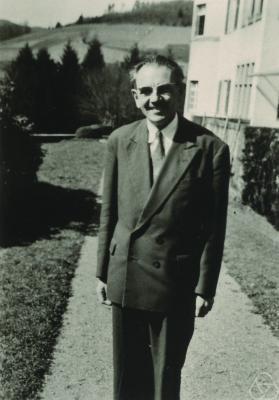
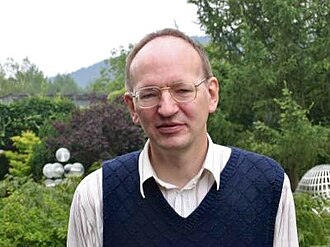
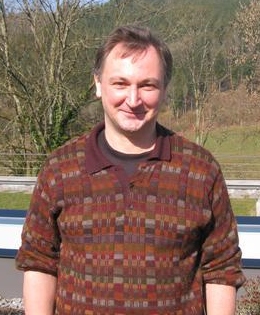
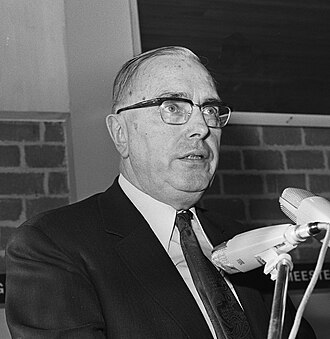
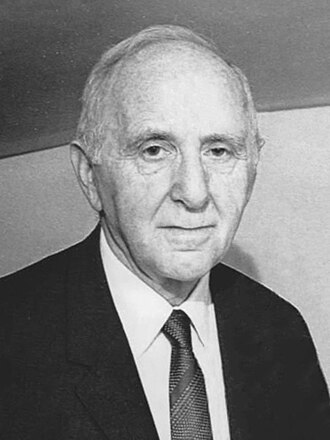
图:Jacobs, Konrad · CC BY-SA 2.0 de · Wikimedia Commons
让·勒雷1906—1998
Jean Leray
French mathematician (1906-1998)
让·勒雷,法国数学家,工作领域为偏微分方程与代数拓扑。
摘自维基百科「让·勒雷」,CC BY-SA 4.0
- 出生
- 1906 年 11 月 7 日,卢瓦尔河畔尚特奈
- 逝世
- 1998 年 11 月 10 日,拉博勒-埃斯库布拉克
- 国籍
- 法国
- 学科
- 数学、博物与综合
- 职业
- 数学家、拓扑学家、教授、大学教师
- 母语 / 工作语言
- 法语
- 母校
- 高等师范学校(1933 年)
- 工作单位
- 法兰西公学院(1947—1978)、南锡大学(1936—1939)、法国军事(1939—1945)
研究领域
主要贡献
代表成就
本站收录的发现与发明
师承
博士生10
来自 Wikidata 的「博士导师」「师从」「博士生」「学生」记录,可能不全。
所获奖项(6)
学会与院士
百科正文
生平
他出生于南特。1926年至1929年求学于高等师范学校。1933年获得哲学博士学位。从1938年到1939年他是南锡大学的教授。他虽没有加入布尔巴基小组,但与其创立者们关系密切。
他在拓扑学的主要工作于1940年至1945年在奥地利埃德巴赫(Edelbach)的战俘营完成。他隐瞒了在偏微分方程方面的知识,因为考虑到其与应用数学的联系,可能会迫使他卷入战争工作。
勒雷这一时期的工作极具成就,他开创了谱序列与层的想法。这些思想后来为许多人所发展,都成为同调代数里重要的工具。
大约从1950年,他重新回到偏微分方程的工作。1945年至1947年于巴黎大学任教授,其后直到1978年一直在法兰西公学。
奖项和荣誉
他曾获得:
1938年罗马尼亚 Malaxa Prize
1940年法兰西科学院数学科学大奖(the Grand Prix in mathematical sciences)
- 1971年林琴学院 Feltrinelli Prize
- 1979年以色列沃尔夫数学奖
- 1988年苏联罗蒙诺索夫金质奖章
以上内容摘自维基百科「让·勒雷」,按 CC BY-SA 4.0 使用,去掉了参考文献、外部链接等尾部小节,公式改写成了纯文本。全文、配图和出处见原文。
英文维基百科补充中文条目比较短,下面是英文条目「Jean Leray」的原文
Jean Leray (French: [ləʁɛ]; 7 November 1906 – 10 November 1998) was a French mathematician, who worked on both partial differential equations and algebraic topology.
Life and career
He was born in Chantenay-sur-Loire (today part of Nantes). He studied at École Normale Supérieure from 1926 to 1929. He received his Ph.D. in 1933. In 1934 Leray published an important paper that founded the study of weak solutions of the Navier–Stokes equations. In the same year, he and Juliusz Schauder discovered a topological invariant, now called the Leray–Schauder degree, which they applied to prove the existence of solutions for partial differential equations lacking uniqueness.
From 1938 to 1939 he was professor at the University of Nancy. He did not join the Bourbaki group, although he was close with its founders.
His main work in topology was carried out while he was a prisoner of war in a camp in Edelbach, Austria from 1940 to 1945. He concealed his expertise on differential equations, fearing that its connections with applied mathematics could lead him to be asked to aid the German war effort.
Leray's work of this period proved seminal to the development of spectral sequences and sheaves. These were subsequently developed by many others, each separately becoming an important tool in homological algebra.
He returned to work on partial differential equations from about 1950.
He was professor at the University of Paris from 1945 to 1947, and then at the Collège de France until 1978.
He was awarded the Malaxa Prize (Romania, 1938), the Grand Prix in mathematical sciences (French Academy of Sciences, 1940), the Feltrinelli Prize (Accademia dei Lincei, 1971), the Wolf Prize in Mathematics (Israel, 1979), and the Lomonosov Gold Medal (Moscow, 1988). He was elected to the American Academy of Arts and Sciences and the American Philosophical Society in 1959 and the United States National Academy of Sciences in 1965.
以上内容摘自英文维基百科「Jean Leray」,按 CC BY-SA 4.0 使用,去掉了参考文献、外部链接等尾部小节,公式改写成了纯文本。全文、配图和出处见原文。
同年获同一奖项
同一学科、同时代的科学家



同一学科的科学家
更多 ›