格物
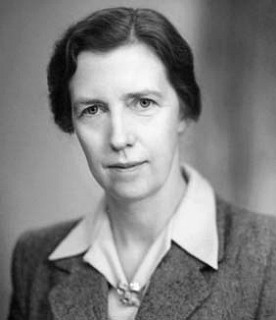
图:by Elliott & Fry, bromide print, 1950, NPG x86637 · CC BY-SA 4.0 · Wikimedia Commons
- 出生
- 1900 年 12 月 17 日,Aynho
- 逝世
- 1998 年 4 月 3 日,剑桥
- 国籍
- 英国、大不列颠及爱尔兰联合王国
- 学科
- 数学、博物与综合
- 职业
- 数学家
- 母语 / 工作语言
- 英语
- 母校
- 牛津大学圣休学院(1923 年)、戈多芬学校(1919 年)、牛津大学(1930 年)
- 工作单位
- The Alice Ottley School(1923—1926)、威科姆修道院女子学校(1926—1927)、剑桥大学格顿学院(1930—1959)、剑桥大学(1959—1968)
研究领域
师承
博士导师1
博士生8
来自 Wikidata 的「博士导师」「师从」「博士生」「学生」记录,可能不全。
所获奖项(4)
- 1947英国皇家学会院士
- 1964西尔维斯特奖章
- 1968德摩根奖章
- 1969Dame Commander of the Order of the British Empire
学会与院士
百科正文
英文维基百科补充中文条目比较短,下面是英文条目「Mary Cartwright」的原文
Dame Mary Lucy Cartwright (17 December 1900 – 3 April 1998) was a British mathematician. She was one of the pioneers of what would later become known as chaos theory. Along with J. E. Littlewood, Cartwright saw many solutions to a problem which would later be seen as an example of the butterfly effect.
Early life and education
Mary Cartwright was born on 17 December 1900, in Aynho, Northamptonshire, where her father William Digby was vicar. Through her grandmother Jane Holbech, she descended from poet John Donne and William Mompesson, Vicar of Eyam. She had four siblings, two older and two younger: John (born 1896), Nigel (born 1898), Jane (born 1905), and William (born 1907). Her early education was at Leamington High School (1912–1915), and then at Gravely Manor School in Boscombe (1915–1916) before completion in Godolphin School in Salisbury (1916–1919).
Cartwright studied mathematics at St Hugh's College, Oxford, graduating in 1923 with a first class degree. She was the first woman to attain the final degree lectures and to obtain a first. She briefly taught at Alice Ottley School in Worcester and Wycombe Abbey School in Buckinghamshire before returning to Oxford in 1928 to read for her D.Phil. Cartwright was supervised by G. H. Hardy in her doctoral studies. During the academic year 1928–9 Hardy was at Princeton, so it was E. C. Titchmarsh who took over the duties as a supervisor. Her thesis "The Zeros of Integral Functions of Special Types" was examined by J. E. Littlewood, whom she met for the first time as an external examiner in her oral examination for that 1930 D.Phil.
In 1930, Cartwright was awarded a Yarrow Research Fellowship and went to Girton College, Cambridge to continue working on the topic of her doctoral thesis. Attending Littlewood's lectures, she solved one of the open problems which he posed.
Career
Throughout her career, Cartwright wrote over ninety articles on several different mathematical concepts. Her contributions extended to topics such as the Dirichlet series, Abel summation, directions of Borel spreads, analytic functions regular on the unit disk, the zeros of integral functions, maximum and minimum moduli, and functions of finite order in an angle.
In 1936, Cartwright became director of studies in mathematics at Girton College. In 1938, she began work on a new project which had a major impact on the direction of her research. The Radio Research Board of the Department of Scientific and Industrial Research produced a memorandum regarding certain differential equations which came out of modelling radio and radar work. They asked the London Mathematical Society if they could help find a mathematician who could work on these problems and she became interested. The dynamics lying behind the problems were unfamiliar to Cartwright, so she approached Littlewood for help with this aspect. They began to collaborate studying the equations, in particular the Van der Pol oscillator, which greatly surprised the two:For something to do we went on and on at the thing with no earthly prospect of "results"; suddenly the whole vista of the dramatic fine structure of solutions stared us in the face.
The fine structure described here is today seen to be a typical instance of the butterfly effect. The collaboration led to important results which have greatly influenced the direction that the modern theory of dynamical systems has taken.
Recognition
- Cartwright was the first woman:
- to serve on the Council of the Royal Society
- to be President of the Mathematical Association (in 1951)
- to be President of the London Mathematical Society (in 1961–62)
- to receive the Sylvester Medal (in 1964)
to receive the De Morgan Medal, the highest award of the London Mathematical Society (in 1968)
In 1968, Cartwright became the first woman to receive the De Morgan Medal, the highest award of the London Mathematical Society, and was elected an Honorary Fellow of The Royal Society of Edinburgh (HonFRSE). In 1969, she was made a Dame Commander of the Order of the British Empire.
In 2026, she was honored with a blue plaque placed at her former home on 38 Sherlock Close in Cambridge.
Death
Cartwright died in Midfield Lodge Nursing Home in Cambridge in 1998.
以上节选摘自英文维基百科「Mary Cartwright」,按 CC BY-SA 4.0 使用,去掉了参考文献、外部链接等尾部小节,公式改写成了纯文本。篇幅所限,较长的小节只摘了开头一部分,有的小节没有收;全文、配图和出处见原文。
同一学科、同时代的科学家


同一学科的科学家
更多 ›