格物
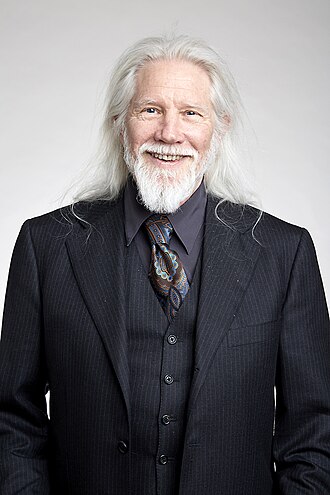
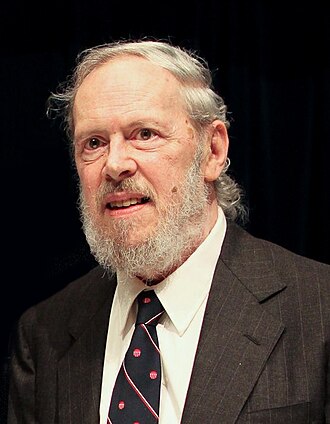
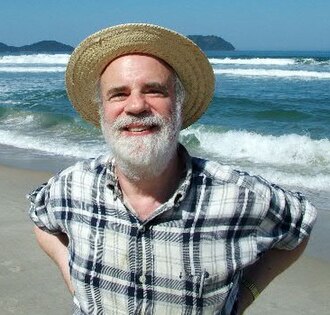
图:Duncan.Hull · CC BY-SA 4.0 · Wikimedia Commons
- 出生
- 1944 年 6 月 5 日,纽约
- 国籍
- 美国
- 学科
- 数学、计算机科学、博物与综合
- 职业
- 密码学家、数学家、计算机科学家、密码破译
- 母语 / 工作语言
- 英语
- 母校
- 麻省理工学院(理学士,1965 年)、斯坦福大学、Jamaica High School
- 工作单位
- 伦敦大学
研究领域
主要贡献
代表成就
师承
师从2
来自 Wikidata 的「博士导师」「师从」「博士生」「学生」记录,可能不全。
所获奖项(14)
- 1992honorary doctor of ETH Zürich
- 1996帕里斯·卡内拉基斯奖
- 1997Louis E. Levy Medal of the Franklin Institute
- 1999IEEE小林浩二计算机与通讯奖
- 2000马可尼奖
- 2004IACR Fellow
- 2010理查德·W·海明奖章
- 2011美国发明家名人堂
- 2011Computer History Museum Fellow
- 2012National Cyber Security Hall of Fame
- 2015图灵奖
- 2017英国皇家学会外籍会员
- 2020ACM会士
- —Order of the Cross of Terra Mariana, 3rd Class
学会与院士
百科正文
生平
其父贝利·威利·迪菲(Bailey Wallys Diffie),是一名历史学家,专长于伊比利亚人与拉丁美洲历史,任教于纽约市立学院。其母贾斯汀·路易丝·惠特菲尔德(Justine Louise Whitfield)也是一位学者及作家。
迪菲在华盛顿特区出生,在纽约市长大,从10岁开始就对密码学有兴趣。大学进入麻省理工学院,主修数学,1965年取得理学士学位。之后至斯坦福大学念研究所。1992年获得瑞士苏黎世联邦理工学院颁发的荣礜博士学位。
1975年至1976年间,与马丁·赫尔曼共同研究加密机制。在1976年,两人共同发表论文《密码学的新方向》(New Directions in Cryptography),他们在此论文中提到的加密方式,也就是后来的迪菲-赫尔曼密钥交换(Diffie–Hellman key exchange)协议。
以上内容摘自维基百科「惠特菲爾德·迪菲」,按 CC BY-SA 4.0 使用,去掉了参考文献、外部链接等尾部小节,公式改写成了纯文本。全文、配图和出处见原文。
英文维基百科补充中文条目比较短,下面是英文条目「Whitfield Diffie」的原文
Bailey Whitfield 'Whit' Diffie ForMemRS (born June 5, 1944) is an American cryptographer and mathematician and one of the pioneers of public-key cryptography along with Martin Hellman and Ralph Merkle. Diffie and Hellman's 1976 paper New Directions in Cryptography introduced a radically new method of distributing cryptographic keys, that helped solve key distribution—a fundamental problem in cryptography. Their technique became known as Diffie–Hellman key exchange. The article stimulated the almost immediate public development of a new class of encryption algorithms, the asymmetric key algorithms.
After his career at Sun Microsystems, where he became a Sun Fellow, Diffie served for two and a half years as Vice President for Information Security and Cryptography at the Internet Corporation for Assigned Names and Numbers (2010–2012). He has also served as a visiting scholar (2009–2010) and affiliate (2010–2012) at the Freeman Spogli Institute's Center for International Security and Cooperation at Stanford University, where he is currently a consulting scholar.
Early life and education
Diffie was born in Washington, D.C. His mother is Justine Louise (Whitfield), a writer and scholar. His father is Bailey Wallys Diffie, who taught Iberian history and culture at the City College of New York. His interest in cryptography began at "age 10 when his father, a professor, brought home the entire crypto shelf of the City College Library in New York".
At Jamaica High School in Queens, New York, Diffie "performed competently" but "never did apply himself to the degree his father hoped". Although he graduated with a local diploma, he did not take the statewide Regents examinations that would have awarded him an academic diploma because he had previously secured admission to the Massachusetts Institute of Technology on the basis of "stratospheric scores on standardized tests". During the first two years of his undergraduate studies at MIT, he felt unengaged and seriously considered transferring to the University of California, Berkeley, which he perceived as a more hospitable academic environment. At MIT, he began to program computers (in an effort to cultivate a practical skill set) while continuing to perceive the devices "as very low class... I thought of myself as a pure mathematician and was very interested in partial differential equations and topology and things like that."
Diffie received a Bachelor of Science with a major in mathematics from the MIT in 1965.
Career and research
From 1965 to 1969, he remained in Greater Boston as a research assistant for the MITRE Corporation in Bedford, Massachusetts. As MITRE was a defense contractor, this position enabled Diffie (a pacifist who opposed the Vietnam War) to avoid the draft. During this period, he helped to develop MATHLAB (an early symbolic manipulation system that served as the basis for Macsyma) and other non-military applications.
In November 1969, Diffie became a research programmer at the Stanford Artificial Intelligence Laboratory, where he worked on LISP 1.6 (widely distributed to PDP-10 systems running the TOPS-10 operating system) and correctness problems while cultivating interests in cryptography and computer security under the aegis of John McCarthy.
Diffie left SAIL to pursue independent research in cryptography in May 1973. As the most current research in the field during the epoch fell under the classified oversight of the National Security Agency, Diffie "went around doing one of the things I am good at, which is digging up rare manuscripts in libraries, driving around, visiting friends at universities." He was assisted by his new girlfriend and future wife, Mary Fischer.
In the summer of 1974, Diffie and Fischer met with a friend at the Thomas J. Watson Research Center (headquarters of IBM Research) in Yorktown Heights, New York, which housed one of the only nongovernmental cryptographic research groups in the United States. While group director Alan Konheim "couldn't tell [Diffie] very much because of a secrecy order," he advised him to meet with Martin Hellman, a young electrical engineering professor at Stanford University who was also pursuing a cryptographic research program. A planned half-hour meeting between Diffie and Hellman extended over many hours as they shared ideas and information.
Personal life
Diffie self-identifies as an iconoclast. He has stated that he "was always concerned about individuals, an individual's privacy as opposed to government secrecy."
以上节选摘自英文维基百科「Whitfield Diffie」,按 CC BY-SA 4.0 使用,去掉了参考文献、外部链接等尾部小节,公式改写成了纯文本。篇幅所限,较长的小节只摘了开头一部分,有的小节没有收;全文、配图和出处见原文。
同年获同一奖项
同一学科、同时代的科学家

同一学科的科学家
更多 ›