格物
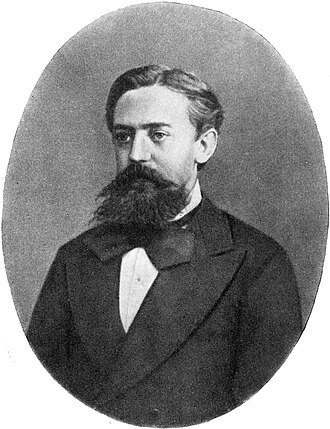
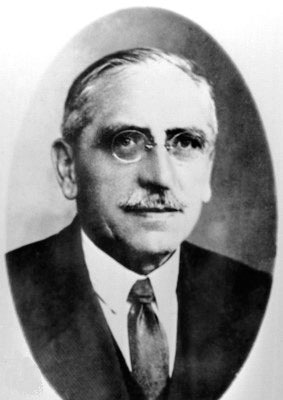
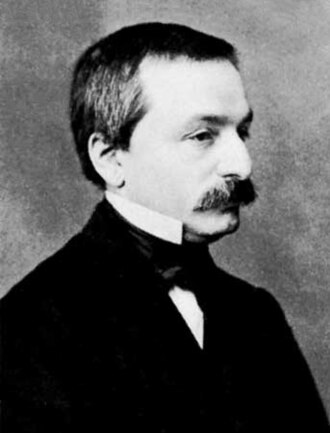
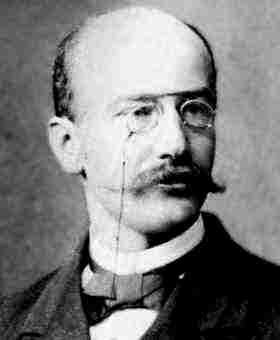
图:作者不详 · Public domain · Wikimedia Commons
- 出生
- 1856 年 6 月 2 日,梁赞
- 逝世
- 1922 年 7 月 20 日,圣彼得堡
- 国籍
- 俄罗斯帝国、俄罗斯苏维埃联邦社会主义共和国
- 学科
- 数学、博物与综合
- 职业
- 数学家、统计学家、大学教师
- 母语 / 工作语言
- 俄语
- 母校
- Faculty of Physics and Mathematics of the Saint Petersburg University(1878 年)、圣彼得堡帝国大学(博士,1880 年)
- 工作单位
- 彼得堡科学院(1886—1922)、圣彼得堡帝国大学(1880—1905)
研究领域
主要贡献
代表成就
以他 / 她命名
师承
博士生7
来自 Wikidata 的「博士导师」「师从」「博士生」「学生」记录,可能不全。
所获奖项(2)
- —Order of Saint Stanislaus, 2nd class
- —Order of Saint Anna, 2nd class
学会与院士
百科正文
马尔可夫和他的弟弟弗拉基米尔·马尔可夫证明了马尔可夫不等式。他的儿子小马尔可夫也是一位著名的数学家,在结构主义数学和递归函数理论方面做出了贡献。
生平
安德烈·马尔可夫于1856年6月14日出生于俄国。他就读于彼得堡文法学校,被一些老师认定为叛逆学生;除了数学以外,他在其他的大部分科目都表现不佳。其后他就读圣彼得堡大学。他的老师包括尤利安·索霍茨基(微分、高等算术)、康斯坦丁·波谢(解析几何)、叶戈尔·佐洛塔廖夫(积分)、帕夫努季·切比雪夫(数论和概率论)、亚历山大·科尔金(常微分和偏微分方程)、米哈伊尔·奥卡托夫(机理论)、奥西普·索莫夫(机械学)和尼古拉·布达耶夫(图形几何学和高等几何学)。在大学完成学业后,他被请求留校作为数学家任职。其后他在中学教书,并自行继续其数学研究。此时,他找到了他的数学技能的一个实际用途,发现可以用链模型来模拟俄罗斯文学中辅音和元音的头韵法。他同样在数学的很多其他方面做出了贡献。马尔可夫1922年逝世于圣彼得堡。
以上内容摘自维基百科「安德烈·马尔可夫」,按 CC BY-SA 4.0 使用,去掉了参考文献、外部链接等尾部小节,公式改写成了纯文本。全文、配图和出处见原文。
英文维基百科补充中文条目比较短,下面是英文条目「Andrey Markov」的原文
Andrey Andreyevich Markov (14 June [O.S. 2 June] 1856 – 20 July 1922) was a Russian mathematician celebrated for his pioneering work in stochastic processes. He extended foundational results—such as the law of large numbers and the central limit theorem—to sequences of dependent random variables, laying the groundwork for what would become known as Markov chains. To illustrate his methods, he analyzed the distribution of vowels and consonants in Alexander Pushkin's Eugene Onegin, treating letters purely as abstract categories and stripping away any poetic or semantic content.
He was also a strong chess player.
Markov and his younger brother Vladimir Andreyevich Markov (1871–1897) proved the Markov brothers' inequality. His son, another Andrey Andreyevich Markov (1903–1979), was also a notable mathematician, making contributions to constructive mathematics and recursive function theory.
Biography
Andrey Markov was born on 14 June 1856 in Ryazan, Russia. He attended the St. Petersburg Grammar School, where some teachers saw him as a rebellious student. In his academics he performed poorly in most subjects other than mathematics. Later in life he attended Saint Petersburg Imperial University. Among his teachers were Yulian Sokhotski (differential calculus, higher algebra), Konstantin Posse (analytic geometry), Yegor Zolotarev (integral calculus), Pafnuty Chebyshev (number theory and probability theory), Aleksandr Korkin (ordinary and partial differential equations), Mikhail Okatov (mechanism theory), Osip Somov (mechanics), and Nikolai Budajev (descriptive and higher geometry).
He completed his studies at the university and was later asked if he would like to stay and have a career as a mathematician. He later taught at high schools and continued his own mathematical studies. In this time he found a practical use for his mathematical skills.
In 1913, he conducted a study on the distribution of vowels and consonants in the first 20,000 letters of Alexander Pushkin's Eugene Onegin, treating the text as a sequence of symbols and analyzing the statistical relationships between them. By classifying each letter as either a vowel or a consonant and analyzing the probabilities of transitions between these categories, Markov demonstrated that chains of dependent events could be rigorously modeled. This was the first empirical application of what are now called Markov chains.
He died at age 66 on 20 July 1922.
Timeline
In 1877, Markov was awarded a gold medal for his outstanding solution of the problem:
About Integration of Differential Equations by Continued Fractions with an Application to the Equation (1+x²)dy/dx=n(1+y²).
During the following year, he passed the candidate's examinations, and he remained at the university to prepare for a lecturer's position.
In April 1880, Markov defended his master's thesis "On the Binary Square Forms with Positive Determinant", which was directed by Aleksandr Korkin and Yegor Zolotarev. Four years later in 1884, he defended his doctoral thesis titled "On Certain Applications of the Algebraic Continuous Fractions".
His pedagogical work began after the defense of his master's thesis in autumn 1880. As a privatdozent he lectured on differential and integral calculus. Later he lectured alternately on "introduction to analysis", probability theory (succeeding Chebyshev, who had left the university in 1882) and the calculus of differences. From 1895 through 1905 he also lectured in differential calculus.
One year after the defense of his doctoral thesis, Markov was appointed extraordinary professor (1886) and in the same year he was elected adjunct to the Academy of Sciences. In 1890, after the death of Viktor Bunyakovsky, Markov became an extraordinary member of the academy. His promotion to an ordinary professor of St. Petersburg University followed in the fall of 1894.
In 1896, Markov was elected an ordinary member of the academy as the successor of Chebyshev. In 1905, he was appointed merited professor and was granted the right to retire, which he did immediately. Until 1910, however, he continued to lecture in the calculus of differences.
In connection with student riots in 1908, professors and lecturers of St. Petersburg University were ordered to monitor their students. Markov refused to accept this decree, and he wrote an explanation in which he declined to be an "agent of the governance". Markov was removed from further teaching duties at St. Petersburg University, and hence he decided to retire from the university.
以上节选摘自英文维基百科「Andrey Markov」,按 CC BY-SA 4.0 使用,去掉了参考文献、外部链接等尾部小节,公式改写成了纯文本。篇幅所限,较长的小节只摘了开头一部分,有的小节没有收;全文、配图和出处见原文。
同一学科、同时代的科学家


同一学科的科学家
更多 ›