格物

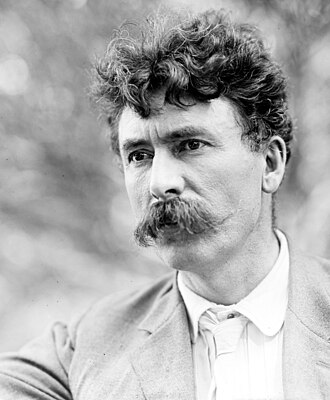
图:作者不详 · Public domain · Wikimedia Commons
吉姆·科比特1875—1955
Jim Corbett
英国猎人、作家
Edward James Corbett was an Anglo-Indian hunter and author. He gained fame through hunting and killing several man-eating tigers and leopards in Northern India, as detailed in his bestselling 1944 memoir Man-Eaters of Kumaon. In his later years, he became an outspoken advocate of the nascent conservation movement.
摘自英文维基百科「Jim Corbett」(英文维基百科,暂无中文条目),CC BY-SA 4.0
- 出生
- 1875 年 7 月 25 日,奈尼塔尔
- 逝世
- 1955 年 4 月 19 日,涅里
- 国籍
- 英国、大不列颠及爱尔兰联合王国
- 学科
- 博物与综合
- 职业
- 作家、猎人、自然科学家、军人
- 母语 / 工作语言
- 英语
百科正文
本条目暂无中文维基百科条目,下面是英文维基百科原文。
Born in Nainital, Corbett explored and hunted in the jungles of India in childhood. He shot his first man-eater in 1907 and continued to hunt and kill such animals over the next four decades. Animals such as the Champawat Tiger, the Leopard of Rudraprayag, and the Panar Leopard had taken hundreds of victims in the divisions of Kumaon and Garhwal, before their deaths at Corbett's hands. Man-Eaters of Kumaon, which detailed several such hunts, became an international bestseller; it was followed by several other books and was adapted into a 1948 Hollywood film. Corbett increasingly disdained what he saw as the rapacious extermination of India's forests and wildlife, and fervently promoted wildlife photography as an alternative to trophy hunting. He played a major role in the creation of India's first wildlife reserve in 1934; it was renamed Jim Corbett National Park after his death. The Indochinese tiger subspecies received the scientific name Panthera tigris corbetti in his honour.
For many years, Corbett earned a living working for the railway companies, and for twenty-two years supervised the transport of goods across the Ganges at Mokameh Ghat. During the First World War, he recruited a labour corps and commanded them on the Western Front; he also supervised the logistics of the Third Anglo-Afghan War in 1919. Returning to his home town during the interwar period, he became a prominent local landowner and businessman who also organised hunts for the elite of British India, including the then-Governor-General Lord Linlithgow, who became a close friend. Corbett served as an instructor in jungle survival for troops of the Burma campaign during the Second World War. Dismayed by the febrile atmosphere surrounding the Indian independence movement, he emigrated to Kenya in 1947, and died in Nyeri eight years later.
Ancestry and early life
The Corbetts descended from several families who had emigrated from the British Isles to the Indian subcontinent over the course of the 19th century. His paternal grandparents Joseph and Harriet Corbett, having eloped together from a monastery and a nunnery in Belfast, had arrived in India on 7 February 1815. They had nine children; the sixth, Christopher William, was born at Meerut in 1822, and followed his father into the Bengal Army, where he served as a medical officer. He married Mary Anne Morrow in December 1845, and they had three children before her early death. Surviving the Indian Mutiny of 1857, he retired from military service and married Mary Jane Doyle née Prussia, a 22-year-old widow of Anglo-Irish descent, in 1859.
Work career and First World War
Corbett spent the two years of his contract near Bakhtiarpur, in charge of a sizeable labour force which collected timber to be used as locomotive fuel. The gruelling work was slightly eased by the rapport he, unlike most of European descent, could build with his men. In cutting down up to two acres (8,100 m2) of forest per day, he gained an appreciation for the then-unknown sciences of ecology and conservation. At the end of his contract, Corbett's honesty in not keeping excess profits for himself impressed a senior railway agent and earned him a job at the Samastipur office, where he worked for a year on various jobs.
Businessman and local notable
After the Third Anglo-Afghan War finished in 1919, Corbett declined to return to the railways, and worked on a Kumaon house agency he had invested in and whose owner had subsequently died. Corbett expanded this business, named F.E.G. Mathews & Co. after its late owner, into hardware and tradesmanship. Around 1915, he had purchased the near-derelict village of Chhoti Haldwani near Kaladhungi. Despite initial difficulties, the village came to prosper: Corbett imported new crops such as bananas, grapes, and maize, and maintained the village to a high standard. A 9-kilometre (5.6 mi) wall he built to protect the villagers remains standing.
Relationship with wildlife
Hunting man-eaters
In 1907, Corbett was approached by the deputy commissioner of Naini Tal, who asked him to hunt the Champawat Tiger. This tigress had allegedly killed two hundred people in Nepal, before a mass beating drove her into India. She established her territory around Lohaghat in early 1903 and doubled her total over the next four years, claiming a victim once every three weeks on average. None of the shikaris (hunters), sportsmen, or army infantry deputised to hunt her had come close. Corbett accepted the task, and hunted the tigress for a number of days. After a seventeen-year-old girl was killed, a beat involving 298 men was organised, which drove the tigress from cover and allowed Corbett to shoot her.
Personal life
Corbett never married. His biographer Martin Booth dismissed suggestions that he was homosexual, instead citing his personal demeanor and his economic, social, and familial circumstances. As a "domiciled" Anglo-Indian, Corbett was inferior socially to any young women from Britain looking for a husband, especially considering his isolated and somewhat primitive life at Mokameh Ghat. He was also generally quiet and introverted. This lack of social confidence was encouraged by his mother Mary, who was intensely protective of all her sons, perhaps motivated by a desire to be looked after in old age. In 1902, she and Maggie, who was similarly jealous of any potential wife for Jim, managed to obstruct his courtship of a holidaying English girl with whom he had fallen in love.
Later life and death
Corbett was worried by the growth of the Indian independence movement in the interwar period, especially after the civil unrest caused by the arrest of Mahatma Gandhi in 1930. Foreseeing a day when those of European origin would no longer be welcome in India, he began to wind down his physical assets in the country and reinvested the money in annuities and life insurance. By 1941, he had sold nearly all of his business holdings in Nani Tal. With Indian independence fast approaching after the Second World War, Corbett believed that he and his sister Maggie would soon become second-class citizens in an anti-British India.
以上节选摘自英文维基百科「Jim Corbett」,按 CC BY-SA 4.0 使用,去掉了参考文献、外部链接等尾部小节,公式改写成了纯文本。篇幅所限,较长的小节只摘了开头一部分,有的小节没有收;全文、配图和出处见原文。