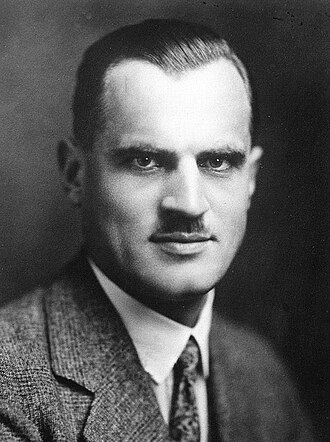
格物
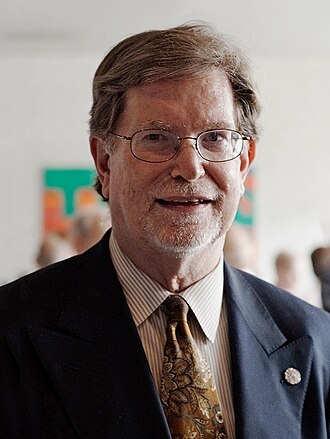
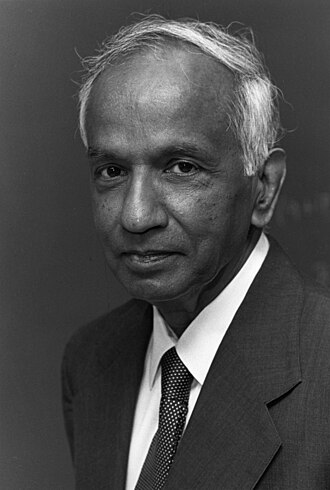
亚历山大·里奇1924—2015
Alexander Rich
American biologist (1924–2015)
亚历山大·里奇,美国生物学家和生物物理学家。自1958年起,他在麻省理工学院和哈佛医学院担任生物物理学的威廉·汤普森·塞奇威克教授。
摘自维基百科「亚历山大·里奇」,CC BY-SA 4.0
- 出生
- 1924 年 11 月 15 日,哈特福德
- 逝世
- 2015 年 4 月 27 日,波士顿
- 国籍
- 美国
- 学科
- 物理学、生物学、博物与综合
- 职业
- 分子生物学家、生物物理学家、生物学家
- 母校
- 哈佛医学院、哈佛大学
- 工作单位
- 哈佛大学、麻省理工学院
研究领域
所获奖项(12)
- 1982罗森斯特尔奖
- 1995美国国家科学奖章
- 1995莱纳斯·鲍林奖
- 2000Bower Award and Prize for Achievement in Science
- 2001威廉·普罗克特科技成果奖
- 2001罗蒙诺索夫金质奖章
- 2008韦尔奇化学奖
- —Honorary doctor of the Free University of Berlin
- —honorary doctorate of the Weizmann Institute of Science
- —美国文理科学院院士
- —honorary doctor of ETH Zürich
- —古根海姆学者奖
学会与院士
百科正文
生平
出生于美国康涅狄格州哈特福里奇博士从哈佛大学获得A.B.(极优等)和MD(优等)。他是莱纳斯·鲍林与詹姆斯·沃森的博士后,拥有超过600署名的论文发表。
1963年,里奇发现了多核糖体(Polysome):核糖体集群同时读取mRNA的一条链。
1979年,里奇和他的同事在麻省理工学院的生长Z-DNA的晶体。.这是任何形式的脱氧核糖核酸(DNA)的第一个晶体结构。
荣誉和奖励
美国国家科学奖章,华盛顿特区(1995年)
韦尔奇化学奖 (2008年)
以上内容摘自维基百科「亚历山大·里奇」,按 CC BY-SA 4.0 使用,去掉了参考文献、外部链接等尾部小节,公式改写成了纯文本。全文、配图和出处见原文。
英文维基百科补充中文条目比较短,下面是英文条目「Alexander Rich」的原文
Alexander Rich (15 November 1924 – 27 April 2015) was an American biologist and biophysicist. He was the William Thompson Sedgwick Professor of Biophysics at the Massachusetts Institute of Technology (since 1958) and Harvard Medical School. Rich earned an A.B. (magna cum laude) and an M.D. (cum laude) from Harvard University. He was a post-doc of Linus Pauling. During this time he was a member of the RNA Tie Club, a social and discussion group which attacked the question of how DNA encodes proteins. He has over 600 publications to his name.
Born in Hartford, Connecticut, Rich was the founder of Alkermes and was a director beginning in 1987. Rich was co-chairman of the board of directors of Repligen, a biopharmaceutical company. He also served on the editorial board of Genomics and the Journal of Biomolecular Structure and Dynamics.
Personal life
Rich spent his early life in Springfield, Massachusetts. He grew up in a working-class family and worked in the U.S. Armory while he was in high school. From 1943 to 1946, Rich was in the U.S. Navy.
He obtained a bachelor's in biochemical sciences from Harvard University in 1947 and a medical degree from Harvard Medical School in 1949. Rich died on 27 April 2015, aged 90.
Academic career
At Harvard, Rich studied with John Edsall, who inspired him to pursue an academic career. In 1949, he moved to the California Institute of Technology to perform postdoctoral research with Linus Pauling. He met James Watson during his time in Pauling's lab. He stayed in Pauling's group until 1954. Rich worked as a section chief in physical chemistry at the National Institutes of Health from 1954 to 1958. He spent a sabbatical at the Cavendish Laboratory in Cambridge (1955–1956), where he worked with Francis Crick and solved the structure of collagen. He became a professor at MIT in 1958. He worked diligently at MIT until his death in 2015. He still went into lab until two months before his death.
Contributions to science
His work played a pivotal role in the discovery of nucleic acid hybridization.
In 1955, Rich and Crick solved the structure of collagen.
In 1963, Rich discovered polysomes: clusters of ribosomes which read one strand of mRNA simultaneously.
From 1969 to 1980, he was a biology investigator looking for life on mars with NASA's Viking Mission to Mars.
In 1973, Rich's lab determined the structure of tRNA.
In 1979, Rich and co-workers at MIT grew a crystal of Z-DNA. After 26 years of attempts, Rich et al. finally crystallised the junction box of B- and Z-DNA. Their results were published in an October 2005 Nature journal. Whenever Z-DNA forms, there must be two junction boxes that allow the flip back to the canonical B-form of DNA.
List of awards and prizes received
- a member of the National Academy of Sciences (appointed 17 April 1978)
- a member of the American Academy of Arts and Sciences
- a member of the Philosophical Society
- a member of the French Academy of Sciences
- a member of the Institute of Medicine
a member of the Scientific Advisory Board of U.S. Genomics, Inc.
President Bill Clinton recognized his outstanding scientific achievements with the National Medal of Science in 1995.
The Bower Award and Prize for Achievement in Science (2000)
2001 William Procter Prize for Scientific Achievement
2008 Welch Award in Chemistry: "For outstanding contributions to the understanding of the chemical and biochemical mechanisms in maintaining a living cell".
Awards and prizes
- Sigma Xi Proctor Prize, Raleigh, NC (2001)
- Bower Award and Prize, the Franklin Institute, Philadelphia, PA (2000)
- National Medal of Science, Washington, DC (1995)
- Linus Pauling Medal, American Chemical Society, Northwest Sections (1995)
Lewis S. Rosenstiel Award in Basic Biomedical Research, Brandeis Univ., Waltham, MA (1983)
- James R. Killian Faculty Achievement Award, Massachusetts Institute of Technology (1980)
- Presidential Award, New York Academy of Science, New York, NY (1977)
- Theodore van Karmen Award for Viking Mars Mission, Washington, DC (1976)
Skylab Achievement Award, National Aeronautics and Space Administration, Washington, DC (1974)
Academies
- Foreign Member, Russian Academy of Sciences, Moscow, Russia (1994)
- Honorary Member, Japanese Biochemical Society, Tokyo, Japan (1986)
- Foreign Member, French Academy of Sciences, Paris, France (1984)
- Honorary Doctorate, Federal University of Rio de Janeiro, Brazil (1981)
- American Philosophical Society, Philadelphia, PA (1980)
- Pontifical Academy of Sciences (1978)
- National Academy of Sciences, Washington, DC (1970)
- Fellow, American Association for the Advancement of Science, Washington, DC (1965)
以上节选摘自英文维基百科「Alexander Rich」,按 CC BY-SA 4.0 使用,去掉了参考文献、外部链接等尾部小节,公式改写成了纯文本。篇幅所限,较长的小节只摘了开头一部分,有的小节没有收;全文、配图和出处见原文。
同年获同一奖项
同一学科、同时代的科学家




同一学科的科学家
更多 ›