格物
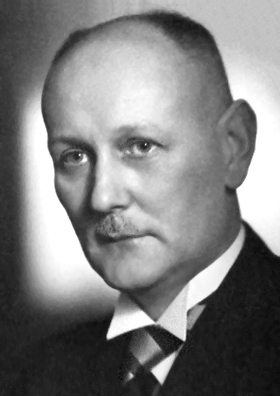
伊恩·海尔布隆1886—1959
Ian Heilbron
British chemist (1886–1959)
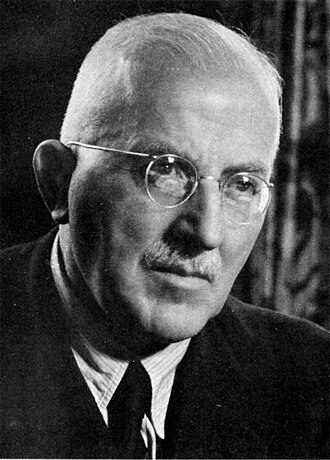
Sir Ian Morris Heilbron DSO FRS was a Scottish chemist, who pioneered organic chemistry developed for therapeutic and industrial use.
摘自英文维基百科「Ian Heilbron」(英文维基百科,暂无中文条目),CC BY-SA 4.0
- 出生
- 1886 年 11 月 6 日,格拉斯哥
- 逝世
- 1959 年 9 月 14 日,伦敦
- 国籍
- 英国、大不列颠及爱尔兰联合王国
- 学科
- 化学
- 职业
- 化学家、大学教师
- 母语 / 工作语言
- 英语
- 母校
- 格拉斯哥高中
- 工作单位
- 曼彻斯特大学、伦敦帝国学院、利物浦大学、曼彻斯特维多利亚大学
研究领域
师承
博士生2
来自 Wikidata 的「博士导师」「师从」「博士生」「学生」记录,可能不全。
所获奖项(7)
学会与院士
百科正文
本条目暂无中文维基百科条目,下面是英文维基百科原文。
Early life and education
Heilbron was born in Glasgow on 6 November 1886 to a wine merchant (David Heilbron) and his wife (Fanny Jessel). He was Jewish.
He was educated at Glasgow High School and then the Royal Technical College with G. G. Henderson. Following an award of a Carnegie Fellowship he went to the University of Leipzig to study under Arthur Rudolf Hantzsch for his doctoral thesis (1907–1910).
He was awarded a Ph.D. He received a D.Sc. at the University of Glasgow in 1918 for his 'Contribution to the Study of Semi-carbazones' and other papers.
Military service
He served in the Royal Army Service Corps (1910–1920). He was awarded a Distinguished Service Order in 1918 for distinguished service related to operations in Salonika. He was also appointed an Officer of the Order of the Redeemer by the Greek government. He achieved the rank of lieutenant colonel, Assistant Director of Supplies.
During the Second World War from 1939 to 1942 he worked as a scientific advisor to the Department of Scientific Research in the Ministry of Supply. From 1942 to 1945 he became a scientific advisor to the Ministry of Production and assisted in the introduction of DDT.
Career
Appointed Professor at Manchester in 1933, where he was keen to exploit new techniques for micro-analysis, adsorption chromatography, low pressure distillation, and ultra-violet spectroscopy. He was elected o membership of the Manchester Literary and Philosophical Society on 5 November 1935
His independent research career focused on the chemistry of natural products, including work on sterols, vitamin D, vitamin A, polyene synthesis, Squalene, terpenes, pyrylium salts, algal pigments, and spiropyrans. He was also instrumental in the development of DDT to fight malaria and yellow fever. Heilbron, with Arthur Herbert Cook, also studied the synthesis and structure of penicillin.
Appointments
Lecturer, Royal Technical College, 1909–14
Scientist, later consultant at British Dyestuffs Corp. (later renamed Imperial Chemical Industries)
- Professor of organic chemistry, Royal Technical College, 1919–20
- Professor, University of Liverpool, 1920–33 (Heath Harrison Chair of Organic Chemistry)
- Professor, University of Manchester, 1933-8 (Sir Samuel Hall Chair of Chemistry, 1935-8)
Professor of Organic Chemistry and Director of the Laboratories, Imperial College, 1938–49
- 1949: Retired from academic research
- Director, Brewing Industry Research Foundation, 1949–58
- Chairman of the Advisory Council of the Royal Military College of Science
- International Union of Pure & Applied Chemistry
- Editor-in-chief of the “Dictionary of Organic Compounds” and
- Chairman of the editorial board of “Thorpe’s Dictionary of Applied Chemistry.”
Notable trainees
While at University of Liverpool
Frank Stuart Spring, graduate student (1930)
While at University of Manchester
Basil Lythgoe, graduate student, (1936)
Ewart Ray Herbert Jones, post-doc (1938)
While at Imperial College
- Stanley H. Harper, graduate student (1937)
- Derek Harold Richard Barton, graduate student (1942)
- Basil Weedon, graduate student, (1942)
- Ralph Alexander Raphael, graduate student (1943)
- Ernest A. R. Braude, graduate student (1944)
- John Arthur Elvidge, graduate student (1947)
- Franz Sondheimer, graduate student (1948)
- Marc Julia, graduate student (1948)
While at Imperial Chemical Industries
Alan Woodworth Johnson, research scientist (1946)
Notable collaborators
While at University of Liverpool
Richard Alan Morton
Awards and honours
- 1911: Fellow of the Institute of Chemistry (F.I.C.)
- 1931: Fellow of the Royal Society (FRS)
- 1939: Longstaff Medal of the Chemical Society of London
1943: Davy Medal from the Royal Society "In recognition of his many notable contributions to organic chemistry, especially to the chemistry of natural products of physiological importance"
1945: The American Chemical Society honored him with its highest prize, the Priestley Medal. This was the first time the award went to a non-American.
1946: In recognition of his work during war he was appointed a Knight Bachelor
1951: Royal Medal from the Royal Society
以上内容摘自英文维基百科「Ian Heilbron」,按 CC BY-SA 4.0 使用,去掉了参考文献、外部链接等尾部小节,公式改写成了纯文本。全文、配图和出处见原文。
同一学科、同时代的科学家