格物
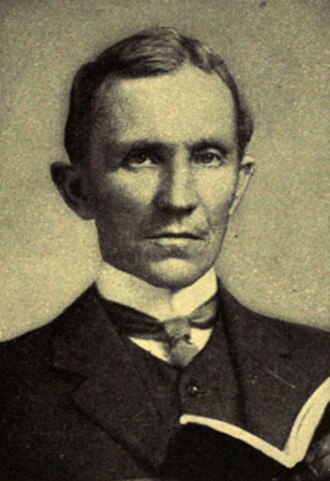
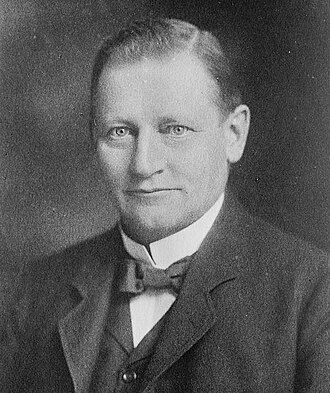
图:E. Spencer Macky · Public domain · Wikimedia Commons
叶吉沃兹·大卫1858—1934
Edgeworth David
Australian geologist (1858–1934)
Sir Tannatt William Edgeworth David, was a Welsh Australian geologist, Antarctic explorer, and military veteran. He was knighted for his role in the First World War.
摘自英文维基百科「Edgeworth David」(英文维基百科,暂无中文条目),CC BY-SA 4.0
- 出生
- 1858 年 1 月 28 日,St Fagans
- 逝世
- 1934 年 8 月 28 日,悉尼
- 国籍
- 澳大利亚、大不列颠及爱尔兰联合王国
- 学科
- 地球科学
- 职业
- 探险家、教授、地质学家、地理学家
- 母语 / 工作语言
- 英语
- 母校
- 牛津大学新学院、莫德林学院
- 工作单位
- 悉尼大学
研究领域
师承
博士生2
学生1
来自 Wikidata 的「博士导师」「师从」「博士生」「学生」记录,可能不全。
所获奖项(9)
- 1899比格斯比奖章
- 1904Honorary Fellow of the Royal Society Te Apārangi
- 1909Mueller Medal
- 1915沃拉斯顿奖章
- 1917威廉·布兰怀特·克拉克奖章
- 1926Patron’s Medal
- —英国皇家学会院士
- —大英帝国爵级司令勋章
- —杰出服务勋章
学会与院士
百科正文
本条目暂无中文维基百科条目,下面是英文维基百科原文。
A household name in his lifetime, David's most significant achievements were discovering the major Hunter Valley coalfield in New South Wales, leading the first expedition to reach the south magnetic pole, and serving in the Tunnelling Corps during the war.
Early life and education
Tannatt William Edgeworth David was born on 28 January 1858, in St Fagans near Cardiff, Wales.
At the age of 12, David went to Magdalen College School, Oxford, in 1870. In 1876, he gained a classical scholarship to New College, Oxford. While there he was lectured by the famous John Ruskin and William Spooner. In 1878 he suffered a health breakdown and travelled to Canada and Australia to recuperate. Returning to Oxford, he attended lectures on geology by Sir Joseph Prestwich which stimulated his interest in the subject. After graduating as a Bachelor of Arts without honours in 1880, he spent the following two years in field study of the geology of Wales.
In 1882 he briefly studied at the Royal School of Mines, London, under John Wesley Judd.
Career
Australia and the Pacific
In 1891, David was appointed professor of geology at the University of Sydney, a position he held until 1924.
From 1900 to 1907 he conducted field studies of glaciation in the Kosciusko plateau and Precambrian glaciation in South Australia.
Douglas Mawson was enrolled for Bachelor of Engineering degree in mining and metallurgy from 1899 until his graduation in 1902, and Edgeworth served not only as an influential mentor to Mawson, but as his referee for his appointment as a junior demonstrator in chemistry during this time. In 1904, Mawson and T. H. Laby were the first to identify radium-bearing ore in Australia, and David made the formal presentation of the paper to the Royal Society of New South Wales on 5 October 1904 on the men's behalf. In 1906 Mawson identified and first described the mineral davidite (named after David), which contains titanium and uranium, at Radium Hill, South Australia.
Antarctic exploration
In mid-1907, David was invited to join Ernest Shackleton's Antarctic Nimrod Expedition, and, in December, won Australian government funding for the expedition.
On 5 October, David led Mawson and Mackay on an attempt to reach the Magnetic South Pole. For 10 weeks the men followed the coast north supplementing their stores with a diet of seals and penguins. They then crossed the Drygalski Ice Tongue and turned inland.
First World War: Australian Mining Corps
When the First World War broke out in 1914, David was a strenuous supporter of the war effort, supporting the campaign for conscription. In August 1915, after reading reports about mining operations and tunnelling during the Gallipoli Campaign, along with Professor Ernest Skeats, a professor at the University of Melbourne, David wrote a proposal to Senator George Pearce, the Australian Defence Minister, suggesting that the government raise a military force to undertake mining and tunnelling. After the proposal was accepted, David used his advocacy and organisational abilities to set up the Australian Mining Corps and, on 25 October 1915, he was appointed as a major, at the age of 57.
The first contingent of the corps consisted of 1,300 officers and men that were initially organised into two battalions before being reorganised into three tunnelling companies, as well as an electrical and mechanical mining company. After departing Australia for the United Kingdom in February 1916, the corps arrived on the Western Front in May 1916. Given the title 'Geological Adviser to the Controllers of Mines in the First, Second and Third Armies', David became relatively independent and spent his time in geological investigations, using his expertise to advise on the construction of dugouts, trenches, and tunnels, the siting of wells for provision of pure drinking water from underground supplies, giving lectures, and producing maps.
Later life
In 1896 the Davids bought 26 acres (10.5 hectares) at Woodford, in the Blue Mountains, with an existing weatherboard cottage, two-roomed with two skillion rooms at the back. To emphasise his Welsh origins, Edgeworth David named the Woodford cottage ‘Tyn-y-Coed’, the 'house in the trees' (often mistranslated as 'the shack in the bush': 'ty' is a proper house in Welsh, not a mere hut).
In 1915 the Davids offered their home to the Red Cross convalescent home for the rehabilitation of injured servicemen and the Woodford Academy boys erected a flagstaff for the Union Jack and Red Cross flags for the soldiers in residence. When the Cooee marchers trooped past in November 1915 some of the wounded soldiers were brought up to the main road to greet the marchers.
Although they had work and commitments in Sydney, Woodford was the David's primary residence from 1899 until 1920. They retained the Woodford cottage as a favoured country retreat until Edgeworth's death in 1934.
Tyn-y-Coed was destroyed by bushfire in 1944 with only a chimney stump remaining. Its grounds are now occupied by eight modern houses, their gardens and adjoining bush.
In September 1920, David was created a Knight Commander of the Order of the British Empire for services during the war.
Returning to Australia, David purchased "Coringah", a cottage in the Sydney suburb of Hornsby. He also started writing a definitive work, The Geology of the Commonwealth of Australia.
Legacy
David's The Geology of the Commonwealth of Australia was finally completed by his chosen collaborator, associate professor William R. Browne in 1950.
The Edgeworth David Medal is named in his honour. It is awarded by the Royal Society of New South Wales for distinguished contributions by a young scientist under the age of thirty-five for work done mainly in Australia or its territories. The mineral davidite is named after him, as was the Edgeworth David Building (demolished 2006) at the University of Sydney.
The Edgeworth David Building at Tighes Hill TAFE campus in the New South Wales Hunter Valley is named in his honour.
David Island, lying off Davis Peninsula in the Shackleton Ice Shelf in Antarctica, is named for him.
Edgeworth David Base is the name of a summer station in the Bunger Hills area of Antarctica. It has been maintained by Australia since 1986.
The suburb of Edgeworth in the city of Newcastle, New South Wales, is named after him.
The Edgeworth David quarry in Seaham, New South Wales is named after David, who discovered varve shale there in 1914.
The boreholes on Funafuti, Tuvalu are known as "David's Drill".
In 1968 he was honoured on a postage stamp issued by Australia Post.
David's daughter Margaret McIntyre was the first woman elected to the Parliament of Tasmania and was awarded the Order of the British Empire.
以上节选摘自英文维基百科「Edgeworth David」,按 CC BY-SA 4.0 使用,去掉了参考文献、外部链接等尾部小节,公式改写成了纯文本。篇幅所限,较长的小节只摘了开头一部分,有的小节没有收;全文、配图和出处见原文。
同一学科、同时代的科学家


同一学科的科学家
更多 ›