格物
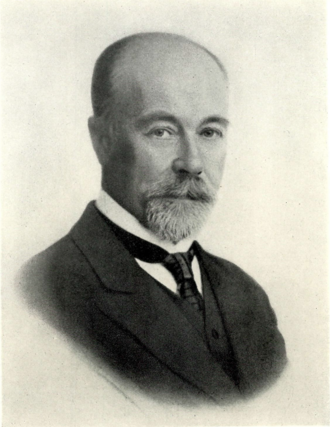
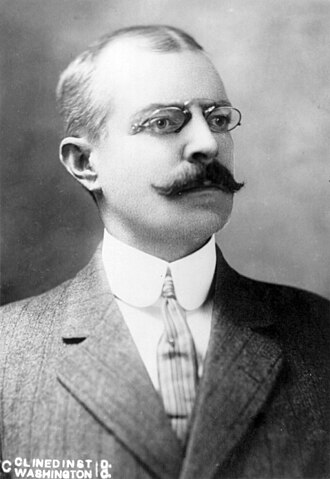
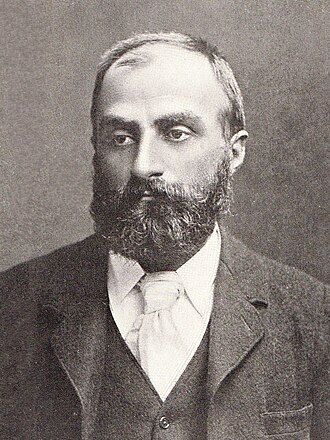
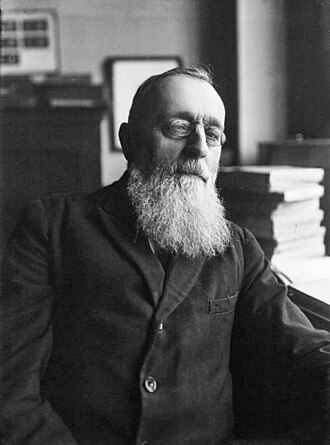
图:作者不详 · Public domain · Wikimedia Commons
Gerard De Geer1858—1943
Swedish geologist (1858-1943)
Baron Gerard Jacob De Geer was a Swedish geologist who made significant contributions to Quaternary geology, particularly geomorphology and geochronology. De Geer is best known for his work on varves. In 1890 De Geer was the first to apply the name Ancylus Lake to the Baltic paleolake discovered by Henrik Munthe. He subsequently participated in the protracted scientific controversy surrounding this lake.
摘自英文维基百科「Gerard De Geer」(英文维基百科,暂无中文条目),CC BY-SA 4.0
- 出生
- 1858 年 10 月 2 日,Klara Church Parish
- 逝世
- 1943 年 7 月 23 日,Saltsjöbaden Parish
- 国籍
- 瑞典
- 学科
- 地球科学
- 职业
- 地质学家、政治人物
- 母语 / 工作语言
- 瑞典语、英语
- 母校
- 乌普萨拉大学
- 工作单位
- 斯德哥尔摩大学(1897—)、Geological Survey of Sweden(1878—1897)、地质杂志
研究领域
师承
博士生2
学生2
来自 Wikidata 的「博士导师」「师从」「博士生」「学生」记录,可能不全。
所获奖项(5)
- 1915Vega Medal
- 1917Björkén Prize
- 1920沃拉斯顿奖章
- 1927Berzelius Medal
- 1930英国皇家学会外籍会员
学会与院士
百科正文
本条目暂无中文维基百科条目,下面是英文维基百科原文。
Biography
Baron Gerard Jacob De Geer comes from a well-known Swedish aristocratic family of Brabant origin, who had emigrated to Sweden in the early seventeenth century. His family included prominent industrialists and politicians. His father Louis and older brother Gerhard Louis served as the Prime Minister of Sweden.
Gerard Jacob was born on 2 October 1858, in Stockholm in the family of Baron Louis Gerhard de Geer, at that time the first Minister of Justice in the Swedish government, and Carolina de Geer, née Countess Wachtmeister. Since 1869 he studied at primary school, and since 1873 - at the Stockholm gymnasium. In 1877, de Geer entered Uppsala University. In May 1879 he graduated and received a Bachelor of Arts degree.
In 1878, De Geer became an employee of the Geological Survey of Sweden, initially freelance, then, since 1882, as an assistant to a geologist, and since 1885, a full-time geologist. At this time he started to study the late Quaternary deposits and landforms of southern Sweden.
Main research areas
De Geer's early studies of raised beaches, used to reconstruct glacio-isostatic sea level changes, and his mapping of glacial moraines to reconstruct the extent of the last Scandinavian ice sheet and its pattern of deglaciation (the particular type of moraine he studied is now referred to as De Geer moraine), were well received. However, De Geer is most famous for discovering varves and pioneering their use in geochronology.
During fieldwork in 1878, De Geer noticed that the appearance of laminated sediments deposited in glacial lakes at the margin of the retreating Scandinavian ice sheet at the end of the last ice age, closely resembled tree-rings. In his best known work Geochronologia Sueccia, published in 1940, De Geer wrote "From the obvious similarity with the regular, annual rings of the trees I got at once the impression that both ought to be annual deposits" (1940, p. 13).
While this observation was not new, De Geer was the first geologist to exploit its potential application.
Global expeditions, teleconnections, and controversy
De Geer firmly believed the main control on varve sedimentation was solar radiation acting on glacier meltwater production, and that consequently, varved sediments represented a "..gigantic, natural self-registering thermograph" (De Geer 1926) and varve curves (varve thickness plotted against varve number or year), which he often referred to as "solar curves", a reliable proxy for past changes in solar radiation. Ultimately, De Geer hoped his studies of varves would explain the fundamental cause of Ice Ages - "If the last glaciation everywhere should show to be synchronous and the origin of the last Ice Age thus to be of a general nature, the assumption of a cosmic cause would scarcely be avoidable."
In 1915 De Geer matched, or 'teleconnected", varve curves from Sweden to varve curves from Finland and Norway. This first attempt at long-distance correlation marked the start of two decades travelling around the world by De Geer and his colleagues, searching out varve sequences for potential teleconnections.
Geochronologia Suecica Principles
In 1940, De Geer published his longest and best-known work Geochronologia Suecica Principles, in which he presented part of the Swedish Time Scale in detail, and expounded upon his theories and work regarding varves.
Almost immediately after the publication of Geochronologia Suecica Principles De Geer's Swedish Time Scale underwent the first of many revisions, as other geologists became involved in the study of varves and more sites were examined.
However, international interest in varves diminished. The bitter dispute between De Geer and Antevs, coupled with the advent of new dating techniques, most importantly radiocarbon dating, showed varves in a bad light.
De Geer died in Stockholm on 24 July 1943. His wife, Ebba Hult de Geer, continued to publish his work, and add to it, into the 1950s.
Awards and recognition
De Geer's contributions to geology were recognised in the UK, where the Geological Society awarded De Geer the Wollaston Medal in 1920, and the Royal Society elected De Geer a foreign member in 1930. The ancient DeGeer Sea in modern-day Maritime Canada and the Gulf of Maine was named in his honour.
The Swedish Antarctic Expedition (1901–1904) named a glacier on South Georgia Island in the southern Atlantic Ocean after De Geer. The British would later rename the glacier Harker Glacier after a contemporary English geologist, Alfred Harker.
The valley of De Geerdalen at Spitsbergen, Svalbard is named after him.
De Geer from a modern perspective
De Geer's most significant contribution to Quaternary science was unquestionably the identification of varves, and his recognition of their potential in establishing annual chronologies of past climatic and environmental change. The Swedish Time Scale was the most precise and accurate geological timescale of its day, and it is still being improved and added to today. His insistence that varves represented quantifiable proxies for past climate has since been borne out to a degree, but the relationship between varve thickness and hydrometeorological conditions is not as simple as he presumed. Varves have recently experienced a renaissance as methods and techniques of study have improved, and varves are now regularly used to calibrate radiocarbon timescales.
Selected English language works
De Geer, G. (1912), A geochronology of the last 12000 years. Congr. Géol. Int. Stockholm 1910, C.R., 241–253.
De Geer, G (1921). "Correlation of late-glacial clay varves in North America with the Swedish timescale". Geol. Förhandl., Stockholm. 43: 70–73. doi:10.1080/11035892109443889.
De Geer, G (1926). "On the solar curve as dating the Ice Age, the New York moraine and Niagara falls through the Swedish time scale". Geogr. Annaler. (Stockholm). 8: 253–284. doi:10.2307/519727. JSTOR 519727.
De Geer, G (1927). "Late glacial clay varves in Argentina measured by Dr. Carl Caldenius, dated and connected with the solar curve through the Swedish time scale". Geogr. Annaler (Stockholm). 9: 1–8. doi:10.2307/519677. JSTOR 519677.
De Geer, G (1934). "Geology and geochronology". Geogr. Annaler (Stockholm). 1: 1–52.
De Geer, G (1935a). "Dating of the Ice Age in Scotland". Transactions of the Geological Society of Glasgow. 19 (2): 335–339. doi:10.1144/transglas.19.2.335. S2CID 219189556.
以上节选摘自英文维基百科「Gerard De Geer」,按 CC BY-SA 4.0 使用,去掉了参考文献、外部链接等尾部小节,公式改写成了纯文本。篇幅所限,较长的小节只摘了开头一部分,有的小节没有收;全文、配图和出处见原文。
同一学科、同时代的科学家


同一学科的科学家
更多 ›