格物
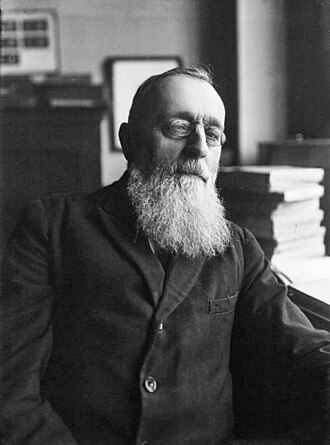
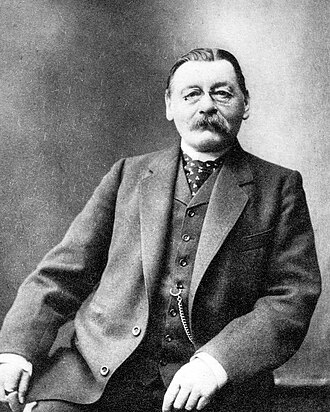
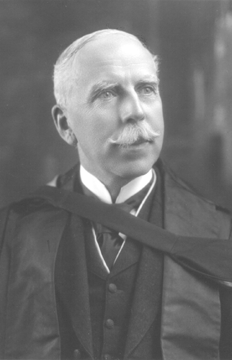
图:Agence Meurisse (domaine public, voir notice complète sur Ga… · Public domain · Wikimedia Commons
阿尔弗雷德·拉克鲁瓦1863—1948
Antoine Lacroix
French mineralogist and geologist (1863–1948)
Antoine François Alfred Lacroix, known as Alfred Lacroix, was a French mineralogist and geologist. He was born in Mâcon, Saône-et-Loire.
摘自英文维基百科「Alfred Lacroix」(英文维基百科,暂无中文条目),CC BY-SA 4.0
- 出生
- 1863 年 2 月 4 日,马孔
- 逝世
- 1948 年 3 月 16 日,巴黎十四区
- 国籍
- 法国
- 学科
- 地球科学、博物与综合
- 职业
- 地质学家、矿物学家、大学教师、火山学家
- 母语 / 工作语言
- 法语
- 母校
- 巴黎科学学院(哲学博士,1889 年)、École supérieure de pharmacie de Paris
- 工作单位
- 高等研究应用学院、国家自然历史博物馆
研究领域
师承
来自 Wikidata 的「博士导师」「师从」「博士生」「学生」记录,可能不全。
所获奖项(9)
- 1903法国荣誉军团骑士勋章
- 1917沃拉斯顿奖章
- 1919英国皇家学会外籍会员
- 1919法国荣誉军团军官勋章
- 1923海登纪念地质学奖
- 1923荣誉军团司令
- 1930彭罗斯奖章得主列表
- 1935荣誉军团大军官勋章
- —Officier de l'Instruction publique
学会与院士
百科正文
本条目暂无中文维基百科条目,下面是英文维基百科原文。
Education
Alfred Lacroix completed a D. s Sc. in Paris in 1889, as student of Ferdinand André Fouqué. Fouqué only agreed to the graduation if Lacroix would marry his daughter.
Career
In 1893, Alfred Lacroix was appointed professor of mineralogy at the Jardin des Plantes, Paris, and in 1896 director of the mineralogical laboratory in the École des Hautes Études.
He paid especial attention to minerals connected with volcanic phenomena and igneous rocks, to the effects of metamorphism, and to mineral veins, in various parts of the world, notably in the Pyrenees. In his numerous contributions to scientific journals he dealt with the mineralogy and petrology of Madagascar, and published an elaborate and exhaustive volume on the eruptions in Martinique, La Montagne Pelée et ses éruptions (Paris 1904).
He also issued an important work entitled Minéralogie de la France et de ses Colonies (1893–1898), and other works in conjunction with Auguste Michel-Lévy. He was president of the volcanology section (1922–1927) of the International Union of Geodesy and Geophysics (IUGG). He was elected member of the Académie des sciences in 1904. He was awarded the Penrose Medal in 1930.
His will includes a final wish that testifies to his great modesty: “I recall that I want to be buried without ceremony of any kind, in the presence of my family only. This does not mean that I am indifferent to my colleagues, pupils and friends, but I attach little value to external events. I only ask them to devote a small place to me in their memories, which can be done without leaving one's work and normal life.” Alfred Lacroix was buried on 18 March 1948 in the family vault, which has no nominal inscription, at the cimetière du Montparnasse (3rd division, concession 871 P 1827).
Contributions
Alfred Lacroix's work was extensive and covered various scientific areas, including mineralogy, geology, petrology, vulcanology, and the history of sciences. He redefined and enriched the concept of mineral species and emphasized the importance of integrating various methods of observation in understanding minerals' occurrence, associations, genesis, and transformations in nature.
He conducted detailed studies on the role of minerals in the composition of rocks, bridging the gap between mineralogy and petrography. Lacroix's research in contact metamorphism, particularly in the Pyrénées, contributed to our understanding of this geological process. His work also supported the theory that mineralizers and volatile emanations from eruptive magmas played a crucial role in metamorphism.
Alfred Lacroix extensively studied volcanic eruptions and the materials ejected by volcanoes worldwide. His investigations on Mount Pelée shed light on the formation of domes and "nuées ardentes" (pyroclastic flows). He played a significant role in the classification of eruptive rocks, which helped determine their relationships and conditions of formation.
Lacroix's expertise extended to the formation of pegmatites, and he notably studied Madagascar pegmatites, distinguishing between potassium and sodium-lithium pegmatites. He also made significant contributions to the understanding of laterite formation, explaining the concentration of iron and aluminum hydroxides during the alteration of silicate rocks in tropical climates.
His interest in terrestrial rocks led him to the study of meteorites, where he applied the same principles to classify stony meteorites rationally. Additionally, he curated extensive mineralogy and petrography collections at the Museum of Natural History in Paris.
Travel and exploration
Alfred Lacroix was an adventurous traveler who conducted geological and mineralogical research in various regions worldwide. His journeys took him to Scotland, England, Ireland, Scandinavia, North America (Canada and the USA), Germany, Greece, Asia Minor, Japan, Malaya, and Java. He was a pioneer in colonial mineralogy, exploring regions like Martinique, Guadeloupe, Guinea, Madagascar, and Indochina. His observations during these travels greatly enriched scientific knowledge.
One of his notable discoveries was the identification and study of uranium minerals in Madagascar.
Contributions to the history of sciences
Apart from his scientific research, Alfred Lacroix had a deep interest in the history of sciences. He fulfilled his responsibilities as the Secretary of the Academy of Sciences by writing biographies of deceased members. His work in this area resulted in four volumes of captivating studies titled "Figures de Savants," which focused on the lives and contributions of French geologists, mineralogists, and naturalists.
Recognition and honors
Alfred Lacroix's contributions to the scientific community were widely recognized. He received numerous accolades, including being a "Grand Officier" of the Legion of Honor. He held memberships in various academies and received honorary memberships and doctorates "honoris causa" from around sixty universities, foreign institutes, and learned societies. He was also a correspondent of several international scientific organizations.
He received several prestigious medals during his career, including the Penrose Medal.
Personal life
Lacroix's wife died in December 1944.
Lacroix was known for his conscientiousness, open-mindedness, fairness, and kindness. He had a sharp intellect and occasionally displayed a slightly ironic sense of humor. His students and colleagues held deep respect and admiration for him, and he left an enduring legacy in the world of French science.
Legacy
Alfred Lacroix's pioneering work in mineralogy, geology, and petrology, along with his dedication to scientific research, left a mark on the world of science. His extensive collections and writings continue to educate generations of scientists.
A species of Asian snake, Oligodon lacroixi, is named in his honor, as is the Lacroix Glacier in the Taylor Valley of Antarctica.
Society
Antoine Lacroix was one of the founder members in 1930 of the Society of Friends of André-Marie Ampère which was created to develop the first science museum in France, the Ampère Museum close to Lyon.
以上内容摘自英文维基百科「Alfred Lacroix」,按 CC BY-SA 4.0 使用,去掉了参考文献、外部链接等尾部小节,公式改写成了纯文本。全文、配图和出处见原文。
同一学科、同时代的科学家


同一学科的科学家
更多 ›