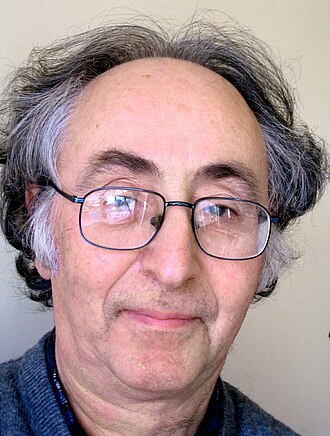
格物

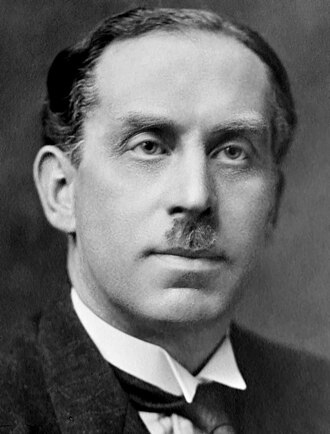
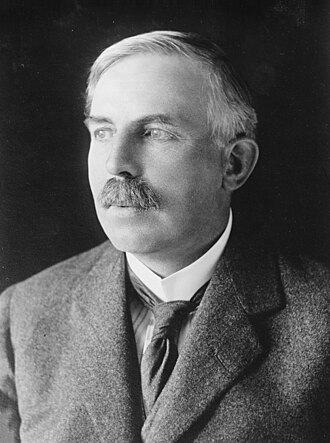
图:Miscellaneous Items in High Demand, PPOC, Library of Congres… · Public domain · Wikimedia Commons
- 出生
- 1870 年 10 月 31 日,伦敦
- 逝世
- 1939 年 10 月 17 日,剑桥
- 国籍
- 英国、大不列颠及爱尔兰联合王国
- 学科
- 物理学、化学、地球科学
- 职业
- 化学家、大学教师、晶体学家
- 母语 / 工作语言
- 英语
- 工作单位
- 剑桥大学
研究领域
师承
博士生1
来自 Wikidata 的「博士导师」「师从」「博士生」「学生」记录,可能不全。
所获奖项(5)
- 1903Longstaff Prize
- 1914戴维奖章
- —英国皇家学会院士
- —honorary doctor of the University of Calcutta
- —大英帝国爵级司令勋章
学会与院士
百科正文
本条目暂无中文维基百科条目,下面是英文维基百科原文。
Biography
William Jackson Pope was born on 31 March 1870 in Hoxton to William (a saddler) and Alice (née Hall). His parents were staunch and active Wesleyans who had eight children, of whom William was the eldest. In 1878 he entered the Central Foundation School, in London, where his ability to learn rapidly gave him leisure at the age of twelve to carry out simple chemical experiments in his bedroom. While at school he also developed great skill as a photographer—many of his early photographs were in perfect condition fifty years later. From there he moved to the Finsbury Technical College, where he learned much from H E Armstrong; the two later became close friends.
Pope studied crystallography under H. A. Miers, and most of his earlier research focussed on measuring crystallographic data with a goniometer. These studies had an important influence on the development of his chemical work, for they enhanced the natural faculty of visualising spatial relationships. This drew him into the field of stereochemistry where his most notable achievements were to resolve a series of asymmetric, optically active compounds of nitrogen, sulfur, tin and selenium. This led to his appointment in 1901 to a chair of chemistry at the Manchester Municipal School of Technology. He was elected a Fellow of the Royal Society (FRS) in June 1902, and then to the 1702 chair of chemistry at Cambridge University in 1908.
During the First World War, Pope served on the Board of Invention and Research for the Admiralty and on the Chemical Warfare Committee at the Ministry of Munitions, where one of his contributions was a modified method for preparing mustard gas. He was appointed a Commander of the Order of the British Empire in the 1918 New Year Honours and was invested as a Knight Commander of the Order of the British Empire in the 1919 New Year Honours, the only chemist to be knighted for service during World War I. Pope was president of the Chemical Society from 1917–19 and of the International Union of Pure and Applied Chemistry (1923–25).
Sir William died, unmarried, in Cambridge on 17 October 1939, after a long illness. A memorial service was held for him at St John’s College Chapel.
以上内容摘自英文维基百科「William Jackson Pope」,按 CC BY-SA 4.0 使用,去掉了参考文献、外部链接等尾部小节,公式改写成了纯文本。全文、配图和出处见原文。
同一学科、同时代的科学家

同一学科的科学家
更多 ›