格物
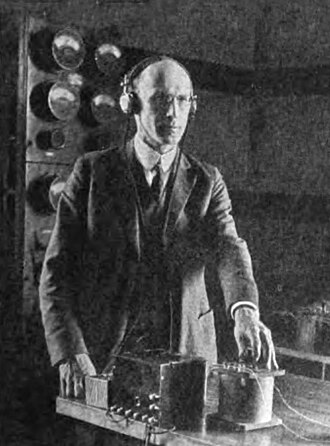
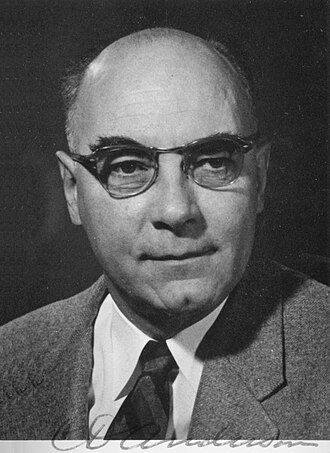
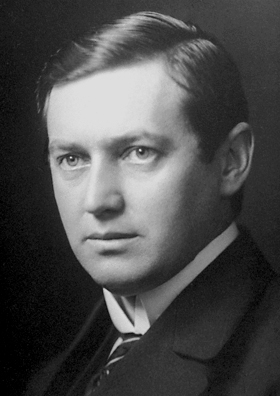
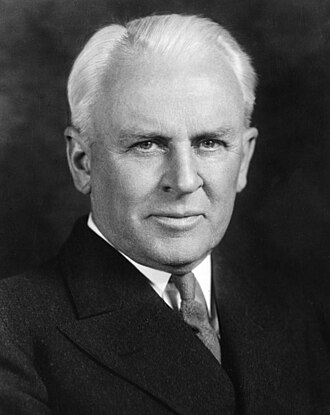
图:作者不详 · Public domain · Wikimedia Commons
约翰·M·米勒1882—1962
John Milton Miller
American electrical engineer (1882-1962)
John Milton Miller was a noted American electrical engineer, best known for discovering the Miller effect and inventing fundamental circuits for quartz crystal oscillators.
摘自英文维基百科「John Milton Miller」(英文维基百科,暂无中文条目),CC BY-SA 4.0
- 出生
- 1882 年 6 月 22 日,汉诺瓦
- 逝世
- 1962 年 5 月 17 日,庞帕诺比奇
- 国籍
- 美国
- 学科
- 物理学、工程与发明、博物与综合
- 职业
- 物理学家、发明家、工程师
- 母校
- 耶鲁大学
所获奖项(1)
- 1953IEEE 荣誉奖章
百科正文
本条目暂无中文维基百科条目,下面是英文维基百科原文。
Formative years and family
Miller was born in Hanover, Pennsylvania on June 22, 1882. In 1904, he graduated from Yale University. He then obtained his M.A. there in 1907, followed by his Ph.D. in Physics in 1915.
He married Frances Riley; the couple had seven children — two girls and five boys.
Career
From 1907 to 1919, Miller was employed as a physicist with the National Bureau of Standards; he then worked as a radio engineer at the United States Navy's Radio Laboratory in Anacostia, District of Columbia from 1919 to 1923, and subsequently at the Naval Research Laboratory (NRL). From 1925 to 1936, he led radio receiver research at the Atwater Kent Manufacturing Company, Philadelphia. From 1936 to 1940, he was the assistant head of the research laboratory for the RCA Radiotron Company. In 1940, he returned to NRL where he became superintendent of Radio I Division (1945), associate director of research (1951), and scientific research administrator (1952).
Honors
Miller was awarded the Distinguished Civilian Service Award in 1945 for "initiation of the development of a new flexible radio-frequency cable urgently needed in radio and radar equipment which solved a desperate material shortage in the United States during World War II," and the IRE Medal of Honor in 1953 for "his pioneering contributions to our basic knowledge of electron tube theory, of radio instruments and measurements, and of crystal controlled oscillators."
以上内容摘自英文维基百科「John Milton Miller」,按 CC BY-SA 4.0 使用,去掉了参考文献、外部链接等尾部小节,公式改写成了纯文本。全文、配图和出处见原文。
同一学科、同时代的科学家





同一学科的科学家
更多 ›