格物

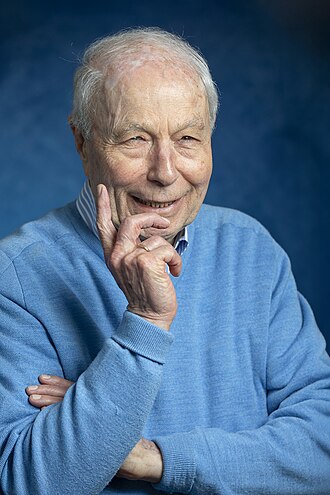
图:Jpbowen · CC BY-SA 4.0 · Wikimedia Commons
- 出生
- 1898 年 4 月 29 日,伍斯特
- 逝世
- 1980 年 11 月 19 日,牛津
- 国籍
- 英国、大不列颠及爱尔兰联合王国
- 学科
- 化学、地球科学
- 职业
- 化学家、地质学家
- 母语 / 工作语言
- 英语
- 母校
- 贝利奥尔学院、Royal Grammar School Worcester
- 工作单位
- 牛津大学
研究领域
师承
师从1
博士生1
来自 Wikidata 的「博士导师」「师从」「博士生」「学生」记录,可能不全。
所获奖项(4)
- 1914The Brackenbury Scholarship
- 1935英国皇家学会院士
- 1963戴维奖章
- 1965Liversidge Award
学会与院士
百科正文
本条目暂无中文维基百科条目,下面是英文维基百科原文。
Early life and wartime career
E. J. Bowen was the eldest of four born to Edmund Riley Bowen and Lilias Bowen (née Kamester) in 1898 in Worcester, England. He attended the Royal Grammar School Worcester.
He won the Brackenbury Scholarship in 1915 to the University of Oxford where he studied chemistry. In 1916, after less than a year of his undergraduate course, he volunteered for training as a gunner officer and served as Second Lieutenant in the Royal Garrison Artillery during World War I. After being demobilised in 1919, he returned to Balliol College.
Research career
In 1922, Bowen became a Fellow in Chemistry of University College, Oxford, succeeding R. B. Bourdillon, who was briefly Fellow in Chemistry at the College from 1919 to 1921, but who subsequently changed his field of interest from chemistry to medicine. Bowen also served as Domestic Bursar of University College and as Junior Proctor of Oxford University in 1936.
Created a Fellow of the Royal Society in 1935 for his research into fluorescence, he was awarded the Davy Medal in 1963. He wrote a seminal book called The Chemical Aspects of Light. He was Vice-President of the Faraday Society and of the Chemical Society.
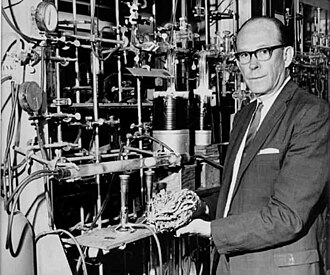
Much of Bowen's research work was carried out at the Balliol-Trinity Laboratories in Oxford. He was an accomplished glass blower for his chemical apparatus and even produced artworks in glass. His 1966 Liversidge Lecture on Fluorescence was based on his life's research. After retirement in June 1965, he was elected as an Honorary Fellow of University College on 6 October 1965. He was one of the longest serving Fellows of that college (43 years as an ordinary Fellow and a total of 59 years). There is a room in the college named after him. He was also a prominent Worcester Old Elizabethan serving on its Committee for many years and organising the Oxford branch of that club.
During May 1931, Bowen, then a University don, attended a series of three lectures given by Albert Einstein at Rhodes House in Oxford. After the second lecture on 16 May, he helped rescue the blackboard used by Einstein; Sir Francis Wylie (Warden of Rhodes House) formally presented it to the Museum of the History of Science in Oxford where it remains on prominent display to this day.
As well as chemistry, Bowen also had an interest in geology, especially around Ringstead Bay on the Jurassic Coast in Dorset on the south coast of England. Perisphinctes boweni, an ammonite from the Jurassic period, is named after him. Bowen was involved with the Oxford University Museum of Natural History and produced a scale model of the sun, earth, and moon, for the upper galleries in the museum.
Later life and death
Bowen lived for most of his working life in Park Town and is buried in Wolvercote Cemetery, north of Oxford. Bowen was married to Edith née Moule and they had a son (also a chemist) and a daughter. He died on 19 November 1980 after a short illness.
Bowen room
The room at University College that Bowen used was subsequently named the 'Bowen room'. It was used by Emeritus Fellows of the college and later occupied by Prof. Ruth Chang. Bowen's papers (1931–1980) are held by the Museum of the History of Science in Oxford.
Notable co-authors
- Sir Cyril Norman Hinshelwood FRS
- Ronald George Wreyford Norrish FRS
- Nevil Vincent Sidgwick FRS
- Sir Harold Warris Thompson FRS
以上内容摘自英文维基百科「E. J. Bowen」,按 CC BY-SA 4.0 使用,去掉了参考文献、外部链接等尾部小节,公式改写成了纯文本。全文、配图和出处见原文。
同一学科、同时代的科学家