格物
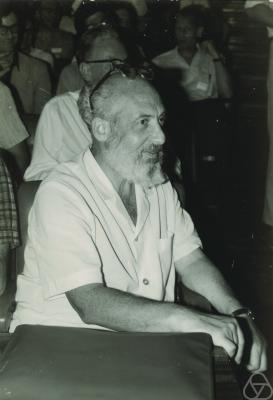
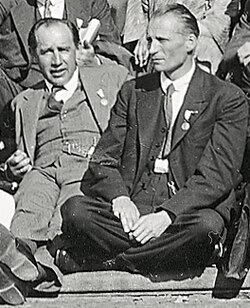
图:Konrad Jacobs, Erlangen · CC BY-SA 2.0 de · Wikimedia Commons
塞缪尔·艾伦伯格1913—1998
Samuel Eilenberg
Polish mathematician (1913-1998)
塞缪尔·艾伦伯格 是一个波兰-美国数学家,犹太血统。他出生于俄罗斯帝国时期的华沙(现在为波兰),逝于美国纽约市,他是纽约哥伦比亚大学的教授,在那里度过了大部分职业生涯。
摘自维基百科「塞缪尔·艾伦伯格」,CC BY-SA 4.0
- 出生
- 1913 年 9 月 30 日,华沙
- 逝世
- 1998 年 1 月 30 日,纽约
- 国籍
- 波兰、美国
- 学科
- 数学、博物与综合
- 职业
- 数学家、拓扑学家、大学教师、艺术收藏家
- 母语 / 工作语言
- 英语
- 母校
- 华沙大学(1936 年)
- 工作单位
- 密歇根大学(1940—1945)、哥伦比亚大学(1947—1998)、普林斯顿大学(1945—1946)、印第安纳大学(1946—1947)
研究领域
主要贡献
代表成就
本站收录的发现与发明
师承
博士生16
来自 Wikidata 的「博士导师」「师从」「博士生」「学生」记录,可能不全。
所获奖项(4)
- 1950古根海姆学者奖
- 1986沃尔夫数学奖
- 1987勒罗伊·P·斯蒂尔奖
- 1989巴黎第七大学名誉博士
学会与院士
百科正文
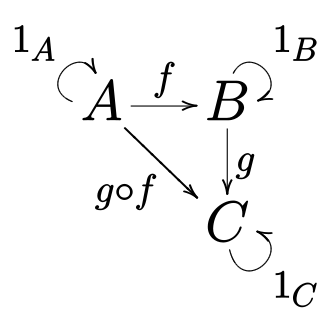
他于1936年在华沙大学获得哲学博士学位。他的论文导师是卡罗尔·博苏克。他主要研究兴趣是代数拓扑。他与诺曼·斯廷罗德一起建立了同调论的公理化,与桑德斯·麦克兰恩合作公理化了同调代数。在这个过程中,艾伦伯格与 Mac Lane 创立了范畴论。
艾伦伯格加入了尼古拉·布尔巴基小组,与昂利·嘉当合作,1956年著有《同调代数 Homological Algebra》,这是一部经典著作。
其后他主要工作是纯粹范畴论,是该领域的奠基者之一。Eilenberg swindle(或 telescope)是将裂项消元法想法运用于投射模的一个构造。
艾伦伯格也写了一部关于自动机理论的重要著作。X-机器是由艾伦伯格1974年引进的一种形式的自动机。
以上内容摘自维基百科「塞缪尔·艾伦伯格」,按 CC BY-SA 4.0 使用,去掉了参考文献、外部链接等尾部小节,公式改写成了纯文本。全文、配图和出处见原文。
英文维基百科补充中文条目比较短,下面是英文条目「Samuel Eilenberg」的原文
Samuel Eilenberg (September 30, 1913 – January 30, 1998) was a Polish-American mathematician who co-founded category theory (with Saunders Mac Lane) and homological algebra. He also founded the field of algebraic automata in his work with Jesse B. Wright
Early life and education
He was born in Warsaw, Kingdom of Poland to a Jewish family. He spent much of his career as a professor at Columbia University.
He earned his Ph.D. from University of Warsaw in 1936, with thesis On the Topological Applications of Maps onto a Circle; his thesis advisors were Kazimierz Kuratowski and Karol Borsuk.
Career
Eilenberg's main body of work was in algebraic topology. He worked on the axiomatic treatment of homology theory with Norman Earl Steenrod (and the Eilenberg–Steenrod axioms are named for the pair), and on homological algebra with Saunders Mac Lane. As a result of this work, Eilenberg and Mac Lane developed the field of category theory, for which they are now best known.
Eilenberg was a member of Bourbaki and, with Henri Cartan, wrote the 1956 book Homological Algebra.
Later in life he worked mainly in pure category theory, being one of the founders of the field. The Eilenberg swindle (or telescope) is a construction applying the telescoping cancellation idea to projective modules.
Eilenberg contributed to automata theory and algebraic automata theory. In particular, he introduced a model of computation called X-machine and a new prime decomposition algorithm for finite state machines in the vein of Krohn–Rhodes theory. He also identified a natural correspondence between certain classes of regular languages called varieties and pseudovarieties of finite monoids, a result which is now known as Eilenberg's theorem. He died in New York City in January 1998.
Art collection
Eilenberg was also a prominent collector of Asian art. His collection mainly consisted of small sculptures and other artifacts from India, Indonesia, Nepal, Thailand, Cambodia, Sri Lanka and Central Asia. In 1991–1992, the Metropolitan Museum of Art in New York staged an exhibition from more than 400 items that Eilenberg had donated to the museum, entitled The Lotus Transcendent: Indian and Southeast Asian Art From the Samuel Eilenberg Collection. In reciprocity, the Metropolitan Museum of Art donated substantially to the endowment of the Samuel Eilenberg Visiting Professorship in Mathematics at Columbia University.
以上内容摘自英文维基百科「Samuel Eilenberg」,按 CC BY-SA 4.0 使用,去掉了参考文献、外部链接等尾部小节,公式改写成了纯文本。全文、配图和出处见原文。
同年获同一奖项
同一学科、同时代的科学家




同一学科的科学家
更多 ›